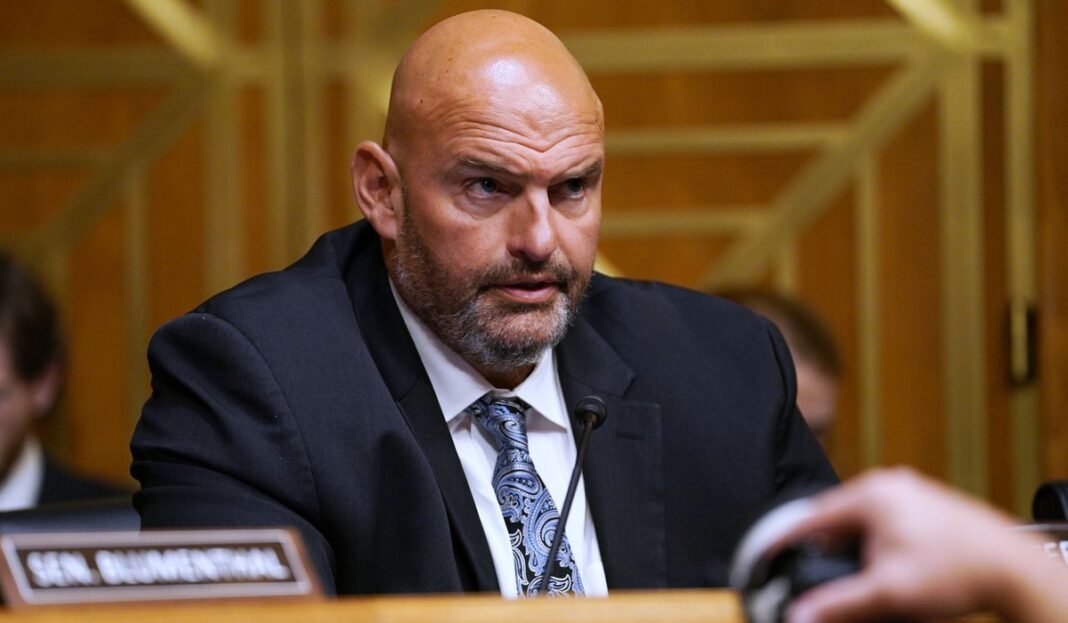





Tom Kean Jr. had faced months of questions about his disappearance from Washington. He later disclosed that he had been receiving treatment for depression.
Republican Rep. Tom Kean Jr. is back in Congress after a four-month absence that became a growing mystery in one of New Jersey’s most competitive House races. And unlike the earlier version of this story, there is now an explanation: Kean disclosed that he was being treated for depression.
Kean’s office had previously declined to publicly explain why he was away from Washington, fueling speculation as he missed congressional work and largely disappeared from public view. The Associated Press reported that Kean later said he had been receiving treatment for depression during the absence and had returned ready to resume his duties.
Kean is seeking reelection in New Jersey’s 7th Congressional District against Democrat Rebecca Bennett. The district has become one of the state’s most closely watched swing seats, changing party control in each of the past two midterm elections. It also includes Donald Trump’s Bedminster golf club, because apparently even congressional district geography in New Jersey likes a subplot.
His disclosure reframes the questions around his absence in a much more sensitive way. Depression is a medical condition, and public officials do not surrender every expectation of privacy simply because they hold office. At the same time, members of Congress have official responsibilities, and lengthy absences can affect votes, committee work and constituent representation. The tension between those two facts is what makes the story more complicated than a simple “where was he?” mystery.
Kean’s case also highlights how differently political culture treats physical and mental health. A lawmaker announcing surgery, cancer treatment or recovery from a serious injury often receives broad public sympathy with relatively little controversy over taking leave. Depression can require treatment just as urgently, but public figures may face greater hesitation about disclosure because of stigma and fear that opponents will portray mental-health care as weakness.
The Associated Press report does not suggest that Kean was secretly engaged in political activity elsewhere or that his office misled the public about some scandalous trip. The core issue is that he was absent for roughly four months without initially explaining why, then disclosed treatment for depression as he returned.
Democrats are still likely to raise questions about representation and transparency, while Kean can reasonably argue that private medical treatment did not require a running public commentary. Voters will have to decide how much disclosure they expect from an elected official when health issues affect the official’s ability to appear in Washington.
The political stakes are high because New Jersey’s 7th has repeatedly flipped. Republicans are trying to protect their House majority, and Democrats see the seat as a major pickup opportunity. That means every development involving either candidate is being examined through the lens of national control of Congress.
It would be easy to turn Kean’s absence into a joke about a congressman disappearing from Congress, but the disclosure changes the appropriate tone. There is still a legitimate accountability question, but depression is not the punchline. The interesting political issue is why the absence remained unexplained for so long and what voters are entitled to know when an elected official steps away from the job for medical treatment.
Kean’s disclosure also arrives at a moment when politicians across both parties have become more open about mental health. Sen. John Fetterman discussed treatment for clinical depression after checking himself into Walter Reed in 2023, helping normalize the idea that elected officials can seek psychiatric care and return to work. That does not eliminate questions about performance or transparency; it does make the conversation less novel than it once would have been.
For Kean, the immediate test is simple: he is back, he has explained the broad reason for his absence, and he is heading into the most visible stretch of his campaign. Bennett will have an opportunity to challenge him on policy and representation, while Kean will have to show voters that the health issue that took him away from Washington does not prevent him from doing the job now.
The old version of this story was a mystery. The new version is a debate about privacy, mental health and public responsibility. How much should an elected official be expected to disclose about a medical condition when it causes a months-long absence from office?