



The United States naval blockade of Iranian ports resumed at 4 p.m. ET Tuesday, which is information that the US government managed to announce in two contradictory versions simultaneously, producing the specific kind of foreign policy clarity that causes Chinese foreign ministry spokespersons to request “normal and safe passage” while reviewing two official American statements that disagree with each other about whether passage requires payment.
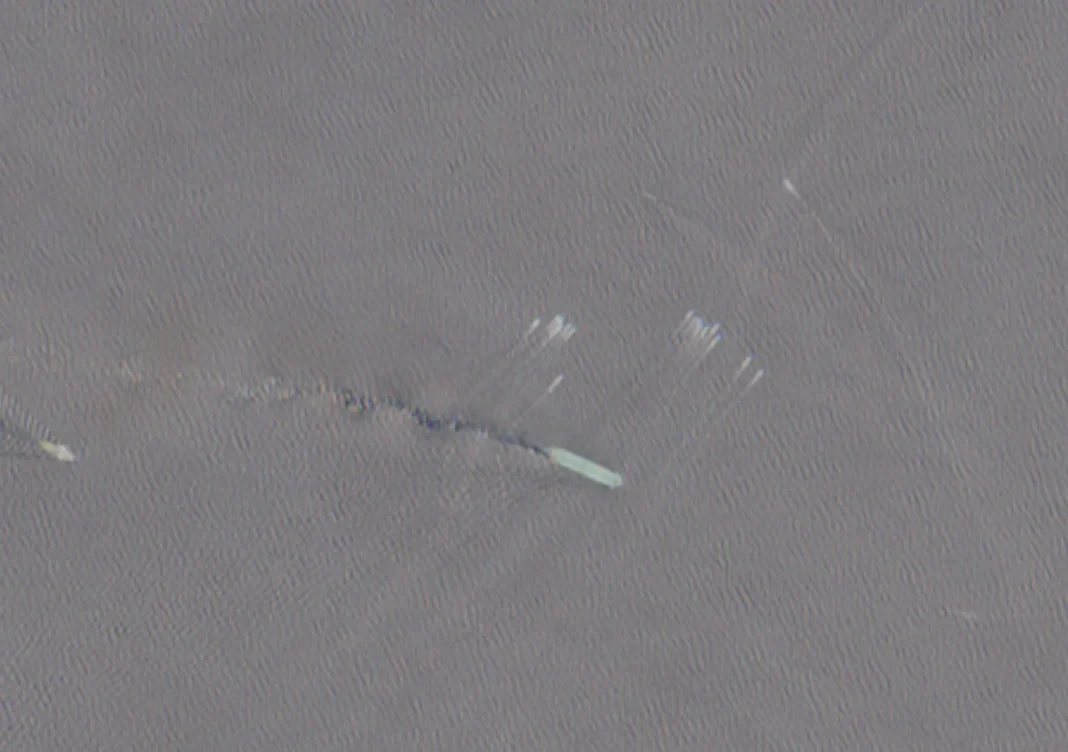
CENTCOM announced Tuesday morning that US forces “will resume blockading maritime traffic entering and exiting Iranian ports” beginning at 4 p.m. ET, following a third wave of strikes against Iranian military targets that brought the three-night total to more than 300. The strikes hit Iranian air defense systems, coastal surveillance assets, missile and drone storage sites, naval capabilities, and military logistics infrastructure, which CENTCOM described as degrading Iran’s “ability to attack civilian mariners,” which Iran’s IRGC described as reason to keep attacking civilian mariners, which is the feedback loop that has produced 300 targets struck.
Trump has announced a 20 percent fee on all cargo moving through the Strait of Hormuz. The Joint Maritime Information Centre, which is the US-led body that issues official maritime advisories for the region and is part of the same US government that employs Trump, issued an advisory stating that there is “no controlling authority or required fee for passage” through the strait, and that coordination with the US Navy is “not mandatory.” The JMIC advisory and the presidential announcement are about the same body of water and reach opposite conclusions about whether you have to pay to use it. Both were issued by entities of the United States government. Neither has been withdrawn.
China, which is the world’s largest importer of oil and routes a significant portion of its supply through the Strait of Hormuz, sent its foreign ministry spokesperson Lin Jian to demand that “normal and safe passage” be restored before the blockade resumed. China was asking this of the country whose president had just announced a 20 percent transit fee and whose navy was simultaneously saying no fee exists. Lin Jian did not specify which American statement he was responding to, possibly because he was still reading both.
Former CENTCOM commander Gen. Frank McKenzie told CBS’s “Face the Nation” Sunday that Iran “has never met a war they could win or a negotiation they could lose,” which is a succinct description of the situation and which Iran’s IRGC demonstrated by announcing it would keep striking until “the end of US interference in this region,” which is the kind of negotiating position that confirms McKenzie’s point.
When the US president announces a 20% fee through a strait that the US Navy simultaneously says has no required fee, and the blockade resumes anyway, who exactly is running the Strait of Hormuz?
Sources
Fox News Live: US Iran war, Strait of Hormuz July 14
Raw Story: US strikes Iran again after ‘clear violation of the ceasefire’