



Trump’s Iowa and Kansas rallies were canceled and restored within roughly a day. By Friday night, the president was openly complaining about 28 straight days of campaigning and said his voice was running at 49.2 percent.
Donald Trump’s final weekend campaign schedule briefly became its own midterm battleground. Two rallies disappeared, explanations multiplied, reporters asked whether the president was tired, and then — less than a day later — the rallies were suddenly back on.
The events in Dubuque, Iowa, and Salina, Kansas, were initially canceled Thursday. The Republican National Committee said Republicans were in a strong position in both states, while aides said Trump would use the time for roughly 20 tele-rallies that could reach more voters without requiring another round of airports, motorcades and arena speeches.
Then Friday arrived and the plan reversed. The Washington Post reported that Trump had restored both Sunday appearances, putting the same Iowa and Kansas rallies right back onto the calendar they had just been removed from.
The explanations were not exactly synchronized. One adviser told the Post that Trump was tired after weeks of campaigning and wanted a day off, another emphasized his enthusiasm for tele-rallies, and still another said the events were rearranged for scheduling reasons.
The RNC had already told everyone the cancellations reflected Republican strength in those states. Twenty-four hours later, apparently that strength still required the president to get back on the plane.
Trump himself added to the confusion by saying he did not think he needed to visit Kansas because Republican Sen. Roger Marshall was doing well. Polling, however, showed the race competitive enough that a presidential visit was hardly irrational.
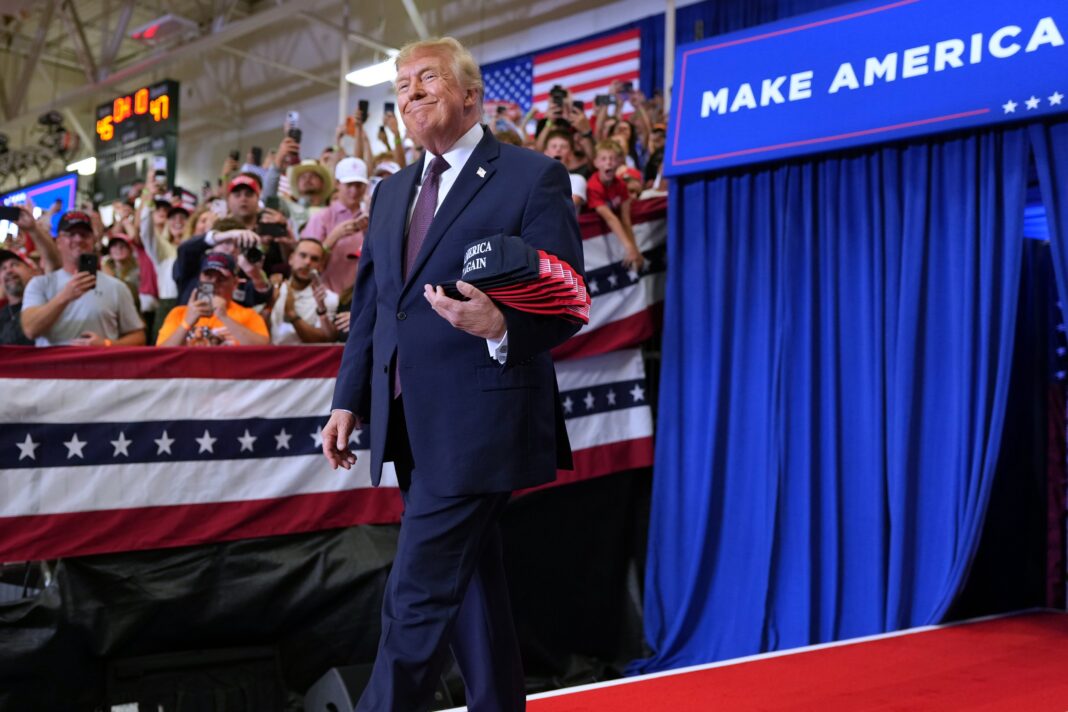
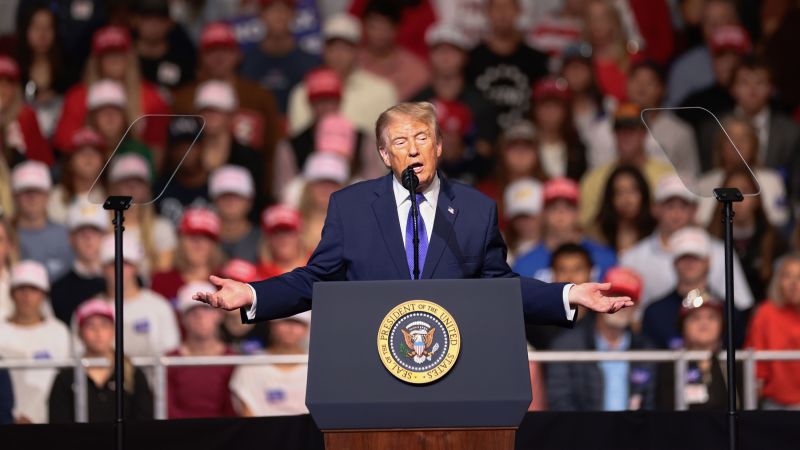
By Friday night in Daytona Beach, Trump sounded like a man who had at least considered the appeal of a couch. “Twenty-eight days in a row of this crap is a lot,” he told the crowd, explaining that he had thought Florida might be his final in-person rally before Election Day.
He also gave the audience an unusually precise medical-style update on his speaking voice: about 49.2 percent. Not 50. Not 49. The campaign apparently has a vocal battery indicator with decimal points.
CBS Miami noted that Trump’s voice sounded strained as he continued the Florida rally. He nevertheless kept speaking and then confirmed that he would be heading back out Sunday for the Iowa-Kansas doubleheader.
The whiplash gave Democrats an easy line about exhaustion and Republicans an easy line about a president determined to keep campaigning. The truth may simply be that late-stage campaign scheduling is chaotic enough to make both versions partially true.
Trump has spent much of October traveling to states with competitive Senate races as Republicans fight to preserve control of Congress. At 80 years old, the president is attempting a schedule that would make plenty of 40-year-olds start pretending their phone had no service.
None of this establishes a medical problem, and Trump has not said illness caused the cancellations. The available reporting points instead to fatigue, scheduling strategy and internal debate over whether tele-rallies could accomplish more than another pair of in-person events.
That distinction matters because “Trump’s voice is shot after 28 days of rallies” is supported by Trump’s own comments, while armchair diagnoses are not. He sounds tired because he says he is tired; no internet medical board is required.
And by Sunday, if the latest plan survives until Sunday, Trump will be back behind another microphone in Iowa and then Kansas. The only thing operating below 50 percent may be his voice, because the schedule itself appears to be running at 140.