



Gautam Adani denied the charges, and a federal judge ultimately said the investment offer did not influence DOJ’s decision. Two Democratic senators still want to know exactly how the case vanished.
Indian billionaire Gautam Adani was facing a major federal bribery and fraud prosecution in New York. Then his legal team was reshuffled, one of President Donald Trump’s personal lawyers became involved, Adani floated a $10 billion investment in the United States, and prosecutors asked a judge to drop the case. If this were a screenplay, an editor would probably circle that sequence and write: ‘Subtlety?’
Now Democratic Sens. Elizabeth Warren and Richard Blumenthal are demanding more answers from the Justice Department about how the prosecution ended. Their questions do not establish that the investment bought Adani favorable treatment. In fact, the federal judge overseeing the case ultimately concluded that the proposed investment did not influence DOJ’s decision. But the judge also previously described aspects of the dismissal as unusual enough to demand more explanation from prosecutors.
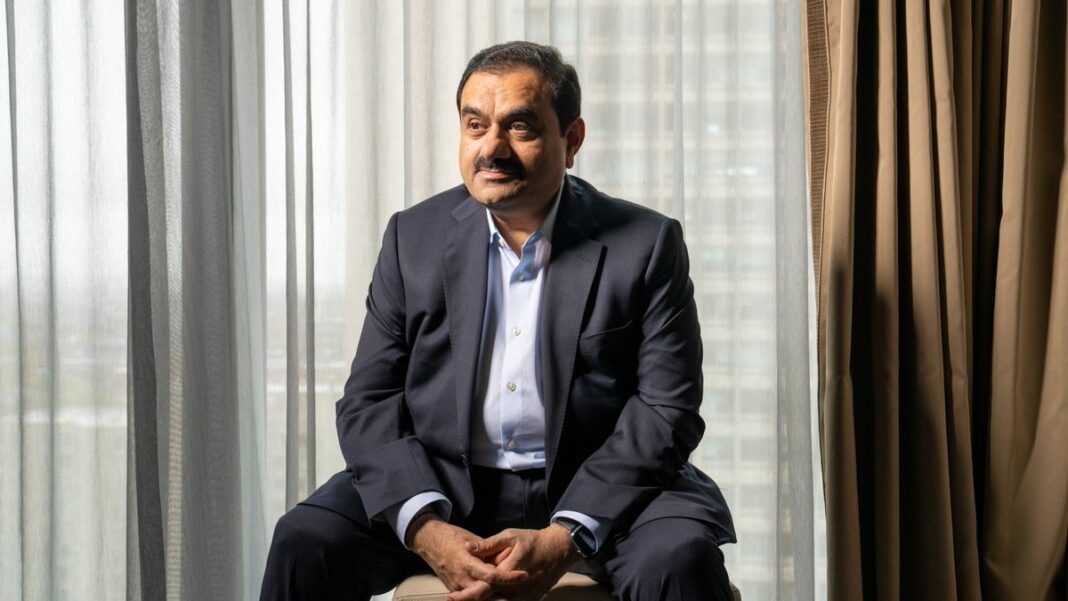
Adani was indicted in 2024 on allegations that he participated in a bribery and fraud scheme involving payments to Indian officials to secure lucrative contracts. He denied the accusations. The case carried enormous international significance because Adani is one of the world’s richest people and a major figure in Indian business, with close ties to Indian Prime Minister Narendra Modi.
According to reporting from The Washington Post and The Guardian, Adani later hired a legal team led by Robert Giuffra Jr., a prominent attorney who also represents Trump in separate legal matters. Prosecutors then moved to dismiss the federal case. U.S. District Judge Nicholas Garaufis initially refused to rubber-stamp that request and ordered DOJ to explain why the prosecution was no longer viable or in the public interest.
That judicial skepticism matters. Federal prosecutors generally receive substantial deference when they ask to abandon charges, but judges can require the government to explain itself when the reasoning is thin or unusual. Garaufis did exactly that, writing that prosecutors had not initially supplied enough facts or reasoning to support dismissal.
Then came the $10 billion detail. Current reporting says Adani offered to invest that amount in the United States while his legal team was seeking resolution of the criminal case. The judge later concluded that the proposed investment had not influenced DOJ’s decision, which is a major factual guardrail here. There is no judicial finding that the case was dropped in exchange for investment money.
Warren and Blumenthal nevertheless say they want to know much more about the conversations surrounding the dismissal. Their latest letter asks DOJ to identify who knew about Adani’s investment proposal, who participated in meetings and whether people close to Trump had any role in advocating for Adani. The senators also raised questions about reports involving Boris Epshteyn, a Trump ally and lawyer, and about a meeting between Donald Trump Jr. and Adani. Representatives for those involved have disputed suggestions that such contacts influenced DOJ.
The senators’ concern is less complicated than the paperwork: when an extraordinarily wealthy foreign businessman facing federal charges proposes a giant U.S. investment while lawyers with connections to the president are seeking dismissal of his case, they argue that the public deserves a detailed explanation of the sequence.
DOJ may ultimately have one. Prosecutors can decide cases are weak, difficult to prove or no longer worth pursuing for many legitimate reasons. International evidence can be complicated. Witnesses can become unavailable. Legal strategies can change. None of those explanations requires a conspiracy or a secret deal.
But this case arrived with enough unusual details that the federal judge himself wanted more. That is what separates the story from a generic partisan accusation. The court did not find that the $10 billion offer bought the dismissal, but it did force prosecutors to justify a decision it regarded as highly unusual.
There is also a broader question about appearances inside a Justice Department already facing constant scrutiny over political influence. When a defendant is represented by a lawyer who also works for the president, the department has a greater burden to show that ordinary rules are being applied. When that same defendant is discussing a massive U.S. investment, the need for a clean paper trail only grows.
Adani denies the underlying bribery allegations. The court has approved dismissal. The judge said the investment did not determine DOJ’s decision. Those facts belong in the center of the article, not buried beneath a sensational headline. But so does the other side of the chronology: a $10 billion investment proposal, a Trump-connected legal team, an abandoned prosecution and a judge who initially demanded a better explanation. Washington has produced less suspicious-looking timelines from actual conspiracy novels.
Warren and Blumenthal have asked DOJ to respond to their latest questions by October 5. Until then, the unanswered part is not whether the investment has been proven to buy anything. It has not. The unanswered part is why the department decided such a significant case should disappear and exactly who was in the room when that decision was made.
So here is the question readers are likely to have anyway: when a billionaire defendant offers a massive U.S. investment while seeking to end a federal prosecution, how much transparency should DOJ be required to provide before the public is expected to accept that the two events were unrelated?