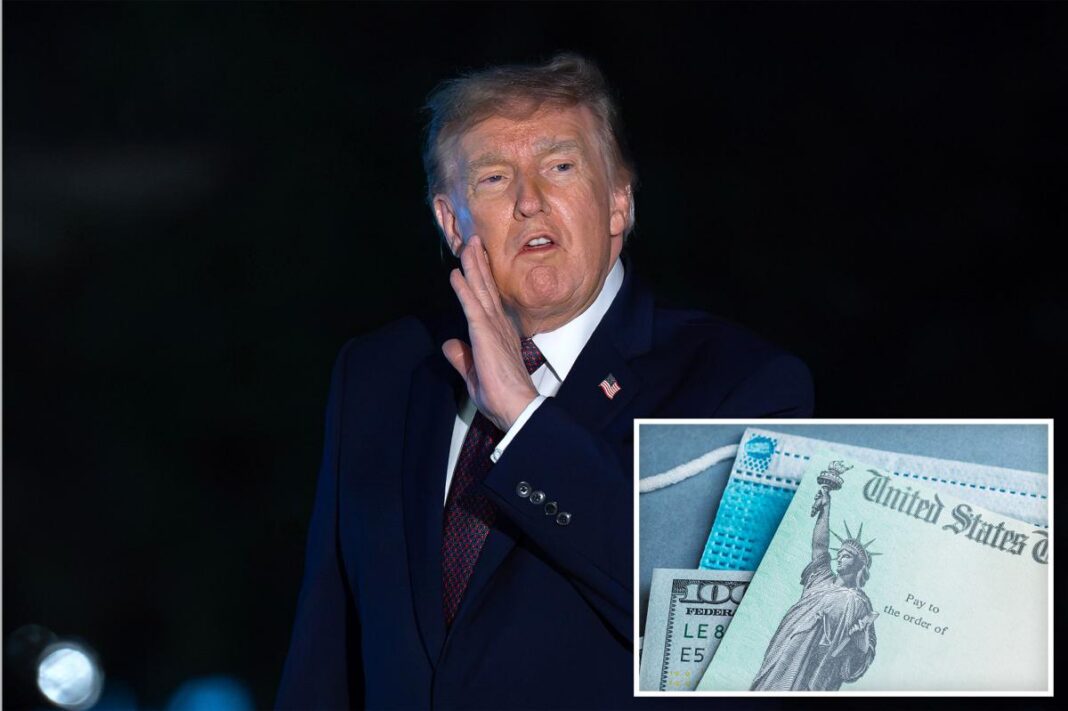




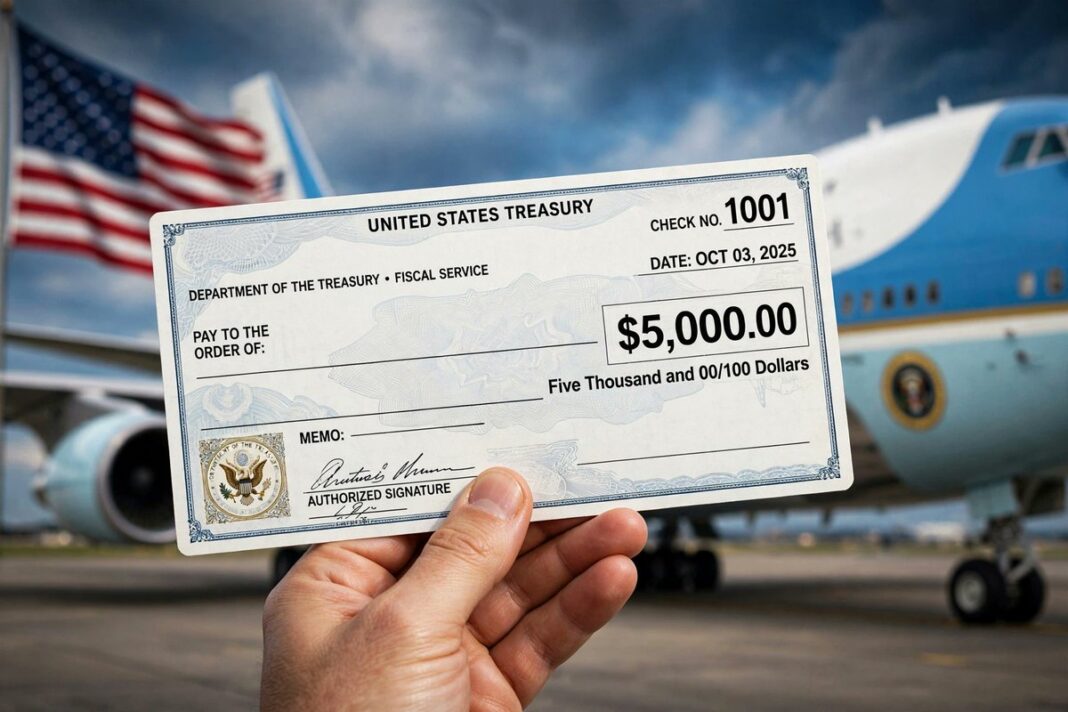
Trump keeps telling Republicans to campaign on $5,000 payments for every American adult if the GOP holds Congress. Most candidates are barely mentioning the idea.
Donald Trump has given Republican candidates what sounds, on paper, like the easiest campaign message imaginable: elect us and Americans get $5,000 checks. Yet a Washington Post analysis found most GOP congressional candidates are barely talking about it.
Trump unveiled the proposal at the Republican midterm convention, promising $5,000 payments to every adult American if Republicans keep control of Congress. He urged candidates to run on the plan and told them to behave as if he were personally on the ballot.
The checks immediately generated national attention. A payment that large would dwarf most recent federal rebates and stimulus programs, and the estimated cost would be enormous — roughly $1.2 trillion according to Associated Press reporting.
There is also one substantial catch: Congress would have to approve it.
The Post reviewed more than a million social-media posts from politicians after Trump announced the proposal and found most Republican congressional candidates were not promoting it. Democrats were actually more likely to mention the checks, usually while attacking them as unrealistic or politically opportunistic.
Even some Republicans who did discuss the idea were skeptical. Rep. Eric Burlison of Missouri called the proposal “by definition socialism,” although he said he would listen to more details. That is not exactly the bumper sticker Trump was requesting.
The silence is notable because congressional candidates generally enjoy talking about giving voters money. There are few campaign consultants who would object to a message reading, “Vote Tuesday, receive $5,000 later.” Yet many Republicans appear reluctant to attach themselves to a promise they cannot guarantee Congress will fund.
Trump has not laid out a detailed legislative mechanism explaining how the money would be financed or distributed. The proposal has been framed as contingent on Republican control of both chambers, but even unified control would not automatically mean GOP lawmakers agree to spend more than $1 trillion on direct checks.
That uncertainty may explain why candidates are sticking to their existing messages about inflation, immigration, taxes and the economy. A promise can be politically useful until voters start asking when the direct deposit hits.
The tension also reveals an important difference between Trump’s campaign style and congressional politics. Trump likes giant, simple promises. Individual House candidates eventually have to answer questions about votes, budgets and whether they personally support the plan.
That makes the $5,000 proposal almost too good as a campaign slogan. If Republicans advertise it aggressively and then cannot pass it, they own the disappointment. If they ignore it, Trump can complain they refused to sell one of his biggest midterm ideas.
For now, most candidates appear to have chosen option two: smile politely, talk about something else and hope nobody hands them a novelty check at the next town hall.
The broader question is whether Trump’s promise becomes more powerful as Election Day gets closer — or whether Republican candidates continue treating a proposed $5,000 payment like the campaign message that must not be named.