




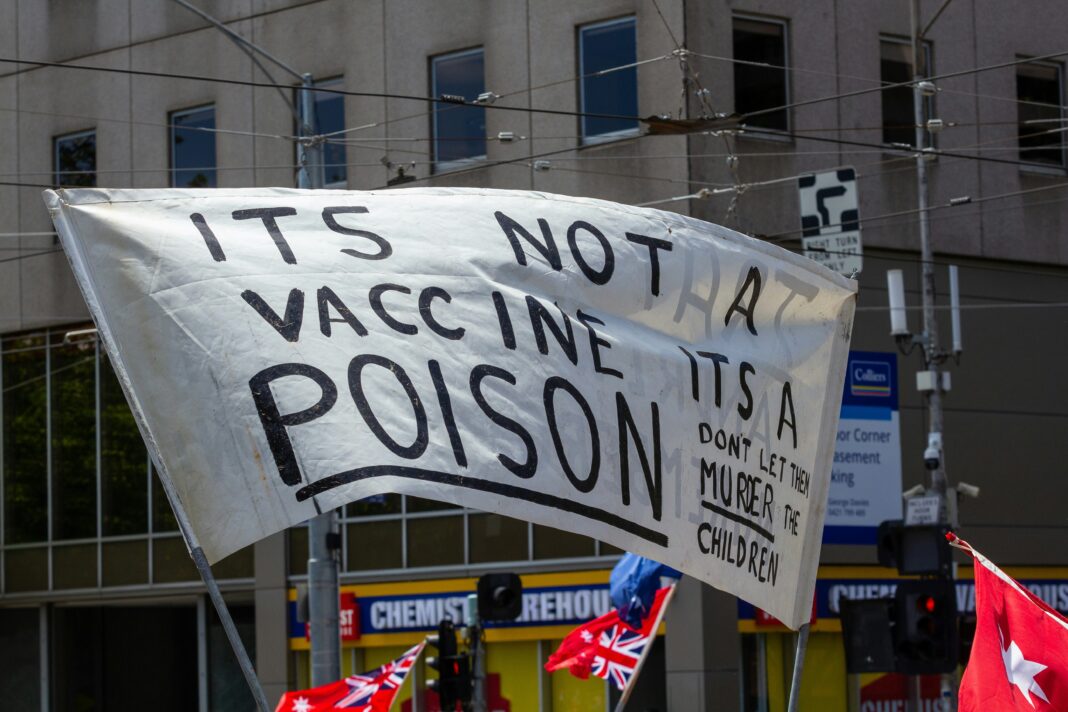
Health and Human Services Secretary Robert F. Kennedy Jr. returned Thursday to a conference hosted by Children’s Health Defense, the organization he once chaired, and told attendees they now have a “strong and steadfast friend in the White House.”
The appearance marked Kennedy’s first time speaking at the group’s conference since becoming health secretary. Children’s Health Defense has long challenged mainstream vaccine policy and describes itself as focused on vaccine safety and opposition to mandates. The Associated Press and Washington Post both described the group as anti-vaccine.
Kennedy used the speech to praise changes the Trump administration has pursued in federal vaccine policy and to assure the audience that the administration intends to keep examining vaccine safety questions.
“Let me be clear: You have a strong and steadfast friend in the White House,” Kennedy said, according to the Associated Press. He told the crowd that the administration had accomplished changes that would have seemed unlikely two years earlier.
The timing is significant because the United States is experiencing its worst measles year in decades. The Washington Post reported that the country is in its worst measles outbreak in 35 years, while public-health officials and medical groups continue to urge vaccination as the most effective protection against the disease.
Kennedy has disputed criticism that his approach is responsible for rising vaccine skepticism. He has said the administration has preserved access to vaccines while asking questions about safety, long-term outcomes and the childhood immunization schedule.
Medical organizations and vaccine researchers disagree with many of Kennedy’s claims. Experts cited by the Washington Post said vaccines undergo extensive safety testing and that decades of evidence support their safety and effectiveness. Public-health specialists have also warned that federal messaging that casts doubt on established vaccine recommendations can contribute to confusion and hesitancy.
The administration has already moved to reshape vaccine policy. Kennedy has changed the membership and direction of federal vaccine advisory bodies, and the administration has pushed changes to childhood vaccine guidance. Some of those efforts have been halted or challenged in court.
At Thursday’s event, Kennedy defended that broader project. He told attendees the federal government was no longer dismissing parents who questioned existing vaccine guidance and said the administration had not taken vaccines away from anyone.
The speech also demonstrated how far Kennedy’s relationship with Children’s Health Defense has traveled. Before entering government, he served as the group’s chairman and chief legal counsel and became one of the most prominent national figures questioning vaccine policy. He stepped away from the organization when he began his presidential campaign and later joined the Trump administration.
Now, instead of addressing the group as an outside activist, he appeared as the cabinet secretary responsible for the federal health agencies that oversee vaccine recommendations, research and public-health guidance.
That change in role is what made his “friend in the White House” line especially consequential. It was not simply a statement of sympathy from a political figure. It came from the official who currently leads the Department of Health and Human Services.
Kennedy and his supporters argue that federal health agencies need more scrutiny and greater transparency. His critics argue that his public comments repeatedly blur the line between legitimate safety monitoring and claims that are not supported by the scientific evidence.
The dispute is likely to continue as the administration makes additional changes to vaccine policy and as state and federal officials respond to ongoing measles outbreaks.
How should a health secretary balance public skepticism about vaccines with the government’s responsibility to communicate the strongest available medical evidence?