




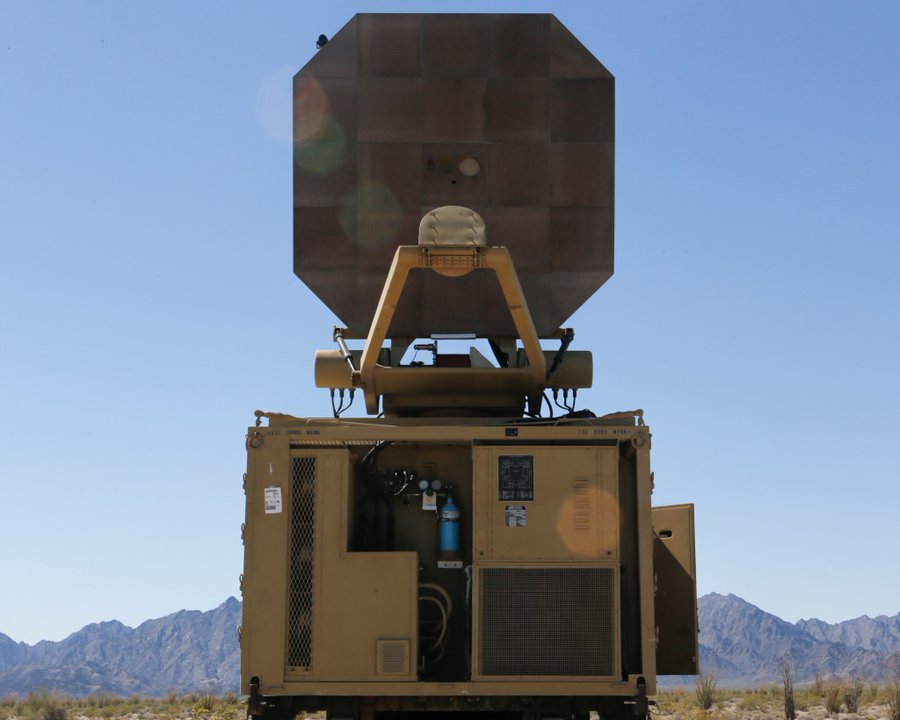
Pete Hegseth has approved a seven-month loan of the military’s Active Denial System to DHS. The weapon uses an invisible beam to create an intense burning sensation on the surface of human skin.
The federal government is testing something at the border that sounds like it escaped from a rejected sci-fi movie: a military “heat ray” designed to make human skin feel like it is burning. Defense Secretary Pete Hegseth has approved a seven-month loan of the system to the Department of Homeland Security for evaluation.
The official name is the Active Denial System, which somehow sounds both less terrifying and more bureaucratic. It shoots an invisible electromagnetic beam that rapidly heats the outer layer of the skin, creating an intense sensation that is supposed to make people immediately move away.
According to Axios, the system can reach targets from roughly 1,000 meters away. That means the government is not testing a glorified space heater; it is evaluating a long-range pain-inducing weapon developed by the military.
The Pentagon classifies the technology as nonlethal because the beam is designed to penetrate only a very shallow layer of skin. The goal is compliance through pain rather than permanent injury, a distinction that is technically important even if “government heat ray” remains an extremely difficult phrase to make sound comforting.
Testing history has not been completely injury-free. Axios notes that accidents have previously caused second-degree burns, including a 1999 laboratory incident and a 2007 training error.
That is one reason DHS says the current step is only testing and tactical development, not an announcement that agents will start using the system on migrants next week. Officials are evaluating how it works, where it might be useful and what legal and safety limits would apply.
The proposal is not entirely new either. During Trump’s first administration, officials considered using the technology at the border, but then-Homeland Security Secretary Kirstjen Nielsen rejected the idea in 2018.
This time, Hegseth has approved letting DHS study it directly. Customs and Border Protection says it continuously evaluates tools that could help protect personnel, control large groups and reduce reliance on weapons more likely to cause lasting injury.
Critics argue that the humane-sounding language can obscure what the machine actually does. It intentionally creates severe pain by making people feel as if their skin is burning, and using that technology in civilian immigration enforcement would raise obvious legal and ethical questions.
Supporters of nonlethal weapons make the opposite argument. If an officer can disperse a dangerous crowd without firing bullets, using tear gas or physically fighting with people, a painful but temporary beam may be less harmful than the alternatives.
The unresolved issue is where that tradeoff lands at a national border, especially around families, children, people with medical conditions or people who may not understand why they are suddenly experiencing extreme pain. Those questions are part of why testing is not the same thing as deployment.
For now, no DHS announcement says the Active Denial System has been approved for routine border use. The government is testing the heat ray, not firing it across the Rio Grande, but the fact that this sentence can now be written without quotation marks around “heat ray” is already doing plenty of work for the headline.