



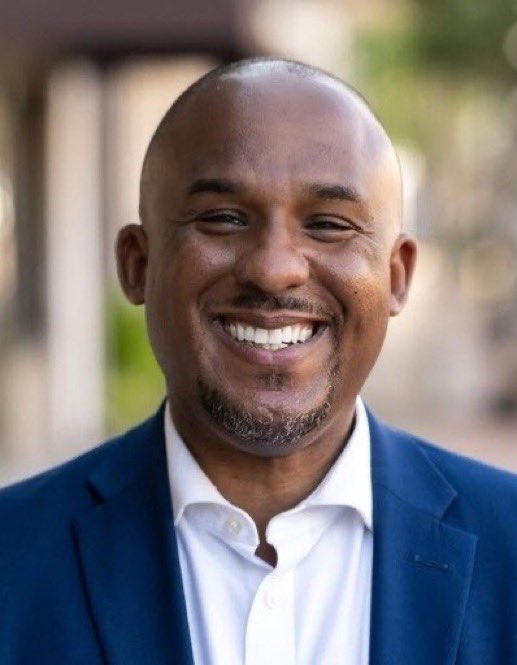
Scott Colom did not sneak into a Donald Trump rally to start a shouting match. The Mississippi Democrat showed up where Republican voters were waiting in line, asked what mattered to them and listened. Days later, he defeated Republican Sen. Cindy Hyde-Smith in one of the biggest surprises of the 2026 midterms. Then Trump did something almost as unexpected as the election result: he complimented the man who had just beaten his candidate.
The rally footage offered a political scene that has become almost exotic in America: a candidate speaking to people who probably were not going to vote for him. No elaborate stage, no carefully selected friendly audience, no moderator asking everyone to stay on message. Just a Democrat wandering into a line of Trump supporters and making the radical proposition that voters might enjoy being treated like people.
The Video That Turned Heads
The encounter happened outside a Trump rally for Hyde-Smith in Corinth during the final days of the campaign. Colom asked people about their priorities, including concerns about gasoline prices, tariffs, the war in Iran and gun rights. The exchanges were not presented as proof that every person in line suddenly became a Democrat. They were evidence that a candidate was willing to have conversations that most campaigns would leave to an extremely nervous field organizer.
Colom posted footage of the outreach, and it circulated widely. The Washington Post reported on his decision to meet Mississippi Republicans where they were, while subsequent coverage highlighted how unusual the approach looked in a political culture built around energizing the faithful and avoiding hostile territory. A Democrat at a Trump rally is usually there as the subject of an angry speech. This one arrived carrying questions.
The video also worked because it matched the broader campaign. Colom, a district attorney from north Mississippi, emphasized household costs, health care and constituent service rather than making every appearance a referendum on whether voters personally liked Trump. He criticized the administration’s policies while trying not to insult its supporters. That distinction sounds basic, but it has apparently become sufficiently rare to qualify as a campaign innovation.
Mississippi Delivered a Shock
The Associated Press called the race for Colom on November 11 after additional absentee and provisional ballots were counted. Mississippi Today reported that he led Hyde-Smith by roughly 4,645 votes with 99% of precincts reporting, based on results that had not yet been certified. Hyde-Smith conceded and congratulated him. Colom became the first Black person elected to represent Mississippi in the U.S. Senate since Reconstruction.
The historical scale is hard to overstate. Trump carried Mississippi by 23 percentage points in 2024. Republicans had controlled its Senate seats for decades, and forecasters largely treated Hyde-Smith as safe. Colom did not merely improve a Democrat’s margin in a difficult state; he won the seat. Somewhere in Washington, a stack of supposedly sophisticated election projections needed a long, uncomfortable meeting.
The victory did not come from a single viral clip. Mississippi Today described strong Black turnout, important crossover support and gains in suburban counties. Colom won DeSoto County, long a Republican stronghold, and flipped other competitive areas. He also benefited from a late infusion of national Democratic money and campaign appearances by prominent party figures. Viral video can make a candidate famous, but it cannot count ballots or knock on doors.
A Beef Joke Became a Campaign Weapon
Hyde-Smith supplied another memorable moment when she responded to questions about expensive beef by pointing to other protein choices. Colom’s campaign answered with an advertisement suggesting voters could choose another senator instead. It was a clean, devastating bit of political comedy: when groceries are expensive, the incumbent’s answer sounds like a menu recommendation, and the challenger offers a replacement.
The ad helped turn an everyday economic frustration into an argument about whether Hyde-Smith understood her constituents. Colom repeatedly described her as inaccessible and insufficiently responsive. Mississippi Today reported that she declined to debate him and avoided open town halls. For a candidate selling the promise of actually showing up, the contrast was convenient enough that a campaign strategist might have tried to invent it.
Colom also campaigned across all 82 Mississippi counties. He built a message that combined familiar Democratic priorities with language about faith, local concerns and the Second Amendment. That was not an ideological conversion to Trumpism; it was an effort to avoid telling conservative voters that they were automatically outside the conversation. The difference mattered in a race decided by a narrow margin.
Even Trump Gave Him Credit
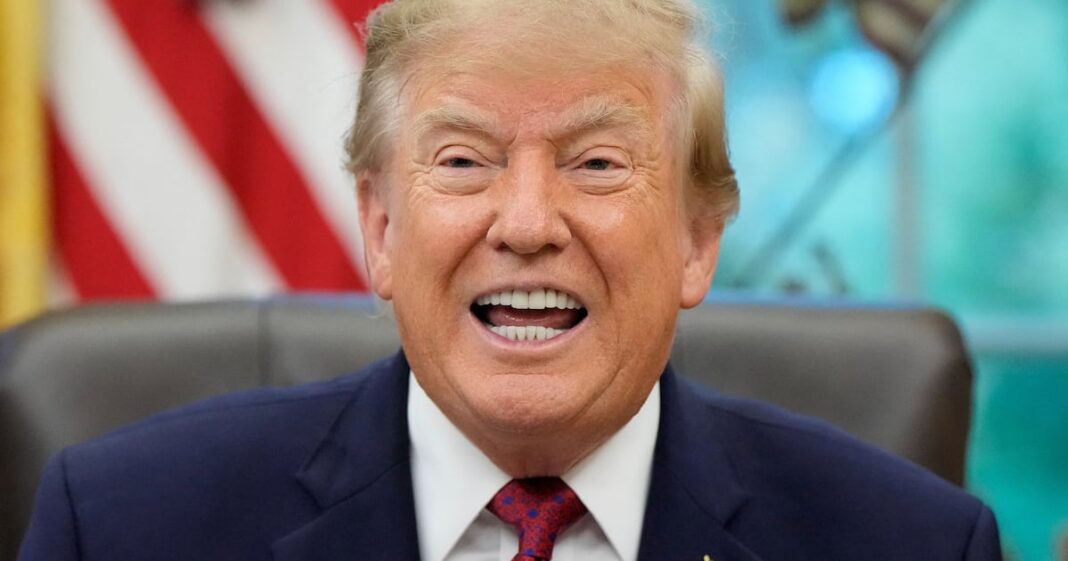
In a Thursday conversation with Stephen A. Smith, Trump acknowledged Colom’s willingness to approach his rally crowd and said he deserved credit. The praise was striking because Trump had attacked Colom as a radical during the campaign. The president was not endorsing Colom’s policies or celebrating the loss of a Republican seat. He was recognizing a tactic that put the Democrat directly in front of the president’s own supporters.
The victory also offers a warning against easy national narratives. Mississippi did not suddenly become a uniformly Democratic state, and Colom did not win by pretending disagreement had disappeared. He found a coalition large enough to prevail in a particular election, under particular conditions, with a candidate willing to spend time in places where defeat seemed likely. Future candidates may copy the viral rally visit and miss the slower work that made it credible. A handshake outside an opponent’s event is only persuasive when voters believe the person offering it will still answer the phone after Election Day.
That creates a genuinely unusual closing image: a Democrat wins a deep-red state after talking to Trump voters, and Trump praises the hustle. The lesson is not that every candidate should crash the other party’s rallies or that one social video explains an election. It is that asking voters what they think can still be a political advantage, even when the people in line are waiting to cheer for someone else.