



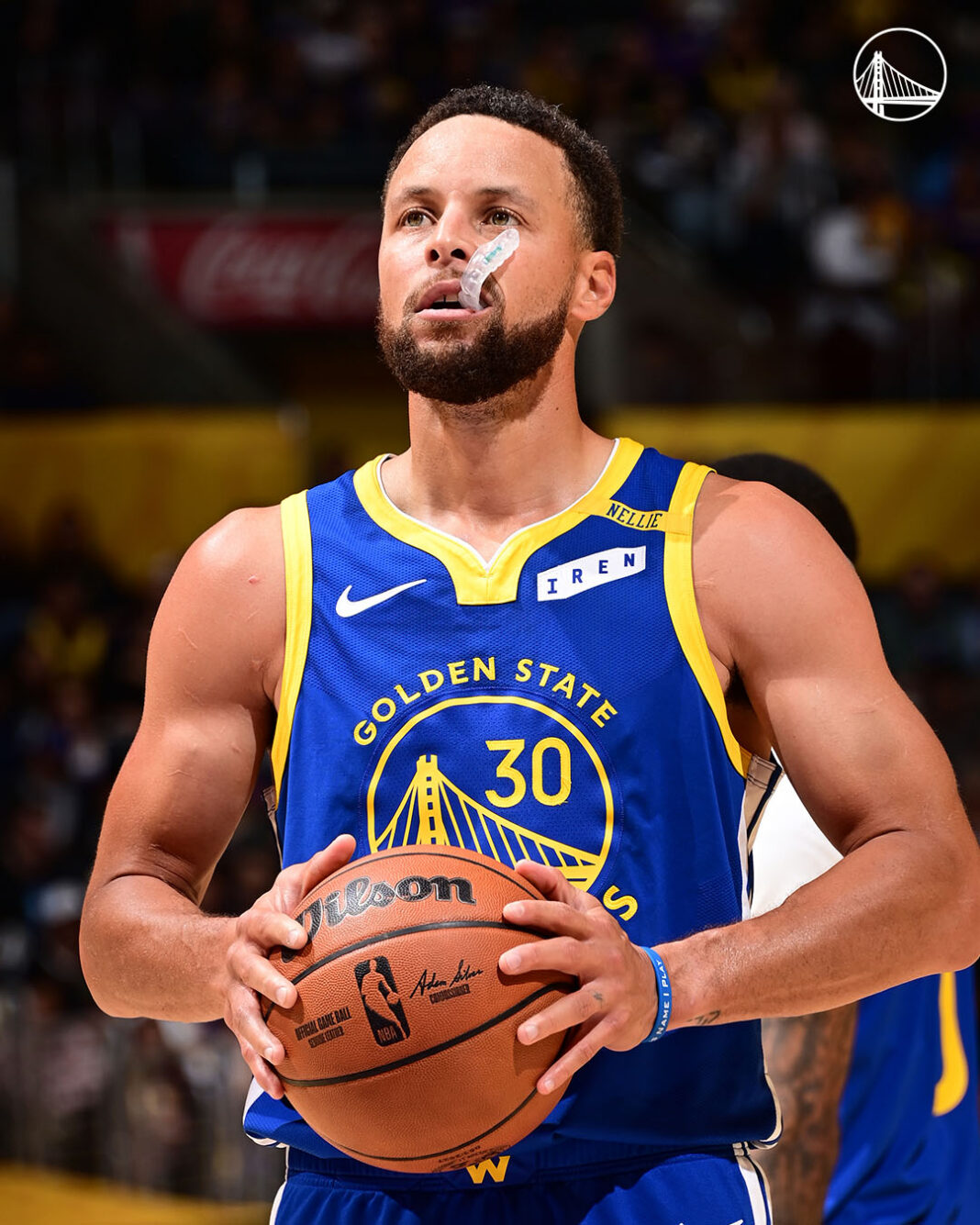
Steph Curry called out Gilbert Arenas, Nick Young and other commentators after they criticized Ayesha Curry for an on-screen kiss.
Stephen Curry has spent years making difficult shots look effortless. This week he faced a challenge apparently even more complicated for certain former athletes: explaining that an actor kissing someone in a movie is, in fact, acting. The Golden State Warriors star posted a video defending his wife Ayesha after a scene from her new romantic comedy prompted an extraordinary amount of unsolicited marriage advice.
The uproar began with a clip from Second Chance Holiday, a Roku movie that premiered November 5. Ayesha shares an on-screen kiss with co-star Matthew Daddario. That is a familiar ingredient in romantic comedies, a genre whose central plot device is often romance. Yet the scene became fodder for podcasts where commentators questioned what it meant for her marriage to one of basketball’s biggest stars.
The film scene was a useful reminder that an on-screen relationship is not a real-world declaration. Directors, co-stars and production crews collaborate to make scripted intimacy look convincing, and the performers then go home to lives that are separate from their characters. None of that is a novel development in Hollywood. The novelty here was watching people with long professional careers in sports discuss the scene as though a romantic-comedy credit had become a marriage-counseling emergency.
The kiss that launched a debate
Former NBA players Gilbert Arenas and Nick Young discussed the kiss on their podcast, while other commentators, including Emmanuel Acho, also weighed in. Arenas described Ayesha as a “blemish” on the Curry family and contrasted her behavior with that of other prominent basketball spouses. The commentary shifted from reviewing a movie to passing judgment on a woman’s career and marriage, which is quite a leap from a scripted scene.
Steph decided he had heard enough. In a social-media video posted Wednesday, November 11, he called out Arenas, Young and Acho by name. He said the remarks diminished his wife’s accomplishments and reflected a broader problem with how some men talk about what women should be allowed to do. He also criticized their apparent misunderstanding of how acting works.
The reaction also reflects the odd economics of celebrity commentary. A brief clip becomes podcast material, podcast material becomes a response video, and the response video sends still more viewers to the original film. Each stage rewards a stronger opinion than the last. Curry’s intervention changed the story from what Ayesha did in a scripted scene to why other public figures felt entitled to grade her marriage. That is a more revealing dispute than the kiss itself.
The funniest part of the argument is its underlying premise. Ayesha was not caught secretly kissing a stranger in a parking lot. She was performing a scene for a film, surrounded by the normal machinery of a professional production. By the logic of some of the criticism, actors playing criminals would need to report to the police after filming and movie villains would have a lot of explaining to do at home.
Curry answers the former players
Curry’s response was pointed without turning into a drawn-out feud. He suggested that the critics could make their apologies as loud as the original commentary, and he thanked them for the free publicity. It was a tidy combination of defending his spouse and reminding everyone that the movie they had been discussing was available to watch. The marketing department probably did not expect the promotional strategy to involve retired NBA players arguing about screen kisses.
There is a distinction between criticizing a performance and criticizing the performer for having accepted the role. Viewers can dislike a scene, find a movie unconvincing or decide a romance is not for them. The commentary that drew Curry’s ire went further, judging Ayesha’s character and family standing. His reply addressed that leap rather than demanding that everybody enjoy the movie. The disagreement is therefore about public treatment of a working actress as much as it is about one celebrity couple.
Young and Arenas responded quickly during a subsequent livestream. Young apologized directly to Curry. Arenas offered a more qualified apology, saying he had intended to praise Steph’s reputation as a family man and did not mean to cause offense. Their responses were not identical, and it would overstate the situation to say every critic fully retracted every comment.
Ayesha also responded to the attention, pointing out on social media that the kiss was not real in the way critics seemed to imagine. Her reaction underlined the central absurdity: an actress had to remind the public that a fictional scene was fictional. That is a fairly low bar for media literacy, but the internet has demonstrated an impressive ability to limbo beneath it.
Apologies, acting and a double standard
The dispute also illustrates a familiar celebrity double standard. Male stars routinely appear in romantic scenes without their spouses becoming the subject of public interrogation. Here, a woman’s film role became a referendum on her marriage, with people who are not in that marriage confidently describing what her husband should feel. Steph’s answer was straightforward: he was not asking for their supervision.
The apologies did not instantly make the conversation disappear. They became new clips, inviting viewers to decide who sounded sincere and who was merely trying to end a bad news cycle. Meanwhile the underlying fact remained simple: the kiss was a performance. For a star whose job is to make impossible basketball shots seem routine, Curry ended up explaining something much more basic. Fictional romance is not a public referendum on a real marriage, no matter how many microphones are pointed at it.
There is no evidence that the on-screen kiss caused a problem between Steph and Ayesha. The controversy is about public commentary, not a documented marital crisis. What began as a scene in a holiday romance became a miniature sports-media spectacle, complete with viral clips, stern responses and apologies. If the critics wanted to prove that Ayesha’s movie was getting too much attention, they chose a remarkably effective way to make sure everyone heard about it.