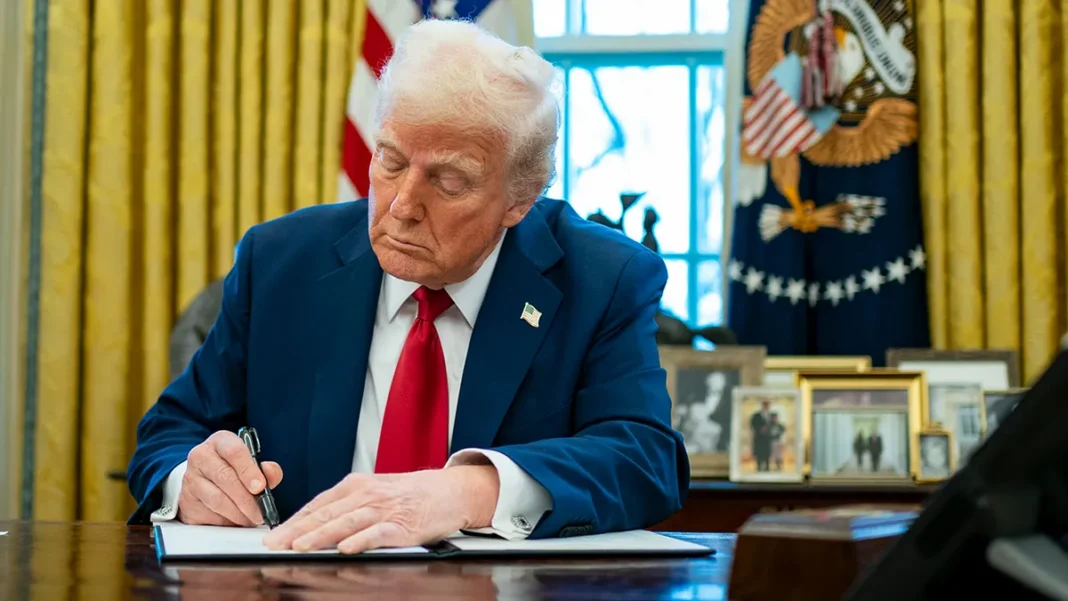





President Donald Trump signed a proclamation Monday amending tariffs on certain copper, aluminum, and iron imports. The White House framed the changes as a way to rebuild American manufacturing. The actual effect is narrower: lower tariffs on some agricultural equipment, dropping from 25% to 15%, and a new 15% tariff on mobile industrial equipment like bulldozers and forklifts when imported from countries with qualifying trade agreements.
The amendments expire December 31, 2027. According to the White House, the temporary adjustments are designed to “spur near-term investments that will rebuild the Nation’s industrial base.”
What’s actually going on
This isn’t a repeal. It’s a carve-out. Trump’s broader steel and aluminum tariffs remain in place. What changed Monday is that certain categories of imports now get preferential treatment, temporarily, if they come from the right countries. The proclamation doesn’t name those countries. It references “trade deal countries that are entitled to such treatment,” which leaves considerable room for interpretation and enforcement discretion.
The categories that got relief are telling. Agricultural equipment and mobile industrial machinery are things U.S. manufacturers either can’t produce at scale or that powerful industry groups have been lobbying to exempt. The tariff structure underneath is unchanged. The carve-outs expire in two years.
The BuzzyTimes take
At some point, a tariff policy that requires this many footnotes stops being a tariff wall and starts being a list of exceptions. The administration spent years describing steel and aluminum tariffs as non-negotiable national security measures. Now the same tariffs are being selectively reduced for bulldozers and farm equipment, with an expiration date, because the political cost of expensive tractors turned out to be higher than the symbolic value of tariff consistency.
The framing is the absurdity. The White House says lowering tariffs on imported construction equipment will rebuild America’s industrial base. If the goal is domestic manufacturing, cutting the cost of foreign-made forklifts is a peculiar strategy.
What we’re watching
Whether any of this moves capital. The bet is that two years of known, lower tariffs will be enough to get companies to commit to manufacturing investments they’ve been postponing. That only works if short-term certainty outweighs the uncertainty of what happens when the tariffs reset in 2028. It’s not clear it does.
The other risk is scope creep. Tariffs this specific attract lobbying. If agricultural equipment qualifies for relief, why not mining equipment? Why not cranes? Once the proclamation is open for amendments, the amendments tend to multiply. The policy could become less coherent the longer it exists.
And then there’s enforcement. The phrase “trade deal countries that are entitled to such treatment” is vague enough to create leverage in future negotiations and litigation if an importer believes it qualifies and Customs disagrees. The ambiguity may be the point.
Will a temporary, conditional tariff cut with a two-year expiration and unclear eligibility standards actually rebuild the industrial base, or will it just make bulldozers cheaper for a while before everything snaps back and nothing structural changes?
Sources: