



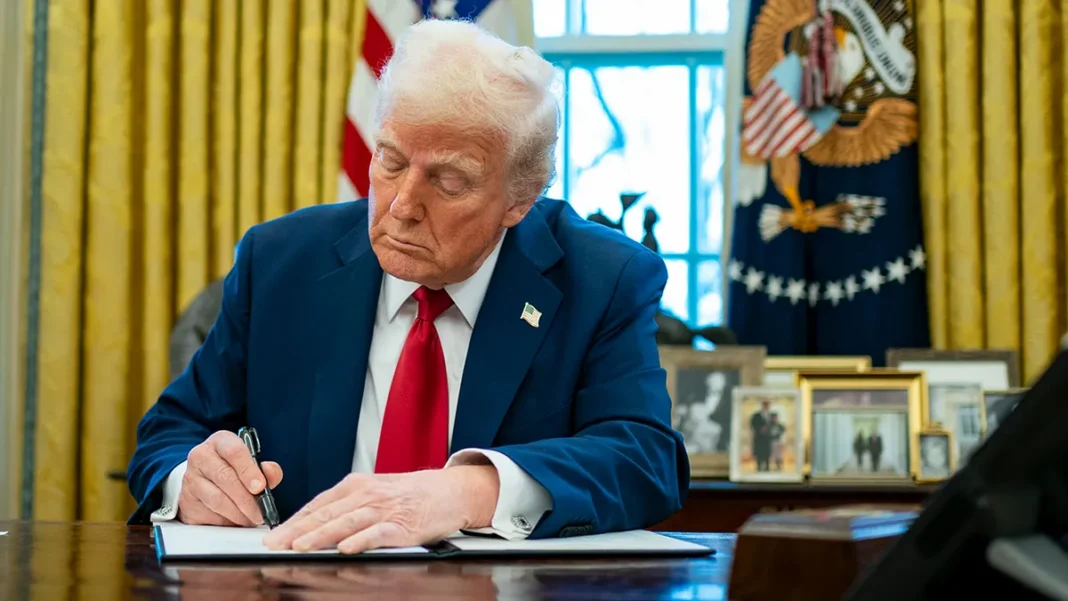
President Donald Trump signed an executive order this week that would grant the federal government early access to the world’s most powerful AI systems before they’re released to the public. The testing framework relies entirely on voluntary cooperation from the companies building those systems. According to NBC News, the order establishes a foundation for federal review of cutting-edge AI models developed by firms like OpenAI, Anthropic, and Google.
The order does not compel participation. It does not specify penalties for noncompliance. It does not define what constitutes a test, what the government would be looking for, or how long the review process might take. What it does is lay the groundwork for a testing regime that may or may not happen, depending on whether the companies that spent billions building these models decide the White House should see them first.
This is the administration’s latest attempt to assert federal oversight over an industry that has, until now, operated largely on its own timeline. AI companies have released models when they chose to, under safety frameworks they designed themselves, with disclosure practices that ranged from extensive to nonexistent. The executive order signals that the Trump administration would prefer a different arrangement.
What the order actually does
The order creates a structure. It does not create enforcement. The federal government would gain the ability to test AI models before public launch, assuming the companies agree to hand them over. The scope of that testing, the criteria for approval, and the timeline for clearance remain unspecified. So does the question of what happens if a model fails.
The framing is cooperative. The companies are invited to participate in a process that, in theory, benefits everyone by catching dangerous capabilities before deployment. In practice, the invitation comes with the weight of an executive order and the implicit understanding that declining is a decision the administration will remember.
There is no indication yet whether any of the major AI labs have agreed. OpenAI, Anthropic, and Google have not made public statements clarifying their position. The order exists. The collaboration it envisions does not yet.
The tension under the surface
AI companies have spent years insisting they take safety seriously. They’ve published research. They’ve formed internal review boards. They’ve delayed releases when models produced unexpected behavior. They’ve also released models that surprised their own teams, raced each other to market, and operated in an environment where the definition of safe enough has been determined by the people building the product.
A government testing requirement changes that calculation. It introduces a gatekeeper. It adds time. It creates a scenario where a model the company believes is ready sits in federal review while competitors move ahead. It also creates a scenario where the government asks for access, the company says no, and the relationship between Silicon Valley and Washington gets worse.
The tech industry has not historically welcomed preemptive federal oversight. The executive order presents it as a partnership. That framing will be tested the first time a company is told to delay a launch.
What comes next
The immediate question is compliance. Do the companies participate voluntarily, or do they wait to see if the order gains teeth? If they do participate, what does testing look like? Who runs it, under what standards, and with what authority to block a release?
The broader question is precedent. If this order holds, it establishes that the federal government has a role in approving AI models before the public sees them. That role could expand. It could become routine. It could also collapse the first time a company with enough legal resources decides to fight it.
For now, the order exists as an invitation with unclear consequences for declining. The companies have the models. The government has the ask. The testing framework is voluntary until it isn’t.
The question worth watching: what happens the first time a major AI lab says no?
Sources: