



MS NOW correspondent Akayla Gardner pressed Trump over his administration’s effort to restrict several news outlets. Trump called her network “fake news” before telling her to “be quiet.”
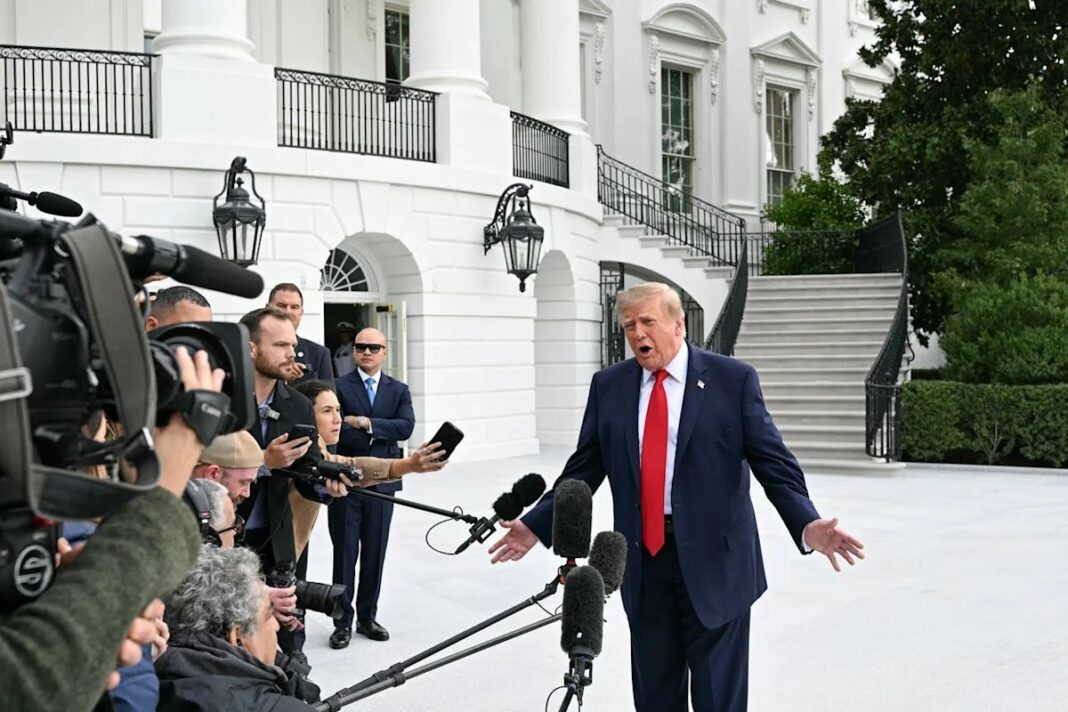
Donald Trump’s fight with the White House press corps produced another made-for-video moment Saturday when MS NOW correspondent Akayla Gardner asked the president whether he only wanted supportive outlets in the press pool. Trump denied that, called her network “fake news” and, when Gardner followed up by asking whether he wanted tough questions, told her: “Be quiet.”
The exchange happened as Trump was leaving the White House and came amid an escalating dispute over access for CNN, MS NOW and Politico. Those outlets had their credentials revoked after Trump publicly announced a ban over coverage he considers unfair. A federal judge temporarily restored their White House access, but the administration has continued restricting them in other settings, including specific events and travel.
Gardner’s first question went directly at the heart of the dispute: “Do you only want outlets that support you to be a part of the press pool?” Trump answered no and said he wanted “real news, not fake news — like you.” He then repeated familiar criticisms of CNN and MS NOW. When Gardner pressed again — “Do you not want tough questions?” — Trump responded with the two-word answer that immediately became the clip: “Be quiet.”
The exchange was not carried live through the usual television pool because the White House had removed CNN from the network rotation assigned to cover Trump’s travel. Instead, the White House itself posted video of the interaction on social media. That is a fitting little twist in the current media fight: the administration restricted one form of press coverage and then supplied the footage that fueled the next round of coverage.
The broader dispute is about more than one sharp exchange. CNN, MS NOW and Politico sued the administration after their credentials were revoked, arguing that the White House punished them for their editorial decisions and violated the First and Fifth Amendments. Trump has openly said the outlets produce “fake news” and has defended excluding them. The White House argues that it has broad discretion to manage access to the president.
A federal judge has already temporarily sided with the news organizations on the credential issue, restoring access while the case continues. But that order has not ended the practical fight. CNN and MS NOW reporters were still restricted from parts of Chinese President Xi Jinping’s state visit, and the White House later removed CNN from a pool rotation for Air Force One coverage.
Pool coverage is not glamorous, but it is important. A small group of reporters and camera crews travels with the president when the entire press corps cannot, then shares material with other outlets. It is how the public gets independent footage of many presidential movements and events. Administrations have always had significant security and logistical authority over the pool, but the current fight is about whether that authority can be used to punish outlets because the president dislikes their reporting.
The “be quiet” exchange does not settle that constitutional issue. Presidents have snapped at reporters for generations, and Trump in particular has made confrontational exchanges with journalists part of his political style. The importance of Gardner’s question is that it came while the government is actively fighting in court over whether it can exclude her employer.
That context changes the meaning of the clip. If this were simply a president telling a reporter to stop shouting questions, it would be another unpleasant but routine press-room moment. Coming during a live dispute over access to critical outlets, Gardner was asking the exact question the court case raises: does the administration want to manage logistics, or manage which questions get asked?
The White House press fight is likely to keep escalating because neither side has much incentive to back down. Trump gains politically from fighting news organizations his supporters distrust. The outlets gain little by accepting access rules they believe are unconstitutional. Courts are now stuck in the middle trying to define where presidential control of physical access ends and viewpoint discrimination begins.
Meanwhile, the video version is much simpler: a reporter asked whether Trump wanted tough questions, and Trump told her to be quiet. In a fight supposedly about who gets to ask the president questions, that answer is going to be replayed for a while. Should the White House be allowed to restrict an outlet’s access because the president believes its coverage is unfair?