



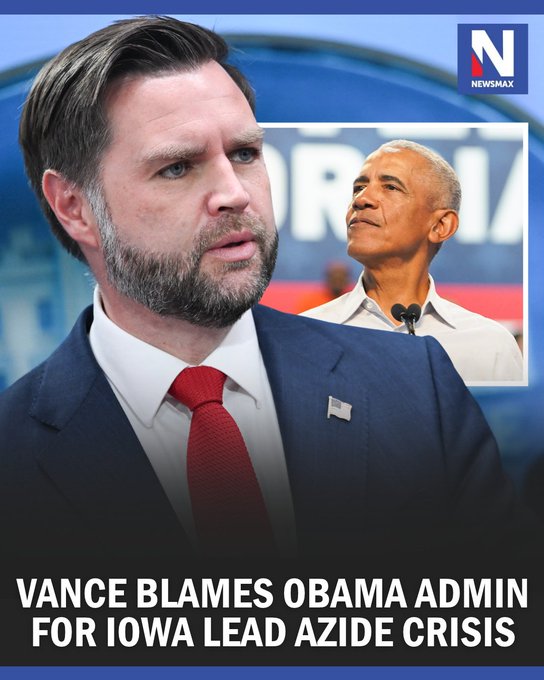
An operation to remove dangerous explosives from an Iowa military facility ended with encouraging preliminary environmental results and a political argument stretching back to 2009. Vice President JD Vance told reporters Wednesday that the Obama administration was responsible for the original storage problem. Critics responded by pointing out how many years and administrations had passed in the meantime.
A question about the calendar
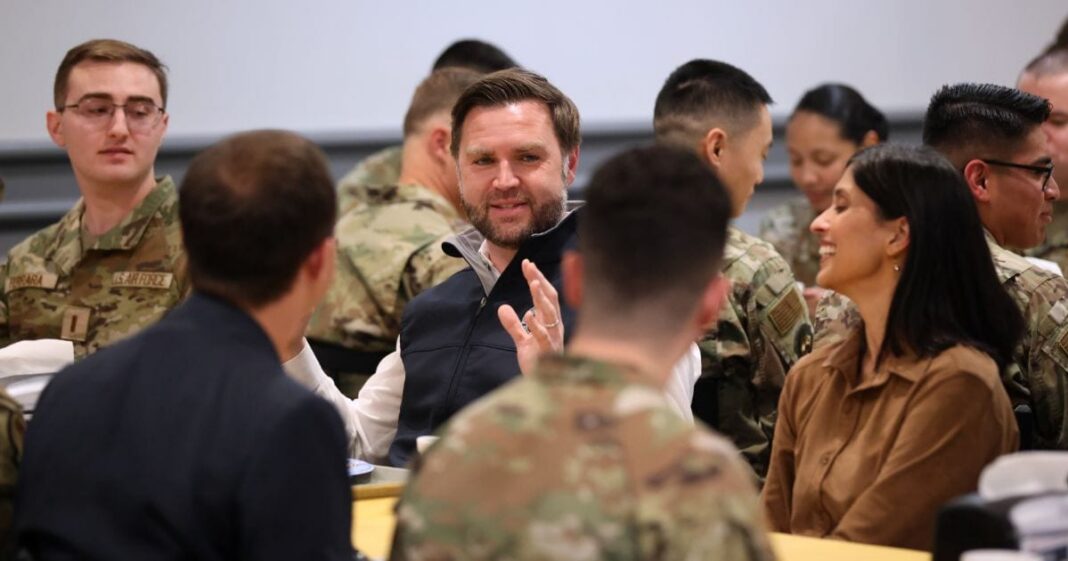
The exchange occurred during Vance’s Thanksgiving visit to Wright-Patterson Air Force Base in Ohio. A reporter asked about the warning given to residents and whether alternatives to the disposal operation had been adequately considered. Vance defended the decision and said his administration had learned about the difficulty of resolving the hazard roughly six months earlier.
A follow-up question focused on why the operation had taken until November. Vance cited the time required for preparation and favorable weather, then returned to the decisions made under Obama. The transcript makes clear that his answer included both an explanation of the recent preparation period and an accusation about the original storage arrangements.
Critics reach for their calendars
Former Obama adviser David Axelrod objected to the attribution, observing that three presidential administrations had followed Obama, two headed by Trump. Former Meet the Press moderator Chuck Todd made a similar point. Author Joyce Carol Oates joked about how far back the search for political responsibility might eventually extend.
The argument is about more than arithmetic. Establishing when a problem originated does not necessarily establish which officials knew about it at later points, what options they had, or whether they acted promptly. Those questions require different evidence. A calendar is a useful starting point, but it cannot complete an investigation by itself.
What happened in Iowa
The Army undertook a controlled disposal operation at the Iowa Army Ammunition Plant on Wednesday. Federal officials said the deteriorating material posed a serious hazard. Residents and environmental advocates had expressed concerns about possible contamination, and officials had spent months preparing for the operation.
The White House announced that initial air monitoring had found no detectable airborne lead and that there were no secondary explosions or infrastructure damage. It credited personnel from multiple federal agencies with the result. Those preliminary findings were welcome news, particularly for nearby families who had spent days worrying about their homes and health.
The administration also emphasized that additional environmental monitoring would continue. Initial measurements are not a substitute for the complete assessment of soil, water and other environmental samples. Residents have a legitimate interest in seeing those results regardless of which political party receives credit for the operation.
Two separate questions of responsibility
The fact that officials reported a successful operation does not settle the historical question about storage or the more recent question about the timing of the response. Conversely, criticism of Vance’s remarks does not establish that the disposal decision itself was wrong. These are separate issues that can be investigated on their own merits.
The White House explicitly attributed the original problem to Obama-era decisions in its announcement. That is the administration’s position. The reporting available here does not establish a complete independent history of every inspection, decision and warning over the intervening years.
For residents near the plant, the immediate concern was whether the operation would leave their community safe. The federal response involved specialists whose work deserves attention apart from the argument over presidential legacies. Their sampling results will matter long after the television exchange stops circulating.
The political discussion, meanwhile, is unlikely to disappear as quickly as the initial emergency. There is room both to recognize a successful response and to ask why a hazardous situation persisted. The useful answer will come from records and environmental results, not simply from finding the oldest presidential portrait in the room.