




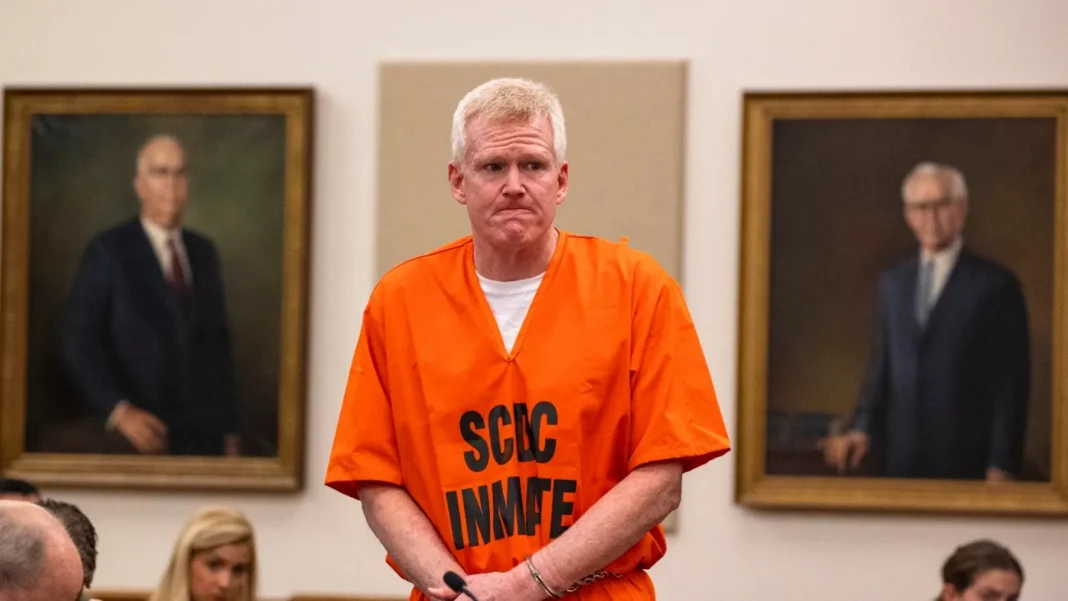
Alex Murdaugh, the South Carolina attorney who was convicted in March 2023 of murdering his wife Maggie and their son Paul at the family’s Islandton hunting lodge on June 7, 2021, was in a South Carolina courtroom on Thursday for a pretrial status conference in what his defense attorney Dick Harpootlian is calling a bid to have his murder indictments dismissed entirely. The basis for the bid is Harpootlian’s allegation that false evidence was presented to the grand jury that indicted Murdaugh, specifically relating to DNA analysis of a tan raincoat found on the family’s property. The proceeding on Thursday was procedural. The substantive hearing on Harpootlian’s motions is coming. What happened on Thursday was that the case moved closer to an answer.
Murdaugh’s trial, which lasted six weeks in early 2023 and was watched by millions through live streams and daily coverage, produced one of the most comprehensive pictures of a life built on fraud and deception that any criminal proceeding has publicly assembled. He was a partner in a prominent South Carolina law firm. He was the scion of a family that had produced solicitors and legal figures in the region for generations. He stole approximately $9 million from his own clients over two decades, including from the family of his late housekeeper Gloria Satterfield, whose death he was involved in covering up for financial gain. He staged a fake suicide attempt on a rural highway. He arranged for an associate to shoot him in the head on the side of the road, surviving the shot and collecting life insurance. He killed his wife and son, per the jury that convicted him, on the evening of June 7, 2021, in what the prosecution argued was an attempt to generate sympathy and delay the imminent exposure of his financial crimes.
The DNA evidence became a contested issue at trial and has remained contested since. The state forensic analyst testified that Murdaugh’s DNA was found in a blood-like stain on the tan raincoat that investigators discovered on the property. The raincoat also had gunshot residue on it, making it potentially significant physical evidence connecting Murdaugh to the scene in a way that would support the prosecution’s timeline. Harpootlian argued at trial that the DNA findings were misrepresented or inaccurate. The jury convicted anyway. Harpootlian has continued to argue since the trial that the DNA evidence was presented falsely, and his current bid to dismiss the indictments is built around that argument applied not to the trial record but to what was presented to the grand jury before any trial occurred.
Dismissal of an indictment on grounds that false evidence was presented to the grand jury is a higher legal standard than a motion for new trial. A new trial says: try the case again with new procedures or new evidence. Dismissal of the indictment says: the entire prosecution is invalid from the beginning because the threshold legal requirement for an indictment was obtained through false means. If Harpootlian’s motion succeeds, the murder charges against Murdaugh would be dismissed and the state would need to re-present the case to a new grand jury, or decide not to proceed at all. The standard for success is correspondingly high. Harpootlian needs to establish that the evidence presented to the original grand jury was false, that the state knew or should have known it was false, and that the false presentation was material to the indictment being returned.
The South Carolina Law Enforcement Division, which conducted the original investigation and whose forensic analyst is at the center of the DNA dispute, has disputed Harpootlian’s characterization of the evidence. SLED’s position is that the DNA analysis was accurate and that its presentation to the grand jury was appropriate. The dispute between Harpootlian’s characterization of the evidence and SLED’s defense of it is the dispute that the substantive hearing on the motions will need to resolve, through examination of the underlying analytical work, the testimony of the forensic analyst, and whatever documentary record exists of what was actually presented to the grand jury.
The case has produced a remarkable secondary media life. The book “Murdaugh Murders: A Southern Scandal” by Valerie Bauerlein and Michael Graff covers the family’s generations of legal influence in South Carolina. The Netflix series “Murdaugh Murders: A Southern Scandal” covers the investigation and trial. Multiple documentaries have covered various aspects of the case. The trial itself was livestreamed and produced a cohort of daily viewers who followed each witness examination with the attention typically reserved for ongoing serial content. The continued legal proceedings are the third act of a story whose first act was the murders and whose second act was the trial. The audience is still watching.
He is back in court. The bid is long-shot. The case is still producing proceedings.
When a convicted murderer’s defense attorney argues that false DNA evidence went to the grand jury and a judge schedules a hearing to decide whether to dismiss the indictments, what exactly is the justice system revisiting?
Sources
Fox News: Alex Murdaugh’s explosive bid to blow up murder case hinging on DNA, dirty money, lies