



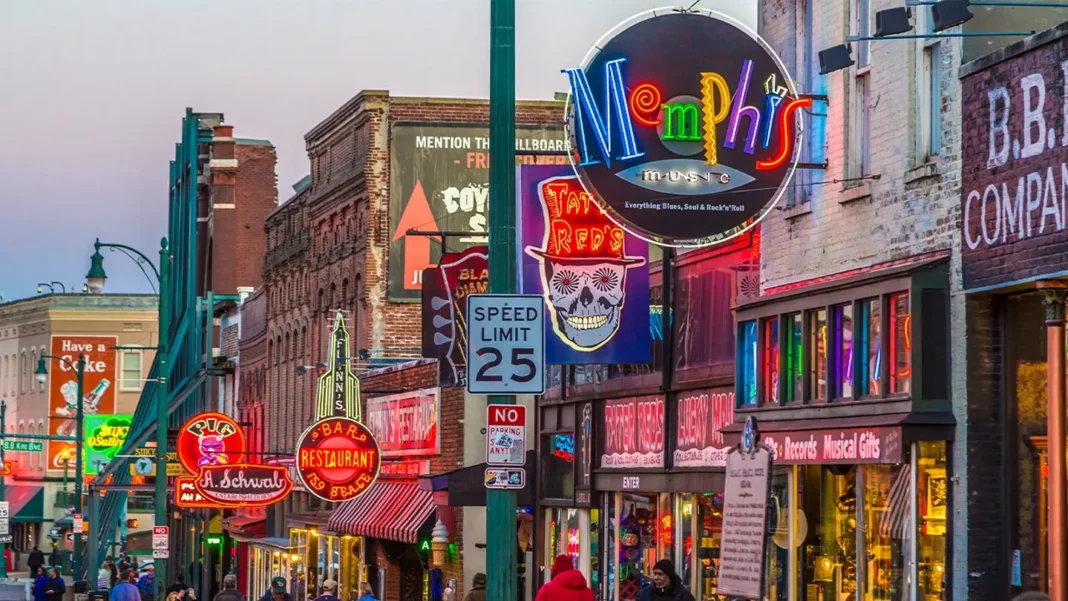
Homicides in Memphis, Tennessee fell 43.7% in the first half of 2026 compared to the same period the prior year, according to data from the Major Cities Chiefs Association, per Fox News’s confirmed reporting published this morning. The decline followed a National Guard deployment that Trump authorized by executive order in September 2025, with troops arriving in Memphis that fall. The city had spent years among the top-ranked American cities by per-capita homicide rate. It is still not a safe city by national comparison. But it is a city where homicides fell nearly in half in six months after the military arrived.
Retired Chicago Police Chief of Detectives Eugene Roy is the former detective making the case that Chicago should follow Memphis’s model. He told Fox News Digital that the model is replicable, that the political will to implement it is the variable, and that Chicago’s leadership has consistently declined to exercise that will. “The answer is not that complicated,” Roy said, in the way that people who have spent decades inside a problem describe solutions that the people running the problem have not implemented. Chicago has a police shortage that has been documented extensively. It has a department still recovering from the consent decree it entered with the Justice Department in 2019. It has a mayoral administration that has resisted federal intervention in local policing. It had nine people shot on Monday night alone.
The Memphis precedent is more complex than the comparison suggests. The National Guard deployment was authorized by a federal executive order that governors could implement or not implement based on state-level decisions. Tennessee’s governor, Bill Lee, accepted the deployment. Illinois’s governor, JB Pritzker, has not made a comparable request for federal troop support in Chicago, and his administration has shown no indication of doing so. The political environment in Tennessee and Illinois are not the same political environment. Lee is a Republican. Pritzker is a Democrat. The deployment model that reduced Memphis homicides by 43.7% requires a state-level decision that the elected officials in Illinois’s government have not made.
Memphis’s decline also happened against a baseline that was exceptionally high. The city had one of the highest per-capita homicide rates in the country before the deployment. A 43.7% decline from a very high starting point produces a number that is still significantly above the national average. The improvement is real. The claim that Memphis is now safe would not be supported by the numbers. What is supported is that a very dangerous city became measurably less dangerous after a specific intervention, which is the piece of the argument that Roy is making and that Chicago’s leadership is not currently accepting.
Chicago’s crime situation has its own baseline and its own history. The city peaked in 2016, when 762 people were murdered, a number that anchored years of national political discussion about urban violence. The subsequent years saw declines followed by a COVID-era surge in 2020 and 2021 that was not unique to Chicago. The city has been on a gradual downward trend since the 2021 peak. Monday’s nine shooting victims are the kind of incident that occurs regularly in a city with Chicago’s gun violence profile, and that regularly produces the kind of media coverage that asks whether the city is getting worse, even when the trend line is slowly improving.
The retired detective making the Memphis comparison is making a political argument as much as a crime policy argument. The political argument is that the Trump administration’s intervention in Memphis worked, that Democratic-run cities are refusing interventions that work, and that the people paying the cost of that refusal are the residents of those cities. It is a version of the argument that Republicans have been making about urban Democratic governance for decades. The 43.7% figure gives it a recent specific data point. Roy is the person making the case on Fox News. The data supports the case he is making about Memphis. The case he is making about Chicago depends on variables that are not in Memphis’s numbers.
Nine people were shot in Chicago on Monday. Memphis homicides fell 43.7%. The National Guard is in Memphis. It is not in Chicago.
When one American city’s homicides fall nearly in half after a military deployment and another city’s retired detective goes on national television to ask why the model isn’t being replicated, what exactly is the political calculation blocking the answer?
Sources
Fox News: Former Chicago detective says one city’s murder plunge offers Windy City crime blueprint