



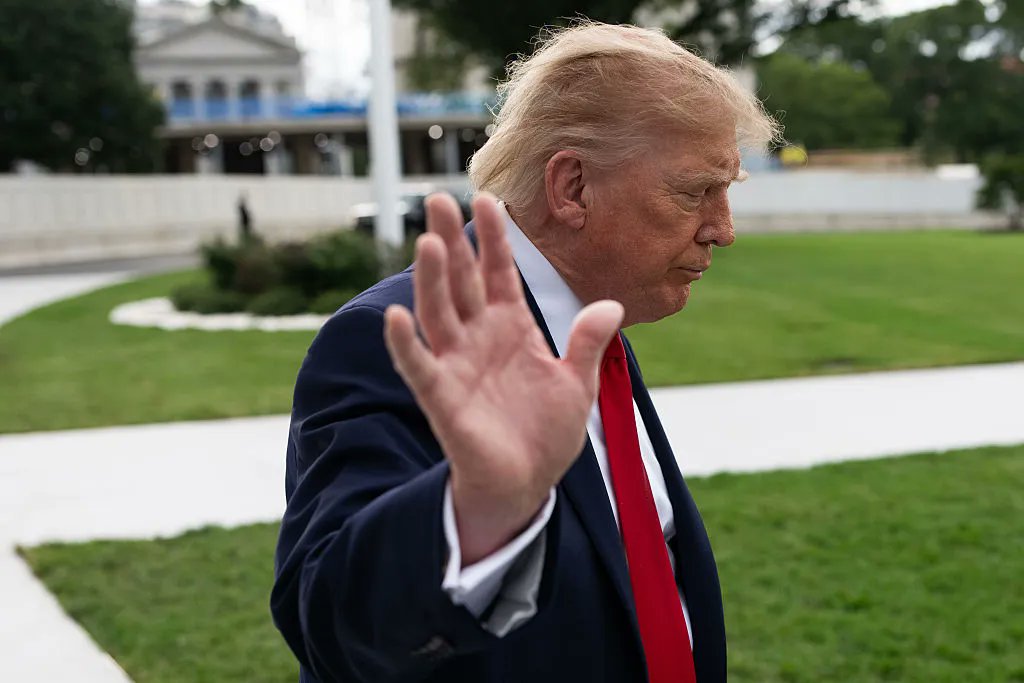
Trump singled out communications adviser Margo Martin at an Oklahoma rally, praising her looks and loyalty. Natalie Harp was also traveling with the president, but claims of jealousy or rivalry remain commentary rather than established fact.
Donald Trump was in Oklahoma Thursday night to campaign for Republican gubernatorial candidate Mike Mazzei when he interrupted the political program to spend nearly two minutes praising one of his own aides.
The aide was 31-year-old communications adviser Margo Martin, an Oklahoma native whom Trump called to the stage after describing her as a social-media “sensation.” Trump then delivered the kind of compliment that came with its own running commentary about whether he was allowed to say it.
“You can never say that a woman is beautiful,” Trump said, according to video and reporting from The Daily Beast. “If you say a woman is beautiful, that’s the end of your political career. But I’ll say it anyway, she is a beautiful woman, inside and out.”
Trump kept going. He called Martin loyal, praised her work, complimented her parents and invoked what he described as his “racehorse theory” — essentially arguing that attractive or talented people often come from attractive or talented parents.
Martin smiled through the attention, thanked Trump and spoke briefly to the crowd. Natalie Harp, Trump’s 35-year-old executive assistant and another highly visible member of his traveling entourage, was also present during the Oklahoma trip.
That last detail is what turned a routine rally compliment into gossip content. Harp has been the subject of extensive reporting about her unusually close working relationship with Trump, including her role curating information for him and assisting with his Truth Social posts. Recent stories have also focused on intensely admiring letters Harp wrote to Trump.
The Daily Beast framed Trump’s praise of Martin as a humiliation for Harp and speculated about rivalry between the two aides. That interpretation should be treated as commentary, not established fact. There is no public evidence showing Harp was jealous, embarrassed or angry because Trump praised Martin.
The factual version is plenty weird without inventing palace intrigue. Trump publicly spent an extended stretch of a campaign rally praising a young aide’s appearance, loyalty and family while another close aide was also traveling with him. That happened. Anything about how Harp emotionally processed it remains guesswork.
Trump has praised Martin’s appearance before, once calling her the “most beautiful photographer in the world.” He has also publicly complained that modern political culture supposedly prevents him from telling women they are beautiful, a theme he repeated during the Oklahoma remarks.
Martin has worked in Trump’s communications operation for years and has become one of the more visible members of his media team. She frequently records and distributes video of the president and travels with him on domestic and international trips.
Harp occupies a different role but is similarly omnipresent. She serves as Trump’s executive assistant, frequently sits near him during meetings and helps manage the material he reads and posts. Both women have become familiar faces in photographs of Trump’s inner circle.
That creates plenty of raw material for commentators looking to turn staff dynamics into a soap opera. But public proximity does not establish rivalry, and BuzzyTimes does not need to pretend there was an invisible thought bubble over Harp’s head while Martin stood onstage.
The real story is Trump’s own behavior. Most presidents introducing a communications adviser might praise her messaging instincts, discipline or work ethic. Trump did some of that too, but first spent a surprisingly long time explaining why he should still be allowed to say she was beautiful.
That is what makes the moment memorable. It was not merely a compliment. It was a complaint about compliments, followed by more compliments, followed by a genetics theory.
Campaign rallies are supposed to be about candidates and issues. Trump rallies have always had a looser relationship with the agenda. Thursday night, Oklahoma voters got a gubernatorial pitch and an unscheduled seminar on whether the president can publicly call a staffer attractive without ending his political career.
His career appears to have survived.
The question is whether voters see this kind of detour as the unscripted personality they like about Trump — or as another example of a president turning a political event into commentary about the appearance of women around him.