



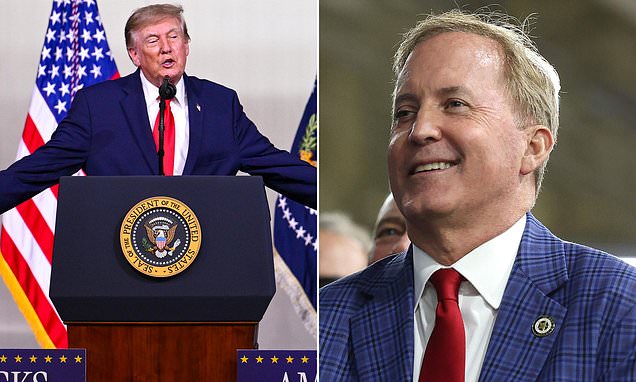
Trump was in Texas to help Ken Paxton win a Senate race when he called Paxton a “pain in the a**,” looked around, realized Paxton was there and kept going anyway.
Donald Trump traveled to Texas to help Republican Senate nominee Ken Paxton get elected. He praised Paxton’s loyalty, called him one of the best attorneys general in the country and then, in the middle of the endorsement, described him as “a pain in the ass.”
The timing made it better. Trump delivered the jab, paused and asked whether Paxton was actually in the room. “Oh, there he is,” Trump said after spotting him. Then came the follow-up: “I don’t care.” It was less a traditional campaign endorsement than the political equivalent of a best man’s speech that started drifting into family secrets.
The exchange happened during remarks in Denton, Texas, where Trump was campaigning for Paxton as Republicans try to hold a Senate seat that has become more competitive than expected. Trump stressed that Paxton had stood by him during difficult political fights and said that loyalty mattered.
Trump said Paxton had been at his side “more than anybody” when Trump was under heavy political pressure. “And I have to always remember that because he could be a pain in the ass sometimes,” Trump said, before immediately pivoting back to praise.
This was not even the first time Trump had publicly roasted the candidate he was supporting. At earlier Republican events, he mocked the way Paxton dressed, talked and looked, then insisted none of that mattered because he considered Paxton an effective attorney general.
The unusual thing is that the insults and endorsement are not really contradictory inside Trump’s political style. He often presents rough teasing as evidence of authenticity, particularly with allies he expects to remain loyal. The message is basically: yes, this person annoys me, but I still want you to vote for him.
Paxton has largely taken the jabs without publicly escalating. That may be because Trump’s endorsement remains politically valuable with Republican voters, even when the endorsement comes bundled with material you would normally expect from the opposing campaign.
The latest remarks also arrived after leaked audio in which Paxton reportedly complained that a Trump-focused Republican convention had hurt GOP polling. Trump was asked about that before traveling to Texas and said he had not spoken with Paxton about it.
That added another layer of awkwardness to an already strange relationship. Paxton needs Trump’s voters. Trump needs Paxton to win. Both men apparently have opinions about the other that occasionally leak into public view.
The result is a campaign alliance that operates less like a polished political partnership and more like two guys who have been in a fantasy-football league together for 15 years and are now stuck sharing a hotel room.
Trump ultimately made his position clear: whatever annoyances he has with Paxton, he wants him elected. He praised Paxton’s record, attacked the Democratic opponent and urged Texas voters to support the Republican nominee.
That means the “pain in the ass” comment was not a withdrawal of support. It was an endorsement with unusually aggressive flavoring.
The question is whether voters see that kind of public ribbing as refreshingly candid — or whether a candidate would prefer his biggest surrogate to get through one campaign stop without generating an attack-ad clip against him.