



Federal prosecutors are presenting evidence to a grand jury over whether former Trump aide Cassidy Hutchinson lied to Congress. No indictment has been announced.
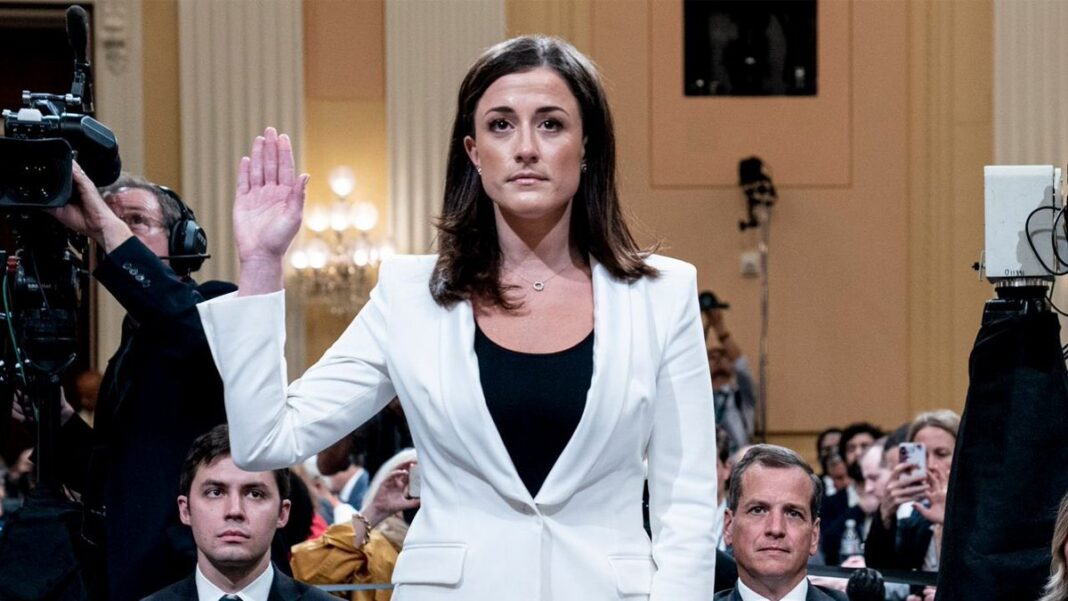
Cassidy Hutchinson became one of the most recognizable witnesses of the January 6 investigation when she testified publicly about what she said happened inside Donald Trump’s White House. Now the Justice Department is asking a grand jury to consider whether she lied to Congress.
CBS News reports federal prosecutors have been presenting evidence in Washington about possible false statements in Hutchinson’s testimony. Two people familiar with the matter told CBS that prosecutors are exploring whether charges should be brought. No indictment has been announced, and the allegations remain unproven unless prosecutors actually file a case and establish it in court.
Hutchinson was a young aide to White House chief of staff Mark Meadows and quickly became one of the House January 6 committee’s star witnesses in 2022. Her testimony included explosive descriptions of Trump’s behavior on the day of the Capitol attack and conversations she said she witnessed inside the White House.
Some of her most dramatic testimony was disputed at the time, particularly secondhand accounts involving Trump and the presidential vehicle. Hutchinson later defended the core of what she told Congress and published a memoir describing her experience inside Trump world.
Trump and many of his allies have attacked her for years, calling her dishonest and accusing the January 6 committee of promoting false testimony. The current DOJ inquiry therefore lands in one of the most politically charged possible places: a Trump administration Justice Department potentially prosecuting a former Trump aide whose testimony badly damaged him.
That political context does not answer the legal question. Lying to Congress is a federal crime, and prosecutors are entitled to investigate if they believe a witness made materially false statements. The important line is whether the evidence supports a criminal case independent of the politics surrounding it.
The grand-jury process is secret, which means the public does not yet know exactly which statements prosecutors are focused on or what evidence they believe contradicts Hutchinson. Grand juries also hear evidence before deciding whether probable cause exists to bring charges, so presenting evidence does not mean an indictment is inevitable.
The optics are still impossible to ignore. Hutchinson went from anonymous White House staffer to central January 6 witness to bestselling memoirist, and now potentially to a criminal defendant in an administration led by the person she testified against. Washington loves a full-circle story. This one is arriving with subpoenas.
The Justice Department will face pressure from both directions. Trump supporters will argue that Hutchinson should be held accountable if she lied. Trump critics will argue that prosecuting her could look like retaliation against a witness who cooperated with Congress.
That is why the facts of any eventual indictment will matter more than the headline. If prosecutors can identify specific false statements, show Hutchinson knew they were false and establish that they mattered to Congress, that is a legal case. If the theory is simply that her testimony embarrassed Trump or conflicted with other accounts, that is something else entirely.
For now, the clean version is simple: prosecutors are trying to determine whether Hutchinson lied, a grand jury is hearing evidence and no charges have been announced. Everything beyond that is still a developing legal fight.