



A Fishing Trip Ends in Flames
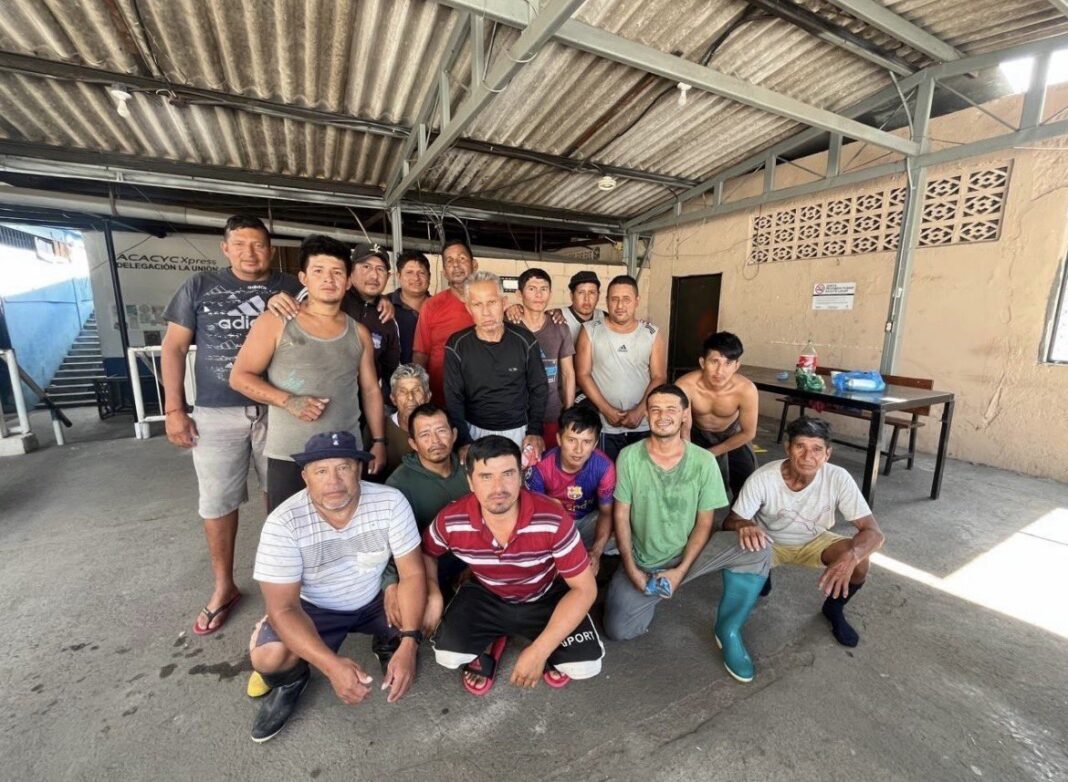
Sixteen fishermen from Ecuador say they went to sea aboard the Negra Francisca Duarte II and ended up fleeing a burning boat after an attack by armed drones. Now they have filed a lawsuit against the Trump administration in federal court in Pittsburgh, demanding compensation and an end to U.S. lethal boat strikes in the Pacific and Caribbean. It is a confrontation with consequences far beyond the usual argument over who was on which boat and why.
The lawsuit was filed Monday, November 16, according to Reuters, which reviewed the court document and spoke with the vessel’s captain. The plaintiffs say their boat was struck in March and that two crew members suffered serious burns. Their account is an allegation in litigation, not a finding by a judge. The administration has not acknowledged responsibility for this particular attack.
The central question is both straightforward and enormous: who attacked the vessel, and on what legal basis? For the fishermen, the immediate losses are less abstract. They say the boat that supported their livelihoods is gone, their colleagues were hurt and their families are still living with the aftermath.
Two Drones, a Burning Vessel and a Jump Into the Sea
According to the complaint described by Reuters, two armed drones launched from a U.S.-operated vessel attacked the fishing boat, setting it on fire. The plaintiffs say all 16 people aboard jumped into the water and made their way to small emergency boats. Two of them sustained serious burns, the filing alleges. Those details are the crew’s account, and their accuracy will be contested or tested as the case proceeds.
The survivors say they headed toward a vessel they believed to be a tuna boat, only to encounter armed men speaking English and wearing military-style clothing. They were then transferred to a Salvadoran ship, which carried them for seven days to a port in El Salvador. Seven days is a long journey under any circumstances; after escaping a fire at sea, it is a particularly grim way to get home.
Captain Hernan Flores told Reuters that the lawsuit was necessary because the vessel was all the crew had and that they had received no help in Ecuador. He said they survived by the grace of God. That statement is not a courtroom verdict, but it captures the stakes for people who say they lost their means of making a living in an instant.
Washington Has Not Claimed This Strike
The Trump administration has publicly defended strikes against vessels it identifies as connected to narcotics trafficking, describing targets as “narco-terrorists” in a broader campaign known as Operation Southern Spear. But Reuters reported a crucial distinction: U.S. officials have said they have no information about the attack on the Negra Francisca Duarte II or two other Ecuadorian vessels sunk earlier this year.
That distinction matters. A lawsuit naming the U.S. government does not by itself prove that American forces carried out this specific strike. The Washington Post reported in August that the three vessels were targeted under a CIA program, according to Reuters’ account of that reporting. The lawsuit adds a detailed firsthand allegation, but the public record described so far does not settle every question about command, intelligence or responsibility.
Reuters said the White House and Justice Department did not immediately respond to its requests for comment. The absence of an immediate response should not be mistaken for an admission. The legal process may ultimately produce evidence and government arguments that are not yet public.
The Lawsuit Wants More Than Money
The crew is seeking damages, but their complaint also asks the court to order an end to lethal U.S. strikes against boats in the Caribbean and Pacific. That makes the case more than a claim for the price of a destroyed fishing vessel. It challenges a military campaign whose legality, intelligence standards and treatment of people aboard targeted boats have drawn intense scrutiny.
The plaintiffs describe the strikes as part of an unlawful campaign. Their lawyer, Jorge Chiriboga, told Reuters that governments cannot kill people around the world and allow impunity to prevail. Whether a U.S. court can grant the sweeping injunction requested is a separate legal issue; requests in a complaint are not guarantees of remedies.
The lawsuit says U.S. forces have conducted 71 strikes on boats in Pacific and Caribbean waters since September 2025, killing at least 235 people. Those are figures asserted in the lawsuit, not independently confirmed totals in the Reuters article. They help explain the breadth of the plaintiffs’ challenge, but should not be confused with a judicially established count.
A Wider Campaign, and More Unanswered Questions
Reuters also reported that U.S. Southern Command said it intercepted and sank at least eight Ecuadorian vessels between late August and mid-September, describing them as resupply points for traffickers associated with the Ecuadorian gang Los Choneros. Those operations are not necessarily the same incident as the March attack alleged by the Negra Francisca Duarte II crew, and the timeline should not be collapsed into one event.
Human Rights Watch, cited by Reuters, said the eight vessels collectively carried around 160 people. Of those, 56 were released without charge by court order and 40 were acquitted for lack of evidence; 50 awaited trial and 14 were not formally charged. Those figures raise questions about how suspicion of trafficking is assessed, but they do not establish the innocence or guilt of every person aboard every vessel.
In maritime interdiction, the gap between an intelligence claim and evidence that can withstand legal scrutiny can be enormous. The fishermen’s case places that gap under a microscope. It asks a court to examine what happened to one boat, while inviting a larger reckoning over how the government identifies targets and accounts for the people affected.
The Next Battle Is in Court
There is a temptation to turn this into a simple story of heroic fishermen versus a reckless government, or of a necessary anti-drug operation versus suspicious vessels. The reporting available now does not justify either shortcut. The crew has provided a serious and detailed allegation; the government’s position on this specific strike remains unclear in the account Reuters published Monday.
What is clear is that the men say they escaped flames, spent days getting to safety and lost a vessel they depended on. They are now asking an American court to provide compensation and confront the legality of a campaign that stretches across two oceans. A federal courthouse in Pittsburgh is an unlikely final stop for a fishing voyage in the Pacific, but that is where the next chapter begins.
The case will turn on evidence, jurisdiction and the government’s response, not on the most dramatic headline. For now, sixteen fishermen have made their allegations public, and the question of who sent the drones is no longer confined to the open water.