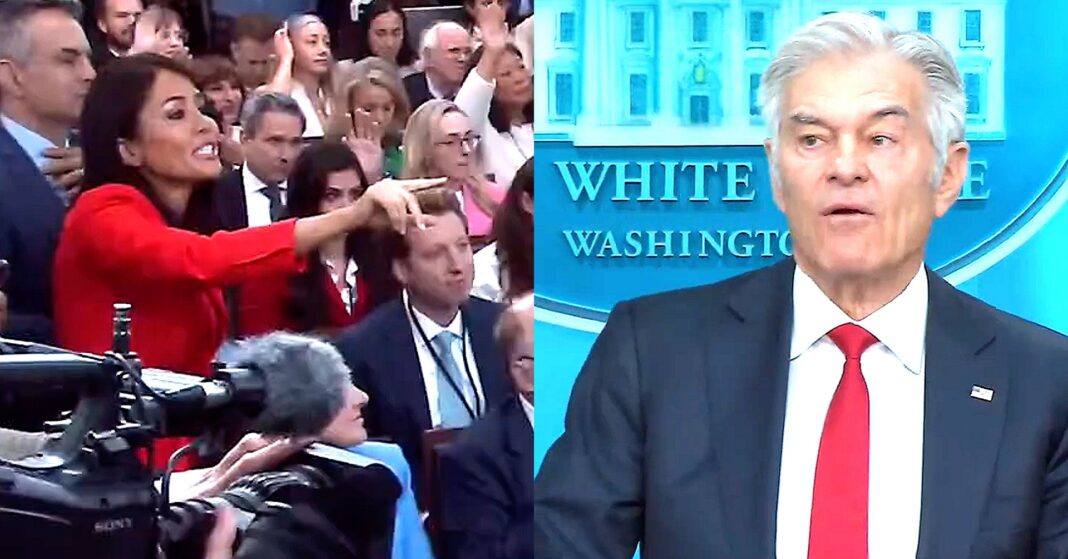





Batya Ungar-Sargon opened her weekend NewsNation program with a plea directed at the president. Her audience: the MAGA base. Her message: they are broke, skipping meals, and buying canned chicken in bulk because that’s all they can afford under the economy Donald Trump has delivered. And contrary to what the administration keeps saying, she told viewers, it’s not just vibes.
The segment aired as gas prices hit $4.50 a gallon heading into summer travel season, the producer price index climbed 6 percent ahead of grilling season, and 13 percent of credit card balances sat more than 90 days delinquent—the highest rate since 2011. According to Crooks and Liars, Ungar-Sargon described herself as a MAGA lefty and framed her appeal as one directed at supporters who have voted for Trump three times and would, in her words, “walk over Legos covered in hot coals to vote for you.”
The absurdity is not that a host is calling out economic pain. The absurdity is that the pain is being felt most acutely by the voters who delivered Trump his margin, and the ask is now for him to help them survive the policies they cheered.
What’s actually going on
Ungar-Sargon’s monologue cataloged the damage in specific terms. Inflation is eating up wage growth. Families are skipping kids’ after-school sports because filling up the car with gas takes priority. Some Trump supporters are quietly skipping meals. She acknowledged that some voters were willing to pay more to support the war in Iran or to absorb tariffs in the name of reshoring manufacturing. But that willingness, she said, has run out.
The stock market is doing well, she noted, and Trump keeps saying so. But nearly all consumer spending gains are concentrated in the top 10 percent. Gas prices, Trump has said, will plummet once Operation Epic Fury concludes. A new memorandum of understanding is on the table. Even if a deal happens, Ungar-Sargon said, it will take time for prices to come down. In the meantime, the people who voted for him need help, and they need it from him.
The plea was not issued on Fox News. It was not issued by a member of the opposition. It came from someone who described Trump’s supporters as loyal to the point of physical pain and who framed the economic distress as a problem Trump now owns.
The take nobody else is naming
This is not the first time an administration has presided over economic conditions that hurt its own voters. It is, however, rare to see a sympathetic voice in friendly media beg the president to intervene on behalf of the base while the administration is still insisting the economy is fine and the complaints are vibes.
The dynamic here is not just that Trump voters are hurting. It’s that they voted specifically to bring costs down, absorbed the tariffs and the war costs and the policy chaos as the price of that promise, and are now being told by the administration that the stock market is up and gas will eventually fall. The gap between what was promised and what is being delivered is not a talking point. It’s a 13 percent delinquency rate and families deciding whether to buy groceries or gas.
Ungar-Sargon is not calling for Trump to abandon his policies. She’s calling for him to acknowledge that the people who believed him are now living with the consequences, and that belief does not pay the credit card bill.
What we’re watching
Trump has not responded to the segment. His administration continues to frame economic concerns as perception problems rather than material ones. The stock market argument works for the top 10 percent of earners. It does not work for the voters filling up at $4.50 a gallon or carrying 90-day delinquent balances.
The question is not whether Trump will pivot. The question is whether his base will continue to absorb the costs while waiting for the relief that keeps getting pushed to the next news cycle. Loyalty has limits. Ungar-Sargon just named one of them on air, in front of an audience that voted for Trump three times and is now wondering when the help arrives.
The memo of understanding she referenced may or may not produce lower gas prices. The timeline is unclear. The distress, however, is not theoretical. It’s showing up in credit data, grocery decisions, and now in the programming of outlets that have historically carried water for the administration.
The real test is whether Trump treats this as noise or as a signal that the coalition that delivered him the presidency is starting to crack under the weight of promises that have not yet materialized. Skipping meals is not a vibe. It’s a condition. And the people experiencing it voted for the person now being asked to fix it.
Will Trump respond to his own supporters’ distress, or has he correctly calculated that their loyalty outlasts their grocery budget?
Sources: