



HHS says the cuts reflected program priorities, not simply a security bill. But the department did move millions from the Office of Minority Health as Kennedy’s protection costs climbed.
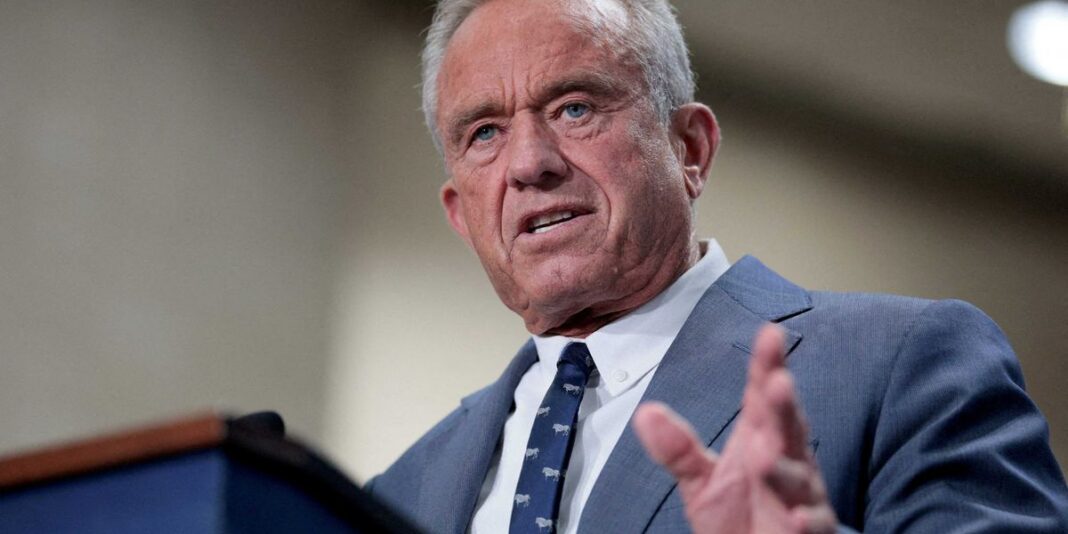
Robert F. Kennedy Jr. now has one of the more expensive security operations in the federal government — and the way his department helped pay for it is becoming a story of its own.
According to reporting based on documents and people familiar with HHS spending, the cost of protecting the health secretary rose from roughly $10 million in fiscal 2025 to about $17 million in fiscal 2026.
At the same time, the Department of Health and Human Services moved about $12 million out of its Office of Minority Health, according to reporting first detailed by The Wall Street Journal and summarized by multiple outlets.
That combination is politically radioactive for an obvious reason. One office is responsible for addressing health disparities affecting minority communities. The other expense is a security operation for one cabinet secretary.
But the details are more complicated than a simple “minority health money was handed directly to bodyguards” headline.
HHS says the grant cuts and spending changes at the minority-health office reflect broader department priorities and program assessments — not simply a decision to raid one office to pay Kennedy’s protection bill.
An HHS spokeswoman said Kennedy faces a security environment very different from that of previous health secretaries, citing threats, travel and the requirements of his job. Kennedy is also the son of Robert F. Kennedy and nephew of President John F. Kennedy, both of whom were assassinated.
Still, the numbers are striking.
Reporting says prior HHS secretaries were typically protected by inspector general agents at an annual cost of roughly $5 million. Kennedy’s protection has reportedly climbed to more than three times that amount.
And according to the same reporting, the department had other discretionary money it potentially could have used.
The Office of Minority Health has existed for decades and supports programs aimed at reducing racial and ethnic health disparities. Its work has included efforts involving maternal health, chronic disease, nutrition and community health.
In August, HHS informed 16 nonprofits and universities that grants tied to the office were being canceled. The department has also said the office is being refocused on different priorities, including infertility, reproductive health conditions and physical activity.
That is where the story stops being merely an expensive-security story and becomes a budget-priorities story.
Federal agencies move money around. Budgets change. Grants end. Security costs rise when threat assessments change. None of those things by themselves prove wrongdoing.
But when a cabinet secretary’s protection bill climbs to $17 million while a health-disparities office loses millions, the optics require almost no assistance.
Kennedy has been one of the most visible and controversial members of the Trump administration. His public appearances attract large crowds, intense opposition and supporters who follow him across the country. That profile naturally creates security challenges that a lower-profile HHS secretary might never face.
The question is how much that added security should cost — and where the money should come from.
HHS disputes the implication that minority-health funding was cut simply to finance Kennedy’s protection. That distinction belongs in any fair telling of the story.
But the department also reportedly told congressional appropriators that money from the Office of Minority Health was being reallocated in connection with the security expense.
So both facts can exist at once: HHS can argue that the cuts reflect broader budget priorities, and critics can reasonably ask why that particular pot of money was part of the solution while Kennedy’s protection costs were soaring.
There is also a larger federal-budget question hiding underneath the personalities. Cabinet officials need protection. Programs need funding. Agencies have finite resources. When the price of one responsibility rises dramatically, something else often gets squeezed.
That tradeoff is usually buried in appropriations tables and transfer authority. This time, it has a very recognizable name attached to it.
Kennedy’s security bill went from roughly $10 million to $17 million. About $12 million was moved from the Office of Minority Health. HHS says those decisions should not be collapsed into one simple cause-and-effect story.
The numbers are still sitting next to each other.
So the real question is not whether a cabinet secretary should be protected. It is whether taxpayers should expect a clearer explanation when the cost of protecting one official climbs by millions while public-health programs are being cut at the same department.