



San Francisco says wealthy traders can buy a head start on potentially market-moving Truth Social posts. Trump Media says the service is a legitimate data product.
Donald Trump’s social-media posts have moved markets before. Now San Francisco is alleging that Trump Media found a way to sell some investors a faster look at them.
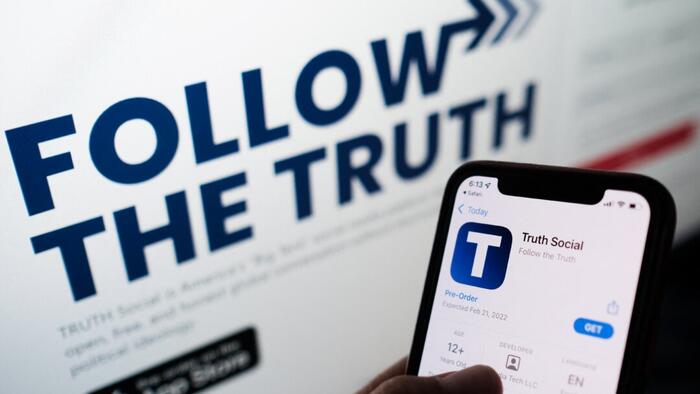
The city filed a lawsuit against Trump Media & Technology Group over a service known as Truth API, which provides paying subscribers early access to posts from Trump and other prominent Truth Social accounts.
The price is not exactly a blue-check subscription.
According to the lawsuit and reporting from The Verge and CBS Bay Area, access can cost as much as $100,000 per month.
San Francisco alleges that the system gives wealthy traders an unfair advantage by allowing them to receive potentially market-moving information before ordinary users see the same posts publicly.
Trump Media disputes that characterization and has compared the product to the high-speed data feeds commonly sold across Wall Street.
That defense gets at the central question in the case: is this just another expensive financial-data service, or is it something fundamentally different because the source of the information is the sitting president of the United States?
Trump posts about tariffs, companies, industries, foreign governments and economic policy with unusual frequency. Markets sometimes react within seconds.
The San Francisco lawsuit points to that reality and argues that milliseconds or seconds of advance access can matter enormously to sophisticated trading firms using automated systems.
To a normal person reading Truth Social over coffee, getting a post slightly earlier may sound meaningless.
To an algorithm capable of placing thousands of trades before you finish reading the first sentence, slightly earlier can be the whole product.
The lawsuit accuses Trump Media of violating California’s Unfair Competition Law and seeks to stop the service. San Francisco officials also argue that the arrangement undermines trust by turning access to official or potentially market-sensitive communication into a premium product.
Trump Media says there is nothing improper about providing machine-readable, high-speed access to public content. Financial markets already operate on a hierarchy of information speed. Bloomberg terminals, exchange feeds, newswires and data APIs all charge enormous sums to customers who want information faster and in formats computers can ingest instantly.
The difference, critics argue, is the identity of the person producing the information.
Trump is not merely a celebrity posting product opinions. He is president, and a statement from him can preview policy, change expectations or move an entire sector.
That creates an unusually messy overlap between government communication and a company tied to the president’s financial interests.
The lawsuit does not automatically prove insider trading. It does not establish that every early-access post contained nonpublic government information. And paying for a faster data feed is not inherently illegal.
What the case does is force a court to confront a scenario that would have sounded absurd a decade ago: can a company associated with the president sell ultra-fast access to the president’s own social-media output to investors for six figures a month?
There is also a technical wrinkle that makes the dispute more interesting than the phrase “early access” suggests.
Professional traders do not necessarily need hours of advance notice. They may only need a narrow timing advantage plus structured data that enters a trading system before a human-readable post appears in the normal app experience.
That is why Wall Street pays for speed everywhere else.
San Francisco’s argument is that when the underlying information comes from a government official whose words can instantly change market expectations, the normal logic of financial-data subscriptions collides with public-interest concerns.
Trump Media’s answer is essentially that markets have always rewarded people willing to pay for faster infrastructure, and Truth API is another version of that business.
The courts will have to decide whether that analogy holds.
Until then, the headline is almost too modern to process: a president posts online, markets react, and a company tied to him can reportedly charge up to $100,000 a month to make sure some traders see the posts first.
The question is simple even if the legal answer is not: should anyone be able to buy faster access to potentially market-moving statements from the president?