



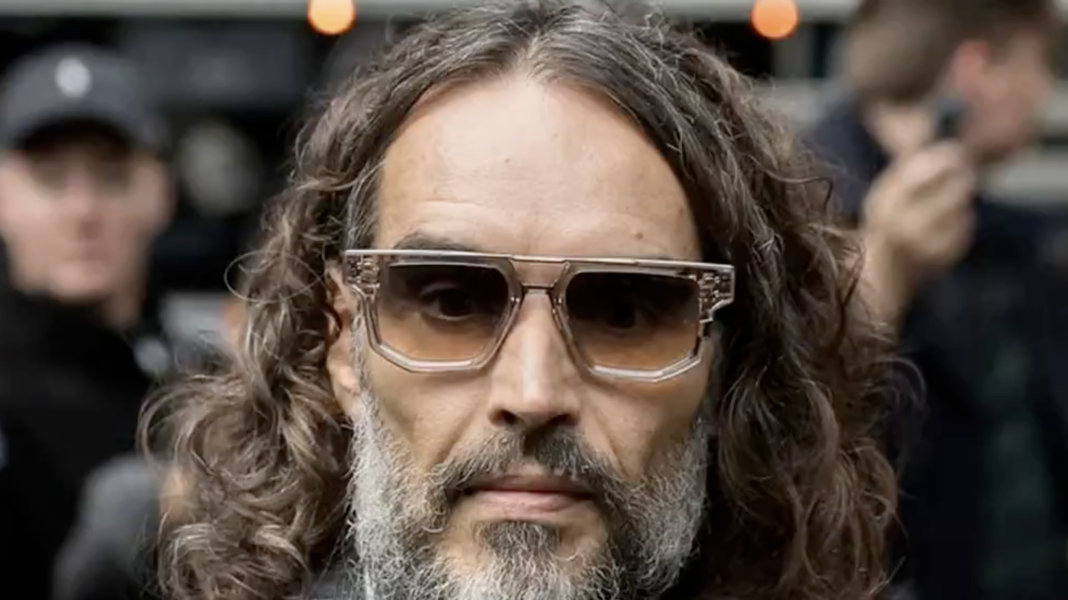
A London jury convicted Russell Brand of rape and three sexual assaults. Police have released interviews as he awaits sentencing and separate inquiries continue.
Russell Brand’s long-running criminal case reached a decisive moment on Thursday, November 5: a London jury convicted the former comedian and broadcaster of one count of rape and three counts of sexual assault. The verdicts followed a four-week trial at Southwark Crown Court and concerned four women. Brand, 51, was taken into custody while awaiting sentencing on Monday, November 9. Police have also released material from interviews conducted during their investigation, putting his earlier denials under fresh scrutiny.
This is no longer simply an argument about allegations circulating online or rival interpretations of a celebrity’s past. Four offenses have been proved to a jury, while three other charges in the same trial resulted in acquittals. Brand had denied the allegations against him. The distinctions matter: the guilty verdicts are established legal outcomes, the acquittals must be accurately reported, and additional complaints under investigation are not convictions.
According to the Crown Prosecution Service, the four offenses for which Brand was convicted took place between 2004 and 2009, during his rise from stand-up comedy into mainstream television and entertainment. The prosecution argued that fame and professional influence helped him exploit women. Jurors heard testimony from complainants and witnesses about encounters from years earlier, at a time when conventional forensic and digital evidence was often no longer available.
The verdicts and the sentence still to come
The jury found Brand guilty of one rape and three sexual assaults. He was acquitted of two additional rape charges and one charge of attempted indecent assault, as Associated Press coverage and other court reporting confirmed. Judge Joel Bennathan refused bail after the verdict and indicated that a substantial custodial sentence was expected. The length of that sentence has not yet been decided and should not be reported as a fixed number before Monday’s hearing.
The outcome follows a public career that had already changed dramatically. Brand became famous for loud, confrontational comedy, television presenting and film roles before building an online audience around commentary about politics, wellness and institutions. His celebrity history helps explain why the case drew international attention, but it does not determine what happened in court. The trial turned on evidence about specific offenses, not whether viewers liked his comedy or found his more recent commentary persuasive.
Prosecutors described a pattern of exploitation and emphasized the power imbalance between Brand and the women he encountered. The Metropolitan Police said the convicted offenses occurred at locations including a radio station, a DVD recording setting and his home. The victims are entitled to anonymity under UK law. Their identities and private histories are not necessary to understand the significance of the verdict.
Public discussion of sexual-assault cases frequently gets sidetracked into questions about why people did not immediately report incidents. The CPS directly addressed that issue, noting that people respond to trauma differently and that no single reporting timeline should be treated as a test of credibility. The organization said the women independently came forward after a 2023 documentary investigation involving Brand drew public attention. A trial conducted years after alleged offenses can be challenging; it is not automatically unreliable for that reason.
What the police interviews show
Following the verdict, police interview clips were released to the public. People’s November 6 report described recordings from interviews spanning November 2023 to July 2025, including instances in which Brand read prepared statements disputing allegations. The videos are relevant because they preserve how Brand responded when investigators confronted him, not because a video alone can substitute for the evidence assessed by the jury.
Police said investigators had spoken with more than 100 witnesses, taken over 400 statements and reviewed more than 1,400 documents. They also examined historical media appearances, books, performances and records to establish timelines and test accounts. According to the Met, Brand repeatedly said during police interviews that he did not recognize the women involved. Prosecutors later argued that changes in his account showed selective recollection. Those claims formed part of the state’s case and should be attributed as such.
The scale of that investigative work is worth dwelling on. A celebrity case can be reduced on social media to one clip, one denial or one slogan, while an actual trial depends on much slower work: locating witnesses, reconstructing old spaces, checking dates and asking how different strands of evidence fit together. That is not especially glamorous. It is, however, how a criminal allegation is tested within the judicial system rather than decided by the loudest person holding a camera.
Brand maintained his innocence through the proceedings. His defense disputed the prosecution’s interpretation, and jurors did not accept every allegation brought before them. The acquittals show why accurate reporting must preserve the detail of each verdict rather than casually describing the whole case as a unanimous endorsement of every claim. A defendant can be convicted on some counts and acquitted on others; both outcomes are part of the legal record.
Separate allegations remain unresolved
The Metropolitan Police have also confirmed that investigations into allegations from two additional women remain ongoing. Brand has previously been interviewed under caution in connection with those reports, and files have been submitted to prosecutors. Those inquiries are separate from the convictions announced November 5. It would be wrong to treat the new allegations as facts found by the trial jury, or to suggest future charges are certain merely because prosecutors are reviewing the material.
The case has also reignited debate over celebrity accountability and the institutions that give high-profile entertainers influence. Brand’s public image shifted over the years, but a professional reinvention cannot rewrite the underlying legal question of consent. Equally, public dislike of a celebrity is not evidence of a crime. The standard has to remain the same whether the defendant is famous, politically outspoken or completely unknown.
The CPS statement praised the women who came forward and argued that fame does not alter the requirement for consent. Police encouraged others with relevant information to contact investigators while emphasizing support for victims. Those are consequential statements after a trial in which the women were required to revisit deeply painful experiences in public proceedings, even though their names remain protected.
As of November 6, Brand is in custody, four convictions stand, three other charges ended in acquittals and sentencing has been set for November 9. The newly released police interviews add documentary material to an already major public case, but they do not change what the jury decided. The next chapter belongs to the court and any separate investigations still under way. For the women who testified, the most important development is not another viral video; it is that a jury heard their evidence and reached its verdict.