



Families visiting the Disney Store in Times Square on Black Friday encountered a decidedly un-Disney-like spectacle outside the shop. Pro-Palestinian demonstrators making their way through Manhattan’s retail district brought their boycott campaign to the store, where footage of a confrontation involving shoppers and apparent fake blood prompted an online backlash. The Happiest Place on Earth may be a theme park slogan, but the sidewalk outside this particular Disney location was having a considerably less magical afternoon.
The November 27 protest was part of a broader demonstration aimed at businesses the activists accused of maintaining ties to Israel. The protesters sought to connect the busiest shopping season of the year with their objections to the treatment of Palestinians. Their choice of tactics, especially outside a store that attracts families with young children, became a controversy of its own.
A boycott campaign takes to the shopping district
The activists described their event as a BDS Black Friday Crawl, referencing the boycott, divestment and sanctions movement. International Business Times reported that the demonstrators traveled between prominent Manhattan retailers, encouraging people not to spend money with the targeted companies.
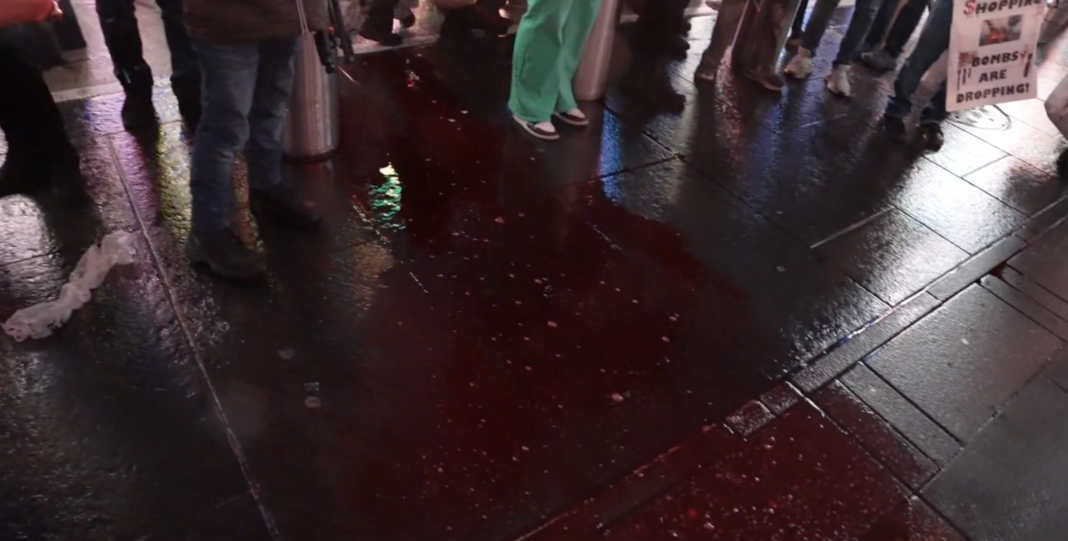
Photographic reporting by ZUMA Press also documented the march and its visits to multiple businesses. The photographs and accompanying descriptions corroborate the broader demonstration, including the use of a substance represented as fake blood outside several stores. Video-based reporting identified additional stops at cosmetics, clothing and fast-food businesses.
The organizers’ general strategy was straightforward: take a message about the political implications of consumer spending to the places where consumers were spending money. Black Friday offered an opportunity for visibility, with substantial crowds and plenty of recognizable corporate signs in the background.
Peaceful consumer boycotts are a familiar political tool. People routinely decline to buy products from companies whose practices they oppose, and they can encourage others to do the same. The controversy here is not simply that protesters wanted people to reconsider a purchase; it is how they reportedly approached the people making those purchases.
When the protest reached Disney
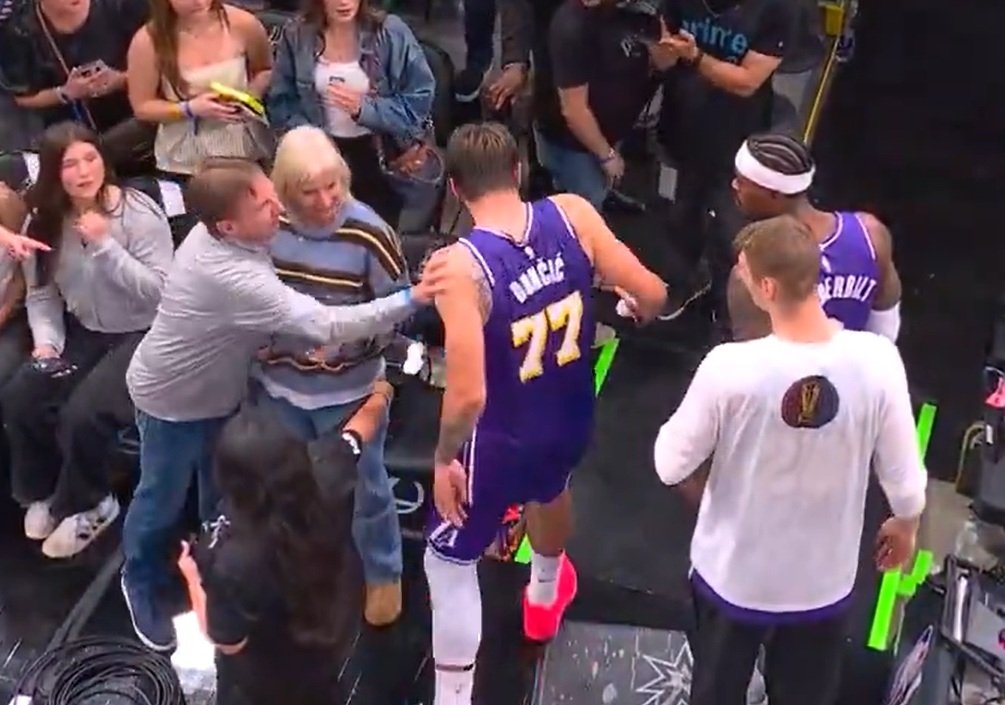
Footage described in the International Business Times report showed a protester near the Disney Store entrance pouring what appeared to be fake blood and challenging a shopper about the purchase of dolls. The coverage also described comments involving actress Gal Gadot and Disney’s live-action Snow White film.
That is quite a lot of international politics to fit into an argument about a shopping bag. A customer who entered looking for a holiday present could suddenly find herself in an impromptu discussion of corporate responsibility, a Middle Eastern conflict and a Hollywood production. There are probably quieter ways to encourage somebody to reconsider a purchase.
Social media posts criticizing the scene characterized the activists as harassing families and children. Those descriptions reflect the judgments of the people posting the videos, rather than a legal finding about the demonstrators’ behavior. The available reporting documents the confrontation and the presence of families but does not establish that every person in the clips was directly targeted.
The distinction matters because clips circulating online often begin or end in the middle of an exchange. They can show conduct that deserves criticism without revealing everything that happened before or afterward. The reporting reviewed for this article does not provide a complete transcript of the demonstration or interviews with all the people involved.
The argument over tactics
Supporters of disruptive protests frequently argue that drawing attention to serious suffering is more important than preserving the convenience of ordinary commercial life. They may regard a symbolic display as a necessary way to communicate the human consequences of a conflict that might otherwise feel distant to shoppers. The use of fake blood in this demonstration was evidently intended to make that message difficult to ignore.
Critics argue that confronting ordinary customers, particularly families, risks alienating the very people activists hope to persuade. Someone buying a doll is not necessarily endorsing a company’s every commercial relationship or taking a position on foreign policy. A shopper may also be entirely unfamiliar with the allegations made against the retailer.
That is the practical challenge facing this kind of activism. A campaign can succeed in attracting attention while failing to win agreement. An angry encounter is highly likely to generate a shareable video, but the person who shares it may be condemning the protesters rather than endorsing their demands.
Some of the online criticism also involved questions about whether demonstrators had obtained appropriate permits or violated local rules. The reviewed reporting does not establish the status of any permits, a police determination that an offense occurred, or an official decision not to enforce a law. Those questions cannot be resolved by treating a social media complaint as a police statement.
A serious cause and an awkward sales pitch
There is a legitimate debate about how companies should respond to international conflicts and how much responsibility consumers bear for their purchasing decisions. The humanitarian suffering involved is serious, and people are entitled to advocate for changes they believe will reduce it. Criticism of a particular protest tactic is not the same thing as dismissing those concerns.
Likewise, protesters are not exempt from criticism merely because they believe their cause is urgent. Members of the public can question whether a confrontation with a parent outside a toy store is an effective or proportionate way to communicate a political message. They can also distinguish between a criticism of those tactics and hostility toward Palestinians, Israelis, Muslims or Jews as people.
The protest received attention beyond the sidewalks where it took place, although the reviewed reporting does not establish whether it had any meaningful effect on the retailers’ sales or policies. Its most visible immediate result was a debate about the protesters themselves.
For a movement seeking to influence consumer choices, that is a potentially awkward outcome. Getting a crowd to notice a message is only one part of political persuasion; giving the crowd a reason to listen is another. If the public remembers the fake blood outside the Disney Store more clearly than the argument the activists were trying to make, the demonstration may have a communications problem that cannot be solved with a bigger megaphone.