



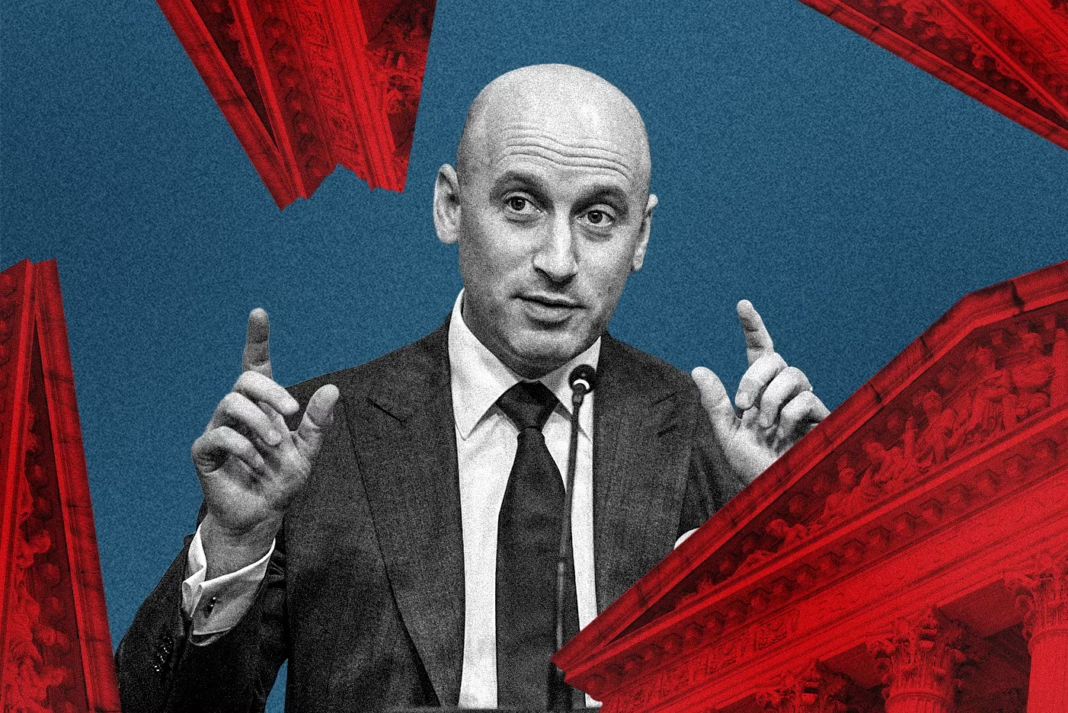
Stephen Miller has been designing immigration policy across two Trump terms. Some of it has survived courts. A lot of it has not. The ones that did not survive were usually challenged, litigated, and struck down publicly, which creates a paper trail and a correction. Slate reported today on a different category: a policy so legally indefensible that his own Justice Department stopped it before it was implemented, and the margin by which it was stopped was one person.
The specific policy involves immigration enforcement. The details remain partially unconfirmed publicly. What the reporting describes is this: Miller pushed a measure past the point where DOJ career lawyers assessed it as unconstitutional. He kept pushing. At least one political appointee, someone whose job was to sign off, declined to sign. The policy did not go forward. Not because Miller agreed it was unconstitutional. Because one person in the room said no.
This is how the guardrail worked. Not a court. Not a congressional vote. Not a public debate. One person. In a meeting. Saying no. On that particular day.
Miller’s record suggests he treats legal assessments from DOJ as starting positions rather than stopping points. He proposes something. Lawyers say it is unconstitutional. He adjusts to the minimum required to proceed. Sometimes this produces a legal policy. Sometimes it produces a policy that gets struck down two years later. Slate’s report describes the category that does not make it to the litigation stage, because someone inside the building held a line.
The question the report raises is: how many meetings were held where that person was not present? How many where they were present but the vote went the other way? How many since?
Nobody outside the building knows. That is the point.
When the constitutional check on an unconstitutional policy is one person’s personal decision in a non-public meeting, what is the check really called?
Sources
Slate: Stephen Miller closer to his scariest idea than anyone knew