




The BBC had an especially awkward problem on Saturday night: a live ballroom-dancing competition was interrupted by what sounded like audio from an adult movie. The judges were supposed to be discussing a performance on Strictly Come Dancing. Instead, the room got an entirely different sort of soundtrack, and the broadcaster ended the evening apologizing to viewers while police examined a mobile phone.
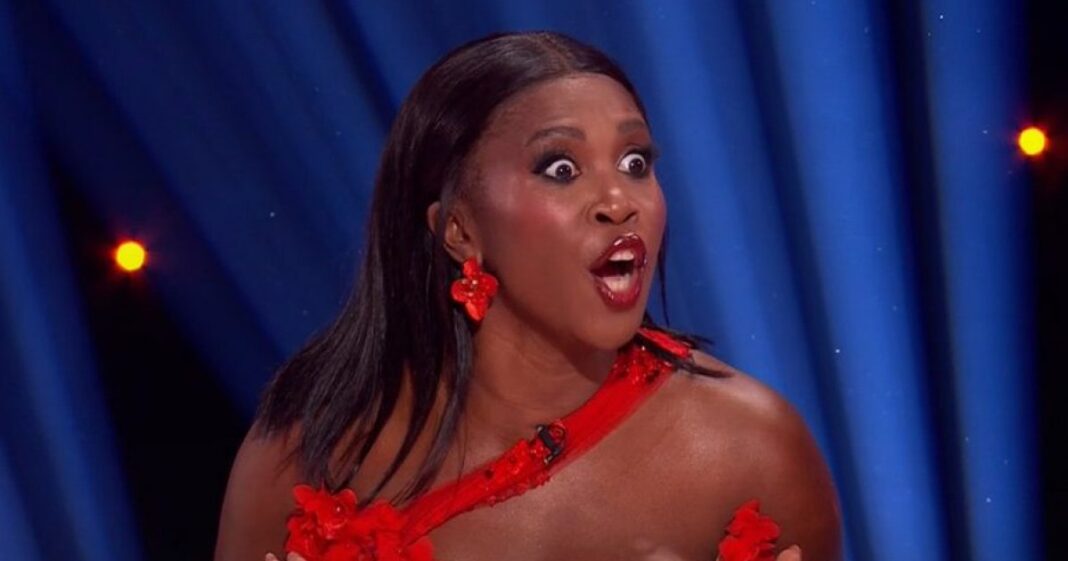
The incident took place on November 21 at Blackpool Tower Ballroom, the lavish setting for one of the show’s most anticipated broadcasts. Australian singer Delta Goodrem and professional partner Kai Widdrington had just finished the opening dance. As judge Motsi Mabuse began delivering her critique, a strange noise interrupted her. She looked around, paused and offered the most immediately understandable defense available: “It’s not me.”
That four-word response gave the moment its comic perfection. Nobody expects to be accused of supplying unsolicited sound effects while judging a television dance competition, yet Mabuse had to clear her own name in front of a national audience. A production built around choreography, glitter and technical scores had suddenly turned into a live investigation of who was making that noise.
The BBC later said it was investigating how the disruption happened. Presenter Emma Willis apologized before the judges’ leaderboard, acknowledging audio interference and any offense caused. Lancashire Police confirmed that a formal complaint had been made and a mobile phone seized. Officers were looking into whether any criminal offense had occurred; the existence of an investigation does not itself establish a crime.
A Blackpool Show Gets an Unexpected Soundtrack
Blackpool week is supposed to be Strictly at its most glamorous. The Tower Ballroom offers a historic setting, enthusiastic spectators and the kind of theatrical atmosphere in which a reasonably executed spin can feel like the finale of a Broadway musical. Contestants get their big night, judges deliver their verdicts, and viewers at home argue about the scores.
Goodrem and Widdrington were the first couple to perform, which gave the intrusion unusually good timing from the point of view of someone determined to hijack a broadcast. The evening had barely got going before attention shifted away from the competition. The dancers had done their job; an unseen device was now competing for the audience’s attention.
Accounts from ITV News and the Press Association describe noises coming through as Mabuse spoke. Her spontaneous denial quickly circulated because it captured the strange predicament better than any official statement could. A judge is normally required to explain a dance’s strengths and weaknesses, not reassure millions of viewers that she is not the source of a suggestive ringtone.
There is also a particularly British contrast at work here. A show known for elegant costumes, exacting ballroom technique and politely calibrated criticism was briefly upstaged by a joke that would struggle to survive the first round of a school talent show. One moment the discussion was about dance technique; the next, someone had apparently smuggled low-grade internet prank humor into prime time.
The Online Prankster and the Mistimed Call
Reporting identified online prankster Daniel Jarvis, who uses the name Jarvo69, as a figure connected to the stunt. He was livestreaming while the show aired and suggested he was arranging a surprise involving an explicit sound. The reporting describes him trying to trigger a phone remotely while watching the live broadcast, rather than standing at the judges’ table and making the noise himself.
Jarvis appeared to want the effect to land during comments from judge Craig Revel Horwood, whom he criticized in his livestream. But live television has delays, and comedy timing that depends on ringing a remote phone can go spectacularly wrong. The audio reportedly surfaced during Mabuse’s feedback instead. Jarvis then complained that the prank had not played out as intended.
It is tempting to award points for ambition and deduct all of them for execution. Jarvis apparently tried to stage a personal jab at one judge and ended up creating the night’s most memorable line for another. The intended target was not the person forced to react on camera. Even the prank seemed unable to follow its own choreography.
Jarvis has been linked to earlier incidents involving explicit audio at televised sporting events, including a BBC football broadcast in 2023. That history explains why coverage quickly focused on him. It does not mean the police inquiry has already established exactly who placed the phone, what laws may have been broken or whether any charges will follow in this case.
The BBC Apologizes, and Police Take a Phone
At the close of Saturday’s programme, Willis told viewers the show wanted to apologize for the earlier audio disruption. It was the sort of announcement television presenters usually reserve for technical failures, except the technical problem this time had an apparent punchline. The BBC said the incident would be investigated and that the on-demand version would be edited.
Lancashire Police’s statement made the incident more than a viral clip. Officers said they had been contacted by organizers, that a formal complaint had been made and that a mobile phone was seized. They were assessing whether a criminal offense had occurred. Police did not publicly announce an arrest or a charge in the initial reporting, and that distinction matters.
Television producers can plan a ballroom’s lighting, live cameras, music, costumes and scoring, but a phone in the audience is a small device with enormous potential to ruin the mood. The episode is a reminder that a live audience is both the show’s best accessory and its most unpredictable production department.
One Noise Becomes the Biggest Story of the Night
There are serious questions for organizers about how a device could be used to disrupt a broadcast and how venues should respond. There are less serious questions for the internet, chiefly whether Mabuse’s reaction deserves its own place in television history. Both conversations were happening within hours of the programme.
None of this appears to have been the dancers’ fault. Goodrem and Widdrington performed, the judges attempted their comments, and the broadcast continued. The reported prankster sought attention, which is precisely what provocative interruptions are designed to attract. Reporting on the episode should avoid pretending the entire night’s production collapsed or that police have already proved a criminal case.
What is confirmed is plenty bizarre: an internationally televised ballroom competition was interrupted by apparent sex noises; a judge publicly denied responsibility; the BBC apologized; and police took possession of a phone. That is a remarkable list of developments for a programme in which the biggest scandal is normally a controversial score.
The unforgettable line belonged to Mabuse. In a moment no television training manual could possibly anticipate, she did not freeze, launch into an explanation or ask for a replay. She simply made sure everyone knew the sound was not coming from her. On an evening built around judging other people’s performances, that may have been the clearest verdict anyone delivered.