




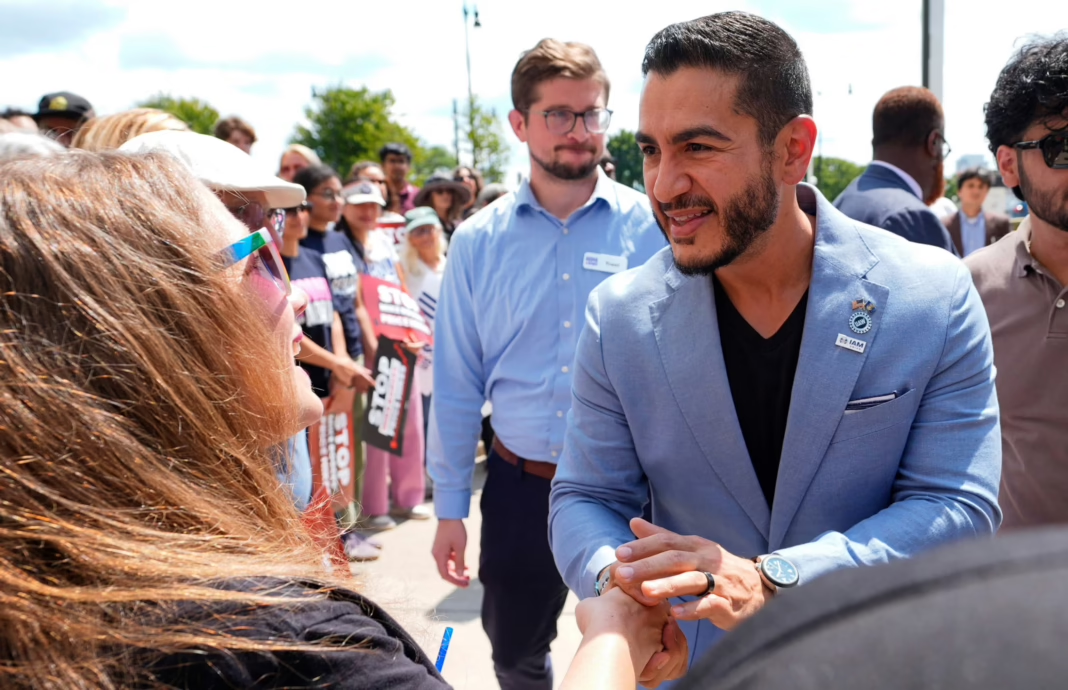
The progressive left has identified another institution in need of ideological supervision, and this time it is the adjective desk. In a Guardian opinion piece published Monday, historian Dana Frank argued that the New York Times repeatedly uses words such as “divisive” and “polarizing” to describe progressive candidates and causes, helping frame the left as a force breaking apart an otherwise unified Democratic coalition. The complaint arrives after a run of progressive primary successes, including Abdul El-Sayed’s Michigan Senate nomination. Apparently winning the election was only step one. Step two is demanding a recount of the modifiers.
Frank points to Times coverage of El-Sayed’s primary against Haley Stevens, Wisconsin politics, Alexandria Ocasio-Cortez and other progressive figures. Her argument is that the language smuggles in an assumption that moderation equals unity while progressive politics equals disruption. That is a legitimate media-criticism question. Words carry framing. Headlines matter. Editors make choices. But the progressive habit of treating unfavorable adjectives as evidence of structural hostility has its own comic problem: a political movement built around challenging existing power structures is now offended that newspapers occasionally describe the resulting conflict as conflict.
El-Sayed did, in fact, emerge from a close and expensive Democratic primary. The Guardian reported earlier this month that he narrowly defeated Stevens and then received support from Democratic leaders who had preferred his opponent. That is politics working normally. Primaries divide parties temporarily because candidates ask voters to choose between competing visions. Then parties try to reunite. Calling that process divisive does not necessarily mean the candidate is evil, dangerous or personally responsible for the invention of disagreement. Sometimes a divided primary is just a primary in which people were divided.
The deeper Too Woke target is the belief that language itself must validate the movement’s preferred self-conception. Progressives understandably want to be described as coalition builders fighting concentrated power. Centrists want to be described as pragmatic adults. Conservatives want to be described as common-sense patriots. Everyone would like the newspaper to use the adjectives from their own campaign brochure. Journalism becomes impossible if every faction gets veto power over any word that implies somebody else might reasonably dislike what it is doing.
Frank’s column argues that the United States was never truly unified and that appeals to unity can protect establishment power. Fair enough. But that actually strengthens the case for allowing the word “divisive” to exist. If politics contains real disagreements over class, race, foreign policy, policing, labor and economic power, then some candidates will sharpen those disagreements. That can be healthy. A politician can be divisive and correct. A movement can polarize voters and still win. The strange progressive tic is treating the description of division as though it automatically settles the moral argument against whoever caused it.
There is a tactical cost to this sensitivity. Voters do not spend much time wondering whether a newsroom’s adjective distribution has achieved ideological parity. They care whether rent is high, healthcare is expensive, schools work and politicians seem sane. Progressive candidates have recently shown they can win by talking about concrete economic problems and challenging entrenched interests. Turning around and litigating whether the Times used “divisive” too many times risks converting a populist political project into a graduate seminar about connotation.
Media criticism is useful when it reveals factual errors, hidden assumptions or inconsistent standards. It becomes less useful when the desired outcome is a vocabulary in which one’s own side can disrupt institutions, overthrow incumbents, attack donor networks and reorder party priorities while remaining linguistically certified as unifying. If you are running against the establishment, some division is not an unfortunate side effect. It is the mechanism. The better argument is not that progressives are never divisive. It is that some divisions are worth having.
There is something almost nostalgic about fighting over newspaper wording in 2026. Political information now moves through podcasts, clips, influencers, newsletters, group chats and algorithmic feeds at a speed no single headline can control. A movement that believes it can remake the Democratic Party should probably be able to survive one metropolitan newspaper calling a primary divisive. If a single adjective can derail the revolution, the revolution may need a sturdier communications plan.
The left also risks misunderstanding why the language bothers it. “Divisive” is irritating because it can suggest that the challenger created a conflict that already existed. Workers and employers can have opposing interests before a progressive candidate mentions them. Tenants and landlords can disagree before anyone prints a campaign flyer. But the answer is to explain the underlying conflict more clearly, not to demand that reporters choose a friendlier adjective. If the division is real, own it. If it is fake, demonstrate that with facts. Vocabulary court is the least persuasive venue.
Progressives have a stronger case when they point to material power than when they police tone. Corporate money, lobbying, healthcare costs and wages are concrete. Whether a headline should say “divisive” or “hard-fought” is a seminar that ends with everybody checking the stylebook. The movement’s recent victories suggest voters are willing to hear arguments that challenge party orthodoxy. That should make the left more comfortable with conflict, not more anxious about the vocabulary used to describe it.
If progressives are campaigning to overturn the Democratic establishment, why should being described as “divisive” count as an insult rather than a job description?
Sources
The Guardian: Why does the New York Times keep calling the left ‘divisive’?
The Guardian: Top Democrats set aside qualms and embrace progressive Abdul El-Sayed
The Guardian: Abdul El-Sayed wins Michigan Senate primary in defining race for Democrats