




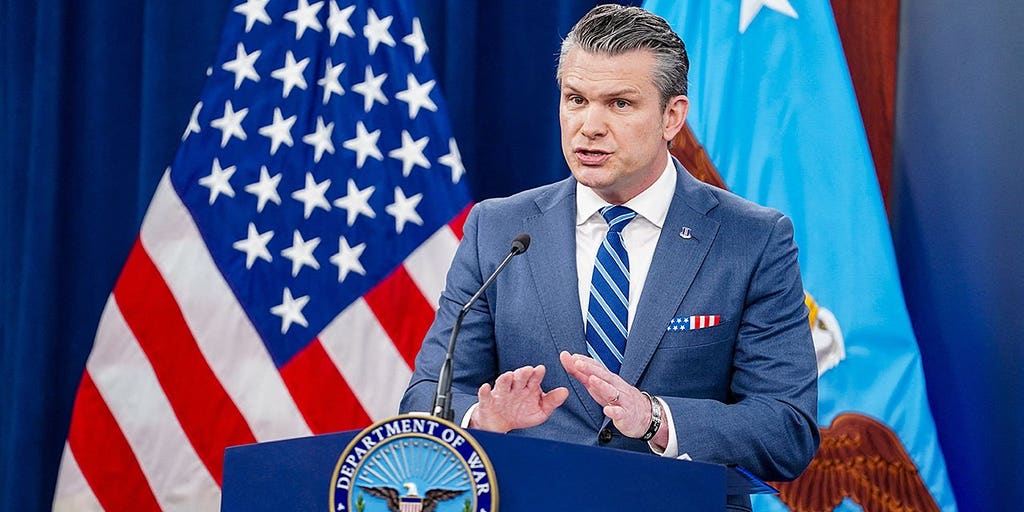
Republican Thomas Massie is pressing eight impeachment articles against Pete Hegseth while Trump defends his Pentagon chief and questions mount over war powers.
Pete Hegseth has a new problem, and it is not coming from the opposition party. Republican Rep. Thomas Massie has put eight articles of impeachment against the defense secretary back on the House agenda, potentially forcing lawmakers to take a public position within days. President Donald Trump is standing by his Pentagon chief. Massie, meanwhile, is asking colleagues to decide whether Hegseth crossed constitutional lines. The family argument has moved from cable television to the House floor.
On November 9, Massie read his impeachment resolution aloud in the chamber. The Kentucky Republican had tried to advance substantially the same allegations in September, but the House departed for its election recess before the question came to a vote. This time he used a privileged procedure designed to put the matter before the chamber quickly. That does not guarantee an impeachment vote on the merits: the House could instead vote to table or refer the measure.
Eight articles, several military campaigns
The resolution is not a single complaint about Hegseth’s television appearances or management style. Its first three articles concern the war with Iran. Massie alleges the administration proceeded without the congressional authorization required by the War Powers Resolution and continued military action beyond the law’s time limits. The dispute goes to an old and serious question: how far can an administration take the country into war without Congress signing off?
Other articles accuse Hegseth of undermining protections intended to limit civilian casualties, conducting unlawful strikes against suspected drug traffickers at sea, and using Pentagon authority against Democratic Sen. Mark Kelly over statements about refusing illegal orders. The resolution also challenges operations in Venezuela and Yemen. These are allegations in an impeachment resolution, not findings by a court or proof of criminal conduct.
The civilian-casualty issue is particularly grave. The resolution points to a strike on an Iranian school and argues that Pentagon decisions weakened safeguards against harming civilians. Those claims deserve scrutiny on their own terms, rather than being treated as just another round in Washington’s daily insult tournament. The victims and the legal questions are considerably more important than which politician wins the next television argument.
The Republican bringing the charges
Massie is an unusual messenger because he is a Republican who has repeatedly broken with Trump. He lost his own Republican primary after Trump backed a challenger, and he is now pressing an impeachment effort against a senior official in Trump’s administration. That creates a political picture nobody would have put on the party’s promotional brochure: a departing Republican trying to remove a Republican president’s defense secretary while Democratic leaders cheer him on.
House Democratic leader Hakeem Jeffries has said he supports impeaching Hegseth. But support for bringing charges is not the same as an assured outcome. Republicans still control the House during this lame-duck session, and procedural maneuvers can prevent a direct up-or-down vote on the articles. Massie himself has acknowledged uncertainty about whether the votes are there.
Speaker Mike Johnson has criticized the effort as political theater, while defenders of Hegseth argue that the military operations were lawful, that Congress was briefed, and that policy disagreements should not become grounds for impeachment. Those responses do not settle the constitutional questions, but they explain why the fight is about more than whether colleagues like the secretary personally.
Trump is not abandoning his Pentagon chief
Trump has publicly defended Hegseth and said he would stand by him even if the House impeached him. That puts the president squarely opposite Massie, a Republican whose argument is that constitutional limits apply regardless of which party controls the White House. The administration’s response has been to defend its military decisions and dismiss the impeachment drive, not to announce any intention to replace Hegseth.
Hegseth has also pushed back, describing the impeachment effort as an attempt to obstruct national security policy. At a November 10 press appearance, he characterized it as sabotage and defended the operations at issue. That is his position; it is not a legal ruling on the eight articles. The distinction matters when the allegations range from congressional war powers to deadly military strikes.
What about those approval ratings?
The political backdrop is difficult for Hegseth. CNN analyst Harry Enten has discussed polling showing the defense secretary with a worse net approval rating than Trump in one comparison. But a claim that one official is universally less popular than another would overstate the evidence. Different polls ask different questions, sample different populations, and measure job approval or personal favorability at different times.
A September Quinnipiac survey, for example, reported 32 percent approval and 57 percent disapproval for Hegseth. That is a substantial negative gap, but it cannot automatically be compared with a Trump figure from an unrelated survey. The cleaner takeaway is that Hegseth faces serious public skepticism alongside an impeachment push initiated by a member of his own party. Political vulnerability and an impeachable offense, of course, are two different questions.
What happens next
A House vote could come by November 11, according to reporting published on November 9, although the precise parliamentary route matters. Lawmakers might vote on tabling or referring the resolution rather than directly approving all eight articles. Even if the House impeached Hegseth, that would be a formal accusation, not immediate removal. A Senate trial and the constitutionally required two-thirds vote to convict would be separate steps.
Cabinet impeachment is rare, which helps explain why this fight has attracted attention well beyond Washington procedural enthusiasts. The last prominent example was Homeland Security Secretary Alejandro Mayorkas in 2024; the Senate dismissed the charges without a full trial. Hegseth’s case would present its own facts and legal arguments, not a rerun of that dispute.
For now, the central scene is striking enough without exaggeration: a Republican congressman is trying to force his colleagues to answer eight serious charges against a Republican president’s defense secretary, while that president says he will stand by his man. Washington loves a loyalty test. This one comes with a 34-page resolution, constitutional arguments, and the possibility of a vote before the week is over.