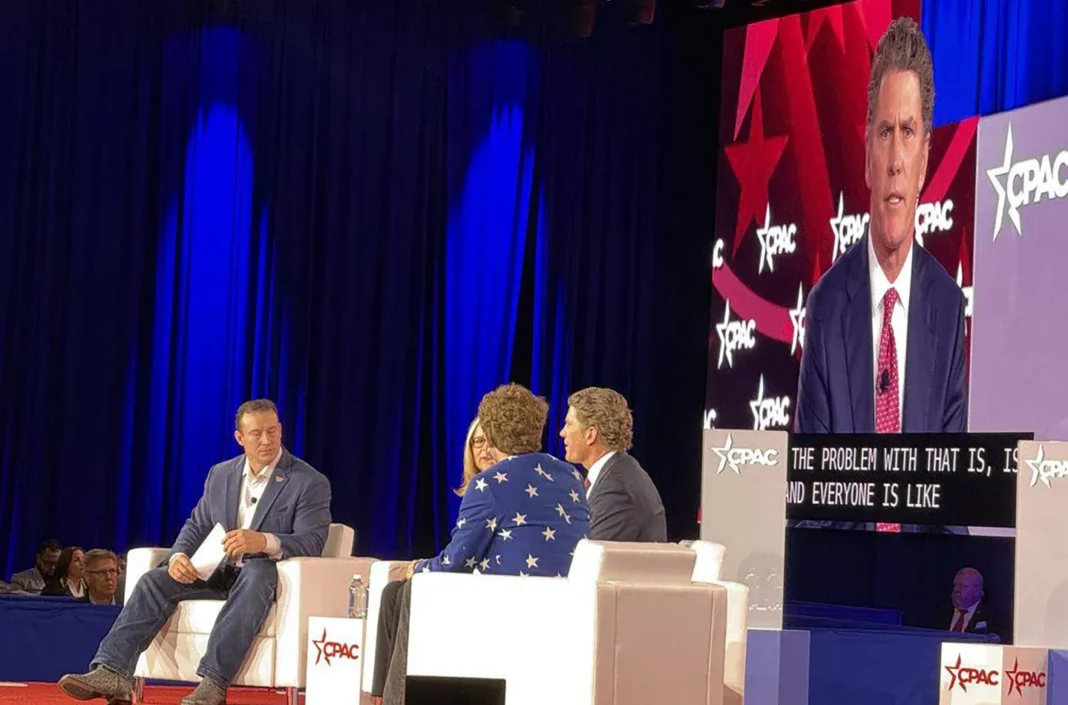




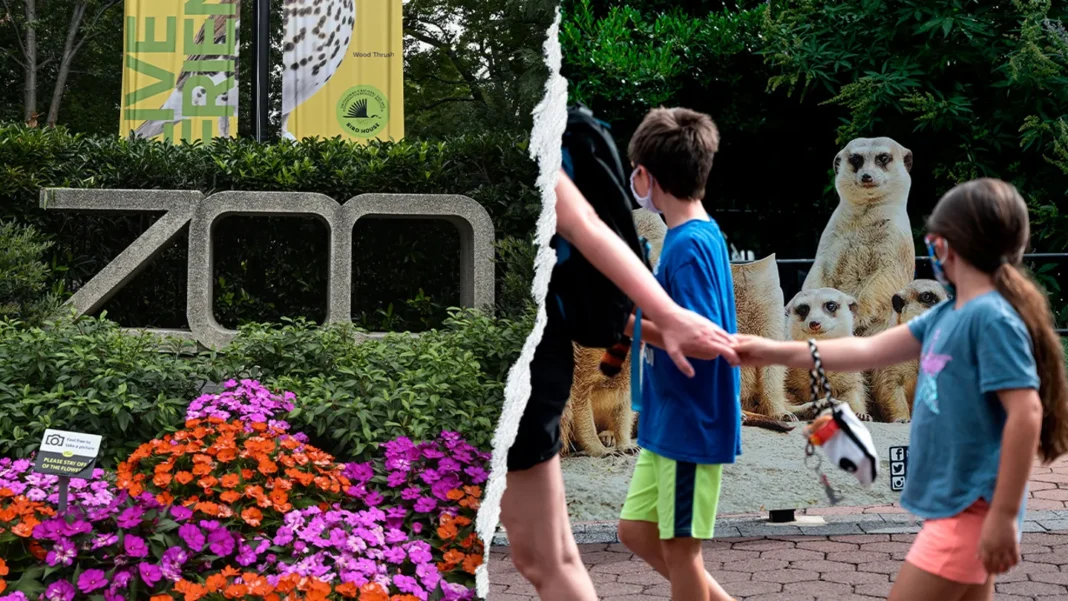
The Smithsonian’s National Zoo is now part of Washington’s argument over whether federally supported cultural institutions have become too political. Fox News reported Thursday that the zoo has promoted programming and language involving DEI, LGBTQ outreach, gender equity, environmental justice and climate change. Yes, the elephants have finally been subpoenaed by the culture war. They were having a perfectly good morning.
Fox’s review points to material that is real and public. The zoo has hosted International Family Equality Day since 2018, with animal encounters, keeper talks, games and community partnerships aimed in part at LGBTQ families. Fox also cited a 2021 Smithsonian conservation article saying that “gender equity, civil liberties and justice” can affect resource use and climate change. The zoo’s broader institution has treated DEI as part of its mission. None of those statements needs to be upgraded into something more sinister to make the political collision obvious.
The collision exists because the Trump administration has been pressing the Smithsonian over what it calls ideological capture. Fox reported earlier this month that a White House review targeted exhibits and institutional practices across the Smithsonian, which receives more than $1 billion in federal funding. Another Fox report this week focused on the Arab American National Museum, a Smithsonian affiliate, and criticized the emphasis of some post-9/11 programming. The National Zoo story is therefore not a rogue panda wandering into politics. It is another enclosure inside a much larger institutional fight.
The Too Woke target is not conservation, gay families or climate science. It is the institutional impulse to attach every worthy social objective to every possible mission until the public cannot tell where one job ends and the next begins. A zoo has an unusually clear assignment. Keep animals alive. Study them. Teach people about them. Make a six-year-old care about amphibians. When the institution also starts explaining how gender equity relates to resource use and climate change, critics do not need much imagination to argue that the mission has expanded beyond the cages.
There are serious intellectual arguments behind that expansion. Conservation happens in human societies. Poverty, land rights, education, public health and political power can affect whether habitats survive. Scientists working internationally do not encounter ecosystems floating free of people. The problem is not that those connections can never exist. The problem is that institutions often present the entire bundle as self-evident, then act surprised when taxpayers ask why a zoo visit now arrives with the intellectual architecture of a graduate seminar.
Fox’s framing is openly critical and should be treated that way. Terms such as “infiltrated” and “woke push” are the outlet’s characterization, not neutral findings BuzzyTimes should silently adopt. But the underlying examples are concrete enough for the roast. The zoo did host LGBTQ family programming. Smithsonian conservation writers did connect gender equity and civil liberties to climate and resource questions. The institution did embrace DEI language. You can defend every one of those choices and still notice that the mission statement has become large enough to require its own habitat.
That expansion creates an easy political trap. Progressives tend to respond to attacks by insisting that every initiative is essential to the core mission. Conservatives then point to that insistence as proof that ideology has swallowed the institution. The result is a fight in which neither side has much incentive to separate the strongest program from the weakest. The administration gets to campaign against a supposedly politicized zoo. The institution gets to defend every layer of programming as inseparable from conservation. The animals remain admirably noncommittal.
The institution could lower the temperature by being more exact about what belongs where. A family-outreach event is one thing. A conservation paper connecting social conditions to environmental outcomes is another. A DEI framework for internal management is another still. Bundling them together under one moral vocabulary makes it easy for critics to present the whole zoo as a political campaign. Precision would not end the fight, but it would make the fight about actual programs instead of a single label stretched over everything.
The zoo example is especially potent because animals are among the least partisan things Washington has left. Families visit to see elephants, pandas, birds and whatever small mammal is currently refusing to come out from behind a log. That gives the institution an unusual reservoir of goodwill. It also raises the cost of confusing educational mission with ideological ambition. A political museum expects arguments about interpretation. A zoo that becomes a culture-war exhibit has managed to make the capybara adjacent to congressional oversight.
The timing also matters because the Smithsonian is not just another nonprofit with a mission statement nobody outside the building reads. It is a national institution sustained in part by federal money and visited by millions of people who did not buy a ticket to an ideological seminar. That does not mean the zoo must become intellectually empty. It does mean every extra layer of institutional messaging carries a public-trust cost. The easiest way to protect expertise is to make clear when staff are speaking from conservation science and when the institution is embracing a broader social philosophy.
The more useful question is whether public institutions can identify boundaries before Congress identifies them instead. The Smithsonian is unusual because it mixes scholarship, education, culture, federal money and a measure of independence. That combination works best when the public trusts the institution to distinguish between expertise and fashionable institutional language. If every social goal becomes integral to every mission, the word integral eventually stops doing much work.
If a national zoo cannot explain where conservation ends and its broader social mission begins, why should anyone be surprised when politicians volunteer to draw the line for it?
Sources
Fox News: Gender equity, DEI, climate action: How the Smithsonian’s woke push infiltrated America’s most beloved Zoo
Fox News: Trump v. Smithsonian: A timeline of how the White House fight over woke history unfolded
Fox News: Smithsonian-linked museum in El-Sayed’s backyard puts America’s post-9-11 response on trial