




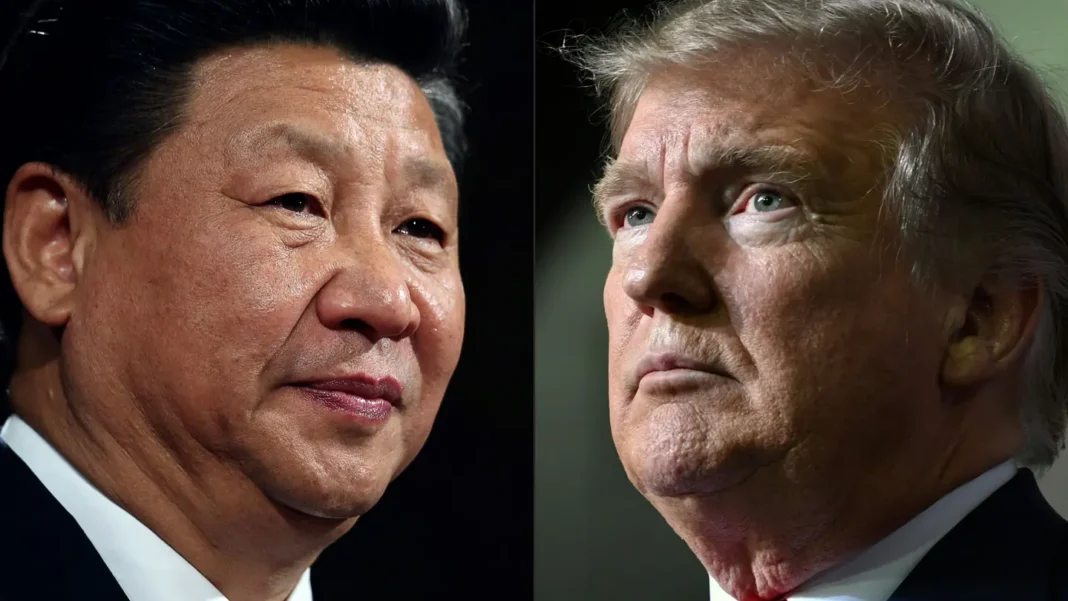
The White House announced Friday that it had exposed a $26 billion transshipment scam in which Chinese companies systematically relabeled goods of Iranian origin as coming from third countries including Turkey, the United Arab Emirates, and Malaysia, allowing those goods to bypass American sanctions on Iranian exports and enter global markets as if they had no connection to the Iranian economy the sanctions are designed to isolate. The administration described the scheme as “costing the US up to $26 billion” and said it was issuing new enforcement guidance, new secondary sanctions designations against Chinese entities involved in the network, and coordinating with allied governments to close the loopholes being exploited.
The $26 billion figure requires context to interpret. American sanctions on Iran are not designed to extract $26 billion from the US Treasury directly. They are designed to restrict Iran’s ability to generate export revenue from oil, gas, petrochemical products, and other commodities, and to cut Iranian entities off from the international financial system. When Chinese companies use transshipment to relabel Iranian goods, the cost is not a direct transfer from American accounts to Iranian ones. It is the cost of reduced effectiveness of the sanctions regime, meaning Iran generates revenue from exports it should not be able to generate, which funds military operations, IRGC activities, proxy networks, and the government functions that sustain the regime’s ability to conduct the conflict the sanctions were designed to pressure.
China’s role in Iranian sanctions evasion is not a new finding. The Treasury Department has been designating Chinese entities for sanctions violations involving Iran since at least 2019, when secondary sanctions were reimposed under Trump’s first term. The pattern of Chinese companies serving as intermediaries for Iranian oil sales, using sophisticated transshipment networks through third countries to obscure the origin of goods, has been documented in Treasury Department enforcement actions, in congressional reports, and in journalism for half a decade. What the White House is announcing Friday is the largest single articulation of that pattern, with a dollar figure attached and coordinated enforcement guidance, at a moment when the US is also conducting active military operations against Iran’s military infrastructure.
The timing is worth examining. The White House announced the $26 billion transshipment scheme on a Friday morning when Iran attacked two UAE ADNOC tankers in the Strait of Hormuz. Both events happened on the same day. The transshipment announcement is the economic containment front of the Iran conflict. The tanker attacks are the military-maritime escalation front. They are not separate conflicts. They are two expressions of the same confrontation, in which the United States is attempting to impose sufficient economic costs on Iran to coerce a change in behavior while conducting military operations that are themselves insufficient to achieve the stated objectives of the war, and in which Iran is attempting to impose sufficient costs on US allies’ shipping and on global energy markets to make the American position politically and economically unsustainable.
The Chinese companies implicated in the transshipment scheme are not arms of the Chinese government in any legal sense. They are private or semi-private Chinese business entities operating in China’s complex corporate ecosystem, where the line between state direction and private commercial interest is genuinely difficult to draw from outside the system. China’s government has publicly denied that it facilitates Iranian sanctions evasion. It has also not stopped it, and Chinese entities are the primary intermediaries through which Iranian oil reaches global markets despite American sanctions. The Treasury Department’s sanctions designations of Chinese entities for Iran violations have not deterred the behavior at scale, because the economic incentives for participating in the transshipment network are substantial and the risk of sanctions designation is calculable and manageable for entities willing to operate in the gray zone.
The $26 billion figure and the coordinated enforcement guidance represent an escalation in the economic pressure campaign. The administration is releasing this on a day when Iran attacked UAE tankers, which means the transshipment announcement arrives in a context where its audience is already processing an Iranian military escalation. The combination is designed to present a coherent picture of an adversary that is simultaneously evading economic pressure through Chinese intermediaries and attacking the shipping of US allies in the world’s most important energy transit chokepoint. The picture is accurate. Whether the enforcement guidance closes the transshipment loopholes is a different question, because previous rounds of sanctions designations and enforcement guidance have not closed them.
The allied governments the White House says it is coordinating with include the UAE, whose tankers were attacked in the Strait this morning, and whose government will be receiving both condolences about the attack and briefings about the transshipment enforcement coordination on the same Friday. The UAE is simultaneously the victim of an Iranian military attack and a participant in the American economic pressure campaign against Iran. Its foreign ministry is issuing condemnation statements about the tanker attacks while its trade and financial regulators are presumably receiving guidance about how to tighten the transshipment enforcement that China has been evading. This is what governing in the middle of a conflict looks like.
The transshipment scam cost $26 billion. Iran attacked two tankers. China is the conduit. The enforcement is being tightened.
When the White House exposes a $26 billion China-Iran sanctions evasion network on the same morning Iran attacks UAE tankers, what exactly is the economic containment strategy achieving?
Sources
Fox News: White House exposes transshipment scam costing US up to $26B, points finger at China