




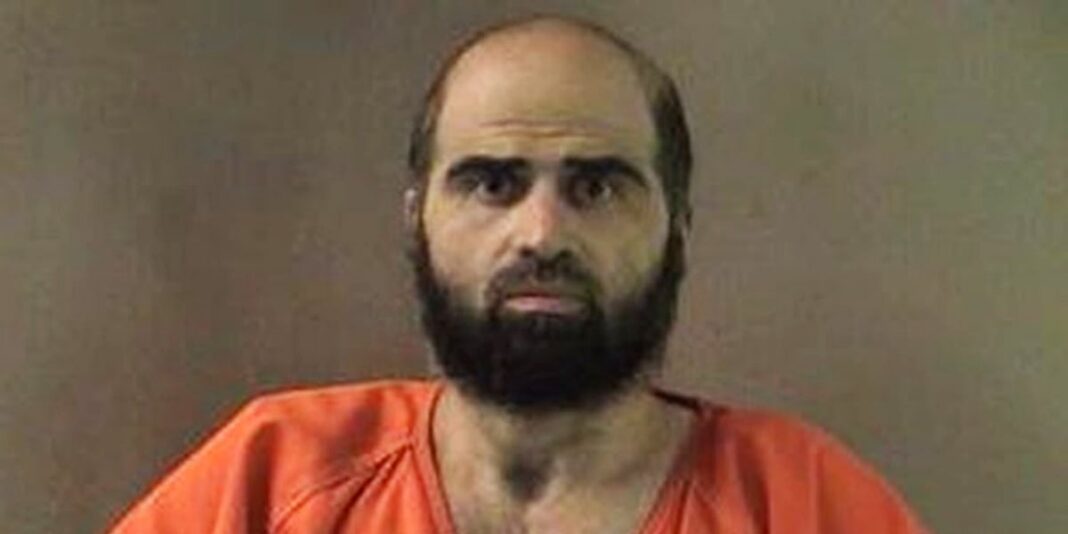
The Pentagon says Nidal Hasan’s Dec. 3 firing-squad execution will be livestreamed. Trump supports carrying out the sentence but is now expressing doubts about turning it into a public broadcast.
The Pentagon is preparing for something the United States has never done before: livestream a military execution to the public. Nidal Hasan, the former Army psychiatrist convicted of killing 13 people and wounding 32 others at Fort Hood in 2009, is scheduled to die by firing squad on December 3.
Defense Secretary Pete Hegseth has been unusually enthusiastic about making the execution public. The Pentagon says the event will be livestreamed, and Hegseth has argued that broadcasting Hasan’s death could serve as a deterrent and demonstrate consequences for terrorism.
That plan has now become controversial enough that even Donald Trump appears to be reconsidering the broadcast portion. Trump supports carrying out Hasan’s death sentence, but he has said he will make the final decision about whether the execution should actually be streamed to the public.
Axios reports that Trump has privately expressed reservations about the idea amid growing criticism from religious leaders, military families, survivors and members of both parties. In other words, the administration has reached the unusual point where the debate is not whether the government should execute Hasan, but whether America needs a livestream button next to it.
Hasan was convicted in 2013 of 13 counts of premeditated murder and 32 counts of attempted premeditated murder for the Fort Hood shooting. A military jury sentenced him to death, and the sentence has survived years of appellate review.
The Army has scheduled the execution for 1 p.m. on December 3 at Fort Hood, the same base where the attack occurred. If it proceeds, it would be the first U.S. military execution since 1961 and the first known military execution by firing squad since World War II.
The livestream proposal is what has transformed a long-running death-penalty case into a much larger national argument. Executions in the United States are normally witnessed by a small group of approved observers, including relatives, officials and members of the press. Broadcasting one to anyone with an internet connection would cross a completely different line.
Some survivors and relatives of victims support Hasan’s execution but oppose turning it into a public spectacle. Alonzo Lunsford, who was shot seven times in the Fort Hood attack, has said the execution will not provide him closure and has questioned the need for a livestream.
Keely Vanacker, whose father Michael Cahill was killed during the shooting, has also criticized the broadcast proposal. She told People that the execution should not become entertainment and said she was frustrated to learn about the plan through public reporting rather than direct communication with victims’ families.
The Catholic Church has now entered the fight from inside the military itself. Archbishop Timothy Broglio, who oversees Catholic ministry to U.S. service members, has urged Catholic soldiers assigned to participate in the firing squad to ask to be excused.
Broglio said participation would conflict with Catholic teaching against the death penalty and questioned the decision to publicly broadcast the killing. He also warned that livestreaming an execution could damage the military’s reputation and create uncomfortable comparisons with extremist groups that circulate execution videos as propaganda.
That is an especially awkward critique for an administration presenting the broadcast as an anti-terrorism message. When the military’s own archbishop is asking whether America really wants to imitate the media tactics of terrorists, the communications strategy may have wandered off course.
House Speaker Mike Johnson and other Republicans have also raised concerns about the footage being reused as terrorist propaganda. Vice President JD Vance has said he would not personally watch the execution and suggested the livestream decision could still change.
Trump initially sounded far more certain. Asked last week whether he had approved the livestream, he said, “Absolutely.” Within a day, however, he shifted to saying he would make a final determination after hearing different perspectives.
That reversal does not mean Hasan’s execution itself is likely to be canceled. The administration remains firmly supportive of carrying out the death sentence, barring a successful legal challenge or other intervention. The uncertainty is specifically about whether millions of people should be able to watch it happen live.
The Pentagon has so far continued to describe the execution as publicly viewable. Hasan could still pursue additional legal action that delays the date, and military death-penalty cases have historically moved slowly through the courts.
The broader argument is now less about Hasan than about what a democratic government should turn into public content. Transparency is one thing. A government-produced livestream of a man being shot to death is another category entirely.
Hegseth appears to see the broadcast as a message of strength and deterrence. Critics see the same thing and worry it would transform justice into spectacle, create propaganda material and place service members in the position of participating in a globally streamed killing.
And that leaves Trump with an unusually strange presidential decision: not simply whether a condemned man should die, but whether the United States government should effectively produce the broadcast.
The execution is scheduled for December 3. The firing squad remains the plan. The only part Trump now seems unsure about is whether America gets the link.
Sources
- Associated Press — Pentagon says Hasan firing-squad execution will be livestreamed
- Axios — Trump expresses doubts about livestreaming Hasan execution
- Axios — Opposition grows as Trump expresses private misgivings
- CBS News — Military archbishop urges Catholics to seek exemption from firing squad
- The Washington Post — Trump says he will make final decision on livestream