




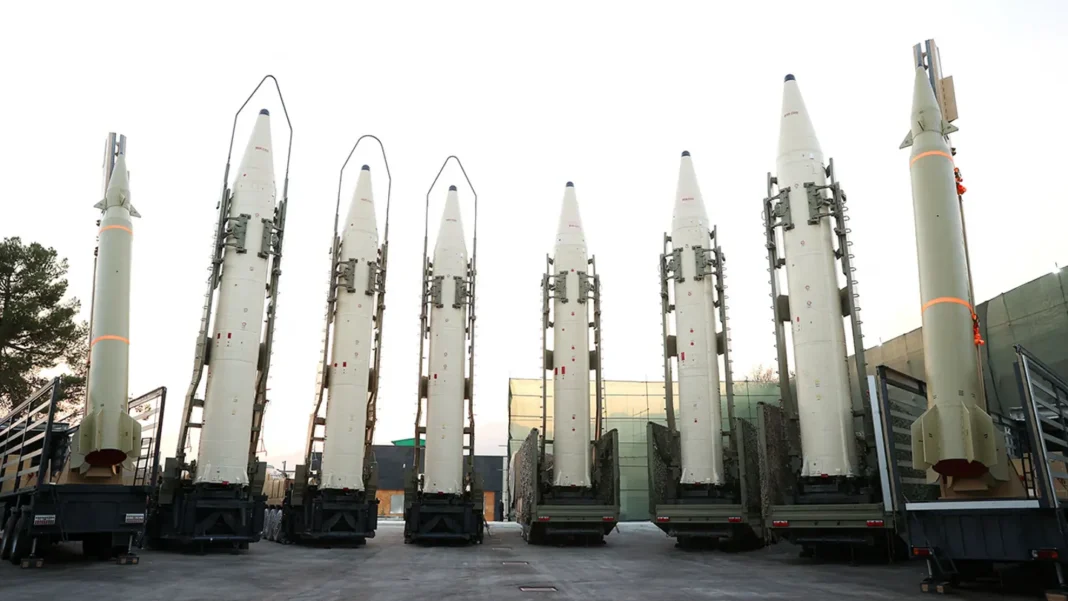
The US economic containment of Iran has produced measurable results over the six months since Operation Epic Fury began on February 28. Iran’s currency has collapsed from roughly 900,000 rials to the dollar in early 2025 to approximately 1.9 million rials to the dollar in August 2026. The Strait of Hormuz, through which Iran generates the majority of its hydrocarbon export revenue, has been closed to most commercial traffic since the naval blockade began. The IRGC has lost command facilities, missile and drone production sites, and communications infrastructure to American strikes totaling more than 300 separate missions since February. The pressure is working in the narrow sense that it is producing economic pain inside Iran at a scale that Iranian households are experiencing as a daily reality. The question analysts are raising Friday is whether that economic pain is producing a path to negotiation or a logic of escalation.
The analyst assessment, per Fox News’s reporting, is that Iran may be moving toward what strategists describe as a kinetic tool to break US economic containment. The phrase is specific: “kinetic” in this context means military action designed to impose costs on US allies and interests that make the economic pressure politically unsustainable rather than action designed to achieve military objectives in the traditional sense. A government under severe economic pressure that cannot negotiate its way to sanctions relief and cannot wait out the pressure indefinitely has a calculus that points toward escalation, because escalation changes the political environment in which the containment operates.
The logic runs as follows. The US economic containment of Iran is politically sustainable in Washington as long as the costs of maintaining it are lower than the costs of ending it. The costs of maintaining it include the military expenditure on strikes and the blockade, the elevated oil prices that American consumers are paying, the diplomatic friction with allies who also want the Strait open, and the risk to US service members deployed in the region. If Iran can escalate in ways that raise these costs significantly, particularly the oil price cost and the risk to US personnel, it changes the political math in Washington and in allied capitals in ways that might produce a negotiated outcome Iran can accept. This is not irrational. It is the strategic logic of a weaker party imposing costs on a stronger one to change the terms of a confrontation it cannot win militarily.
The ADNOC tanker attacks that Iran conducted on Thursday are readable in this context. ADNOC is the UAE’s state energy company. The UAE is a US ally. Attacking ADNOC tankers is not a minor maritime nuisance. It is an attack on the sovereign property of a country that hosts American military facilities, that participates in the regional coalition against Iranian aggression, and whose stability is a component of American strategic interests in the Gulf. If Iran escalates further against Gulf state energy infrastructure, the oil price response would be severe, the political pressure on the US to either resolve the conflict or escalate far beyond its current scope would intensify, and the Gulf state governments would face domestic pressure to accommodate Iranian demands rather than continue to bear the costs of the American containment strategy.
The counter-argument is that Iranian escalation risks exactly the kind of American response that it cannot survive. The military assets deployed in the region include capabilities that have not yet been used against Iran. The air and naval forces available to CENTCOM for operations against Iran include options that are significantly more destructive than the strikes conducted so far. If Iran’s escalation crosses a threshold that produces a massive American escalation, the regime faces an existential threat that its current suffering does not. The regime’s survival calculus, in other words, creates an incentive both to escalate enough to change the political environment and to avoid escalating so much that it triggers regime destruction.
That narrow band between productive escalation and suicidal escalation is the space in which Iran’s strategic decision-making is operating, per the analysts Fox News cited. The tanker attacks on Thursday are in that space. The Houthi attacks on Red Sea shipping are in that space. The IRGC’s continued missile and drone production despite American strikes is in that space. Iran is doing enough to impose costs without doing enough to trigger the response that would end it.
The White House’s announcement Friday of the $26 billion transshipment enforcement action is a response to the economic evasion front of the same conflict. Iran is maintaining revenue streams through Chinese intermediaries while absorbing the costs of the blockade. The US is trying to close those revenue streams while maintaining the blockade. Iran is attacking Gulf state shipping to impose costs on US allies. The US is tightening sanctions enforcement and conducting strikes. All of these things are happening simultaneously and constitute the operational reality of a conflict that both sides are managing rather than resolving.
The Oman talks have not produced a framework. The ceasefire expired Monday. Eighteen American service members are dead. The rial is at 1.9 million. Iran attacked UAE tankers on Thursday.
When analysts warn that Iran is preparing kinetic escalation to break US economic containment and Iran attacks UAE tankers the same day, what exactly is the containment containing?
Sources
Fox News: Iran could unleash kinetic response as US tightens economic containment, analyst warns