



New York City Mayor Zohran Mamdani has a plan to make groceries cheaper by opening five city-run stores. Neighborhood grocers have responded with the traditional small-business love language of a lawsuit. The Multicultural Business Coalition, which says it represents independent supermarkets and bodegas, is challenging the plan in court and arguing that stores backed by the city could undercut businesses that still have the irritating burden of rent, payroll, taxes and making the numbers work. A socialist grocery experiment has therefore arrived at its first genuinely New York milestone. Someone is suing someone else over the price of onions.
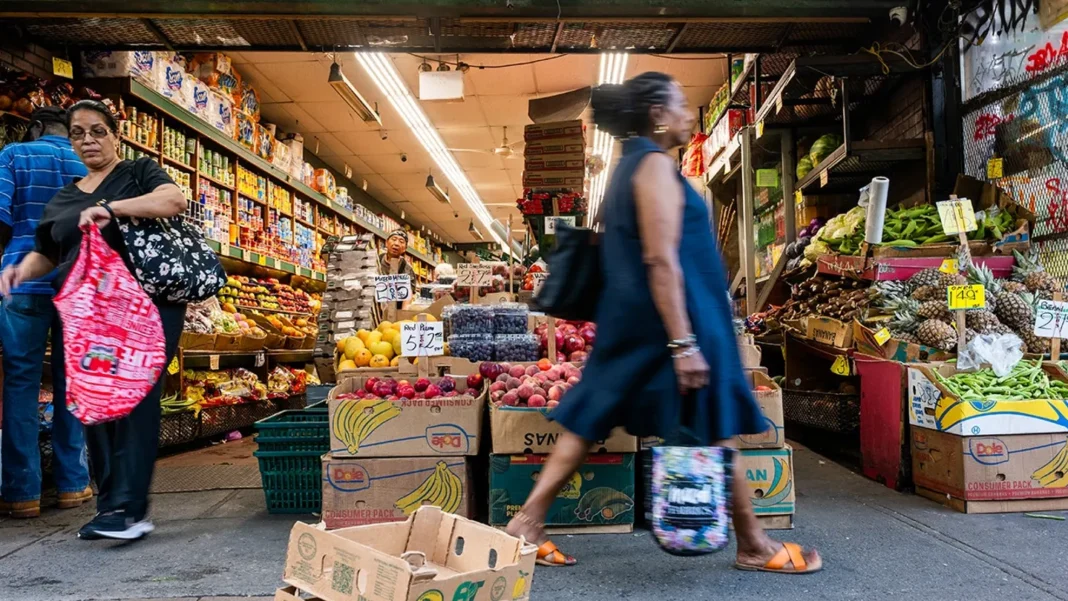
The underlying promise is easy to understand. Mamdani campaigned on city-owned grocery stores as a way to attack food prices, and his administration has said some products could be sold about 30 percent below prevailing prices. The proposal calls for five stores, one in each borough. Fox News reported Thursday from a family-owned East Harlem market whose owners fear a publicly subsidized competitor could threaten the business their immigrant parents built nearly three decades ago. The Washington Examiner and Breitbart previously reported on the coalition’s lawsuits, which allege predatory pricing and demand an economic review of the program’s effect on existing stores.
The target here is not the idea that groceries cost too much. They do. Nor is it offensive for a city government to test ways to lower food bills. The funny part is the confidence required to conclude that the missing ingredient in New York retail is municipal grocery management. This is a city government that already supervises schools, shelters, subways, sanitation, housing rules, permits and a budget larger than those of many countries. Apparently what the operation lacked was a produce aisle. Nothing says lean, responsive government like adding bananas to the portfolio.
Mamdani’s supporters can make a serious case. Food deserts exist. Small stores often pay more to wholesalers than huge chains do. Public entities can choose to accept lower margins, and five pilot stores in a city of more than eight million people are not the nationalization of breakfast cereal. But the 30 percent figure turns the policy from a modest demonstration into a direct competitive challenge. If city-backed stores can price well below nearby private shops because taxpayers absorb costs that a bodega cannot, the experiment is no longer merely testing whether government can sell cheaper groceries. It is testing how long private grocers can stand next to a competitor that does not need to make money.
That tension lands awkwardly for a political movement that spends considerable time praising small businesses, immigrant entrepreneurship and neighborhood institutions. The plaintiffs are not multinational chains seeking constitutional protection for a yacht. They are local operators saying the government that regulates them now wants to become their competitor. The coalition’s allegations still have to survive court, and the city has every right to defend the legality of the plan. But the optics are unusually efficient. You can fit the progressive contradiction on a reusable tote bag. Support the neighborhood shop, unless City Hall can sell the same milk for less.
There is also a practical question about what the 30 percent discount includes. Grocery retail is a low-margin business with brutal logistics. Food spoils. Refrigeration breaks. Theft happens. Labor costs rise. Suppliers change prices. A government store can choose not to maximize profit, but it cannot choose not to have costs. If the city makes up the difference, taxpayers are subsidizing the discount. If it squeezes suppliers, it is using purchasing power in a way small competitors cannot. If it cuts service or selection, shoppers may decide the discount is not worth it. The promise sounds simple because the hard accounting has been moved offstage.
None of that proves the pilot will fail. Public grocery models exist in some places, and a well-designed program could fill gaps where private markets have failed. The problem is Mamdani’s tendency to sell a structural experiment with the ease of a coupon. Five stores, lower prices, problem addressed. Real grocery markets are ecosystems. A city can improve access in one neighborhood while weakening the independent store three blocks away. If that store closes, the public option may stop being an option. It may become the thing left after the experiment changed the market it was supposed to help.
The lawsuits are useful because they force the administration to answer questions that campaign rhetoric could glide past. What costs will be subsidized? How will sites be chosen? What happens if a city store opens beside a family business rather than in an underserved area? What happens if the pilot loses money for years? What does success mean besides cheaper shelf tags? A serious progressive government should welcome those questions. The whole argument for public intervention is that government can plan beyond the next quarter. Planning beyond the next quarter includes noticing the people already selling groceries.
Mamdani may ultimately prove the grocers wrong. The stores could lower prices without hollowing out local commerce, and the city could discover a model worth expanding. But if the plan works only because public stores can ignore the financial constraints imposed on private ones, the administration will have solved one affordability problem by creating another constituency asking why its taxes are helping City Hall compete against it. That is less a revolution in retail than a municipal version of opening a lemonade stand beside a taxpayer and using the taxpayer’s wallet for change.
The left’s strongest case for active government is that public power can correct markets without pretending markets do not exist. Mamdani’s grocery plan now has to pass that test in court, in neighborhoods and eventually at the cash register. The political slogan was the easy part. The receipt is coming.
If City Hall can only make groceries cheaper by subsidizing a competitor that nearby small grocers cannot match, what exactly is the city trying to save?
Sources
Fox News: Her immigrant parents built a NYC grocery store from scratch. Now Mamdani’s experiment could end it
Washington Examiner: NYC immigrant-led coalition challenges Mamdani’s government-run grocery stores
Breitbart: Grocers sue over NYC Mayor Mamdani’s city-owned grocery store plan