



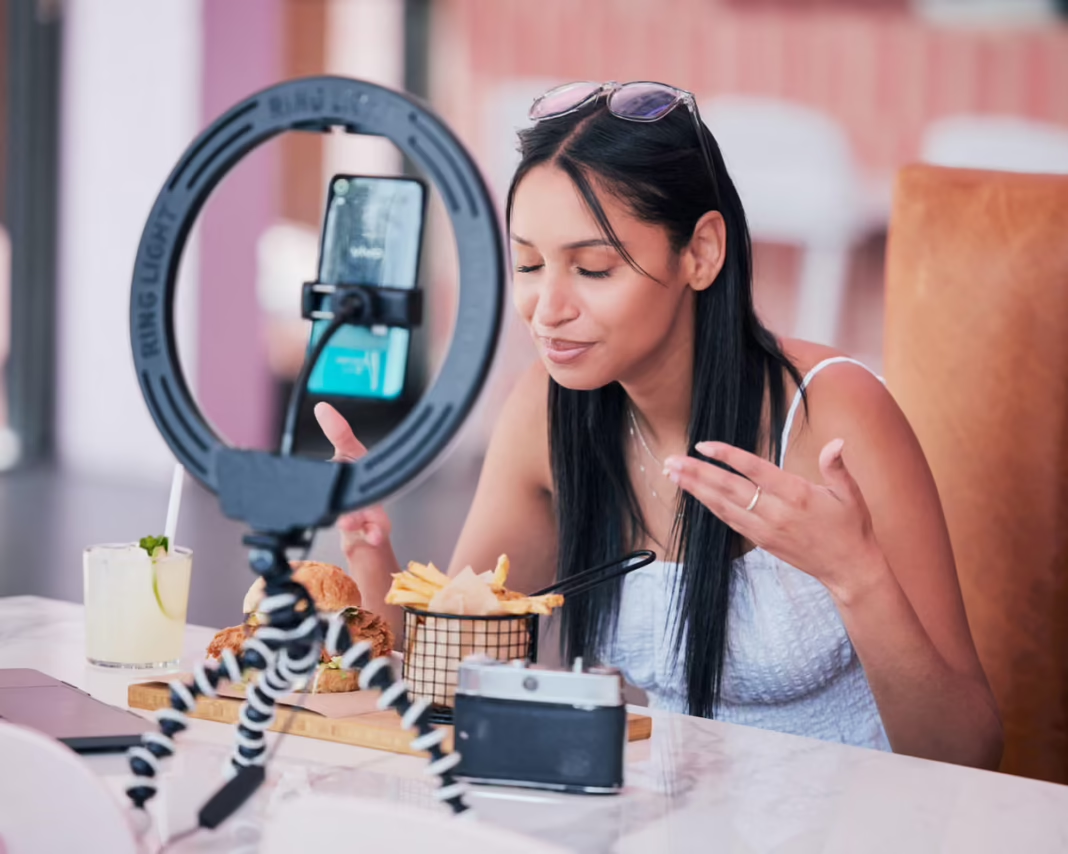
The modern restaurant review has reached its logical endpoint. A person receives a free meal, films it under flattering light, declares the burger life-changing, edits the experience into 28 seconds of ecstatic chewing and then wonders why viewers have developed trust issues. The Guardian’s deep dive into Britain’s food-influencer economy describes what one creator called a ‘crisis of authenticity.’ This is the natural destination for an industry where nearly every plate is incredible, every opening is London’s hottest and every bite apparently requires a facial expression normally reserved for lottery winners.
Food influencers matter because they can move real customers. The Guardian reported that a Topjaw appearance kept one restaurant busy for months, while another business saw hundreds of people arrive after a creator featured it. Large accounts reach audiences traditional restaurant pages can only envy. The Independent’s food and drink editor told the Guardian that a single reel from a major creator can reach more people than the circulation of Britain’s print media. That is not pretend influence. It is one reason restaurants and public-relations firms learned very quickly that a free dinner can be a remarkably cheap advertising budget.
The problem arrived with the business model. Influencers generally do not get paid by Instagram simply because a reel performs well. Many therefore rely on free meals, brand partnerships and direct payments for content. Some of those relationships are disclosed. The Guardian also reported allegations of under-the-table payments for positive restaurant coverage, including detailed claims from industry sources. One prominent influencer did not respond to the paper’s questions about undisclosed payments. Those claims should remain attributed, but the broader incentive structure does not require much speculation. If criticizing dinner means fewer invitations to dinner, criticism has acquired a cover charge.
This is where the audience eventually catches up. People eat at the restaurants. They discover that not every chicken sandwich causes spiritual renewal. The gap between the reel and the plate becomes obvious. A creator can say everything is the best for only so long before ‘best’ becomes a camera setting rather than a judgment. Earlier this year, The Guardian reported restaurateur Jeremy King complaining about an ‘influenza-like outbreak’ of influencers at fashionable restaurants. The newer reporting adds the better punchline. Restaurants helped invite the outbreak because influencers were useful marketing.
That circularity is the target. The restaurant industry wanted coverage without paying for old-fashioned advertising. Influencers wanted access without having the budgets of old-fashioned critics. The result was an arrangement where everybody could insist nothing had technically been purchased while the free meal sat between them. Then the system produced too much positive content and audiences began distrusting it. Marketing created the credibility problem and is now reportedly looking toward smaller creators because they seem more authentic. Naturally, those creators are also being offered free meals.
The word authentic has done heroic work on social media. It means spontaneous content planned with a shot list. It means honest recommendations delivered through affiliate links. It means a creator speaking directly to camera while three lights and an agency brief sit just outside the frame. Food influencing is especially vulnerable because the product is subjective. There is no benchmark test for a croissant. If the creator says the layers changed their life, viewers cannot prove otherwise until they spend £7 and learn their life remains substantially unchanged.
Traditional criticism was never pure. Newspapers had advertisers, publicists, expense accounts, relationships with chefs and all the usual human compromises. The difference was structural. A critic could publish that a restaurant was bad and still be paid for the review. An influencer whose access depends on invitations faces a different calculation. The Guardian’s reporting notes that some creators actively avoid thinking of themselves as critics. That is fair. But if your audience uses your content to decide where to spend money, refusing the responsibility of criticism does not make the influence disappear. It just makes the accountability optional.
The algorithm makes this worse because moderation is terrible television. ‘The pasta was fine’ is not a reel. ‘YOU NEED TO TRY THIS’ is a reel. Platforms reward fast emotion, recognizable formats and familiar personalities. Creators learn what performs and repeat it. Restaurants learn what performs and invite the creators who can deliver it. Viewers then complain that everything looks the same. Everyone is correct, which is the most depressing possible outcome.
Some influencers are already responding by becoming more critical, more specific and less dependent on invitations. That is probably the only durable path. Expertise helps. Negative opinions help. Paying for your own meal helps a lot. The great irony is that the future of influencing may require rediscovering the boring old virtues of criticism that influencing once displaced. Know the subject. Say when something is bad. Make the audience more important than the access.
The creator economy did not ruin restaurant culture. It did expose how quickly recommendation becomes advertising when the people recommending things need the people selling them. The system can survive, but only if viewers can tell when enthusiasm is earned. A restaurant scene where every meal is incredible is not generous. It is useless. Restaurants need attention, creators need material and audiences need recommendations. The arrangement works until all three pretend those needs are the same thing. They are not. One side is selling dinner, one side is selling attention, and the viewer is trying to figure out whether the chips are actually good.
If food influencers need restaurant access to make content, can they ever become trusted critics without being willing to lose the invitation?
Sources
The Guardian: ‘A crisis of authenticity’: the truth about food influencers
The Guardian: ‘Food porn’: are sexy meal pics ruining the restaurant industry?
The Independent: Jeremy King is right about badly behaved diners – but he’s wrong about banning influencers from restaurants