




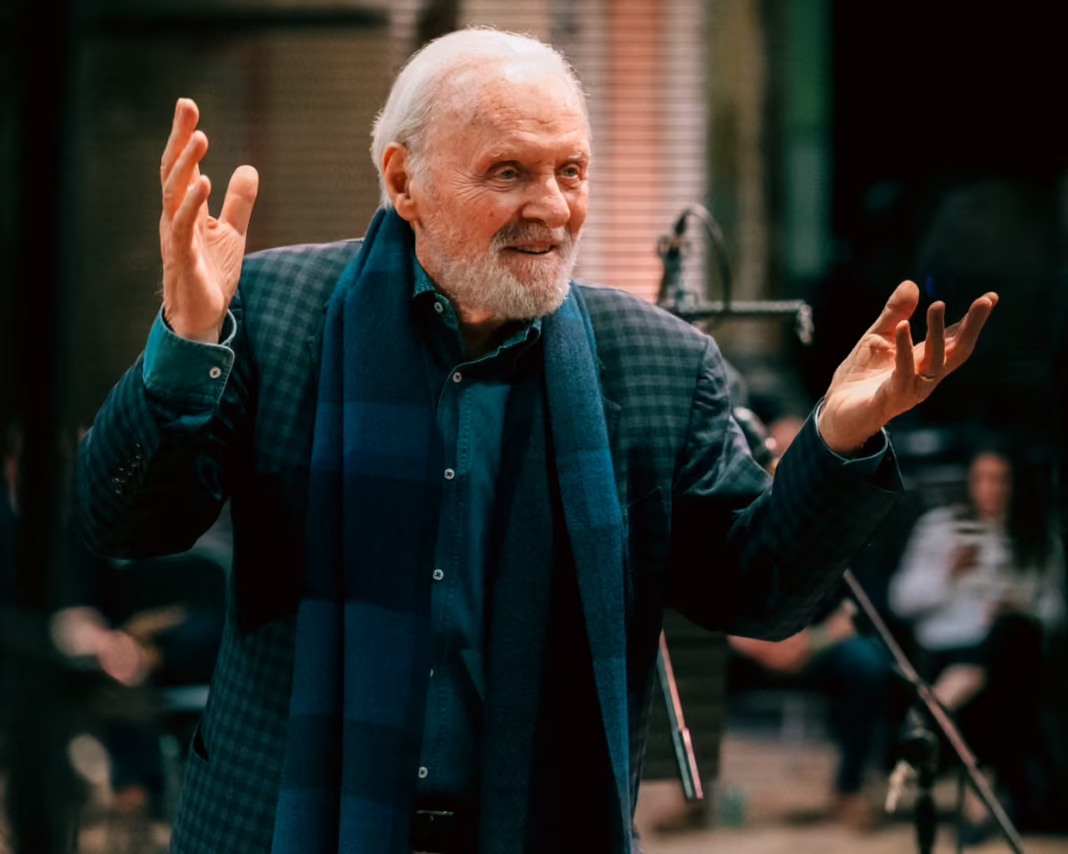
Anthony Hopkins has released a classical album at 88, which should have been an easy assignment for the celebrity vanity-project police. Famous actor discovers another art form. Prestigious orchestra arrives. Publicist says hidden passion. Everyone politely admires the courage until the streaming numbers flatten. There is one problem. Hopkins has been composing music for more than six decades, began playing piano as a child and appears to have made an album that actual classical critics think is good. The man has ruined a dependable cultural category by committing the deeply inconsiderate act of preparing for it his entire life.
Life Is a Dream is not Hopkins wandering into a studio between film shoots. The Independent reports that the record collects compositions written across his life and is performed by the Philharmonia Orchestra with conductor Gustavo Dudamel. One piece dates to 1963. Another draws on his Welsh heritage. Pianist Sergio Tiempo, cellist Gregorio Nieto and the Bach Choir appear on the project. The Guardian’s review describes accessible, heartfelt music rather than a curiosity that needs an Oscar-winning name on the cover. This is the sort of résumé that makes every celebrity launching tequila, skincare, a podcast and an ambient record in the same quarter look unnecessarily busy.
Hopkins has also left a paper trail. The Guardian reported in July, when he released the single Bracken Road, that music was his first desire and that he had been writing for decades. He was playing piano at four. His compositions include memories of Wales and family. André Rieu recorded one of his waltzes years ago. In other words, the backstory existed before the product launch. Celebrity branding normally works in the opposite direction. First comes the commercial object. Then a documentary discovers the star has always had a profound connection to whatever is being sold.
The larger target is the modern assumption that fame is a transferable professional license. Actors become musicians. Musicians become actors. Athletes become venture capitalists. Influencers become nutrition authorities by Tuesday. Sometimes the result is excellent because talented people can have more than one talent. Often the audience is asked to confuse access with ability. Hopkins makes that distinction unusually clear. His name opened doors, of course. Most 88-year-old composers do not receive a Dudamel recording session because they mailed in a score. But access got him into the room. Decades of work are what keep the joke from being on the music.
There is something refreshing about the timing too. Celebrity side projects are usually optimized for peak attention. Hopkins waited until an age when most career advice consists of resting. The songs were not rushed to market because a franchise was hot. A piece written in the early 1960s had time to become older than several streaming services combined. The album therefore feels almost hostile to the content economy. It suggests a person can practice something privately for years without converting every developmental stage into episodes, posts, merch and a founder story.
Classical music is an especially unforgiving place to try the usual celebrity shortcut. Pop audiences may accept charisma, studio production and a catchy collaboration as part of the product. Orchestral composition leaves more of the structure exposed. Themes have to develop, players need parts worth performing and conductors have to believe the work can survive rehearsal. Hopkins benefits enormously from his name, but the Philharmonia and Dudamel are not decorative accessories in the way a fashion-house logo can be. Their involvement raises the standard. The Guardian review does not pretend Hopkins is a lost Mahler. It treats the pieces as melodic, traditional and sincere. That is enough to move the story out of novelty and into the much more dangerous category of competent second career.
It also complicates the fashionable advice that everyone should turn a passion into a business immediately. Hopkins did the opposite. He kept composing alongside acting for decades, allowing the work to exist without requiring it to become his identity or income. Only late in life did the archive become a major-label album. Most people do not have that luxury, and most people are not Anthony Hopkins. Still, the sequence is revealing. Skill came before monetization. Curiosity came before personal brand extension. In an economy where hobbies are routinely converted into side hustles and creative experiments are posted before they are finished, an 88-year-old actor has produced the strangely radical message that not every interest needs an audience on day one.
Celebrity albums are usually easy targets because fame can open a studio door long before musicianship earns one. Hopkins complicates that joke by arriving with decades of receipts. He was composing before he was famous, kept writing while acting consumed his public life and has now put those pieces in front of a major orchestra. The result may still be judged like any other record, and reviewers are free to find it moving, dull or somewhere between. What makes the project unusual is that the celebrity name is not being used to invent a musical backstory after the fact. The backstory was there first. The celebrity just took sixty years to catch up with it.
None of this requires treating Hopkins as a saint of artistic authenticity. He is an internationally famous actor making a heavily promoted record on a major classical label. The machinery of celebrity is plainly helping. That is what makes the project useful. Privilege and preparation can exist together. The standard should not be that famous people stay in one lane. The standard should be that the new lane contains actual work. Hopkins has supplied enough of it to create a surprisingly demanding precedent for everyone else with an IMDb page and a spare afternoon.
If a celebrity side project can arrive with six decades of preparation, what excuse is left for the ones built almost entirely on fame and a launch campaign?
Sources
The Independent: We can all learn a valuable lesson from Anthony Hopkins’s new album
The Guardian: Anthony Hopkins: Life Is a Dream album review – easy on the ear melodies written from the heart
The Guardian: “Music was my first desire”: Anthony Hopkins releases single