



Dave Chappelle’s remarks about Charlie Kirk’s death triggered backlash, while Erika Kirk condemned jokes about political assassination.
A Joke That Escaped the Room
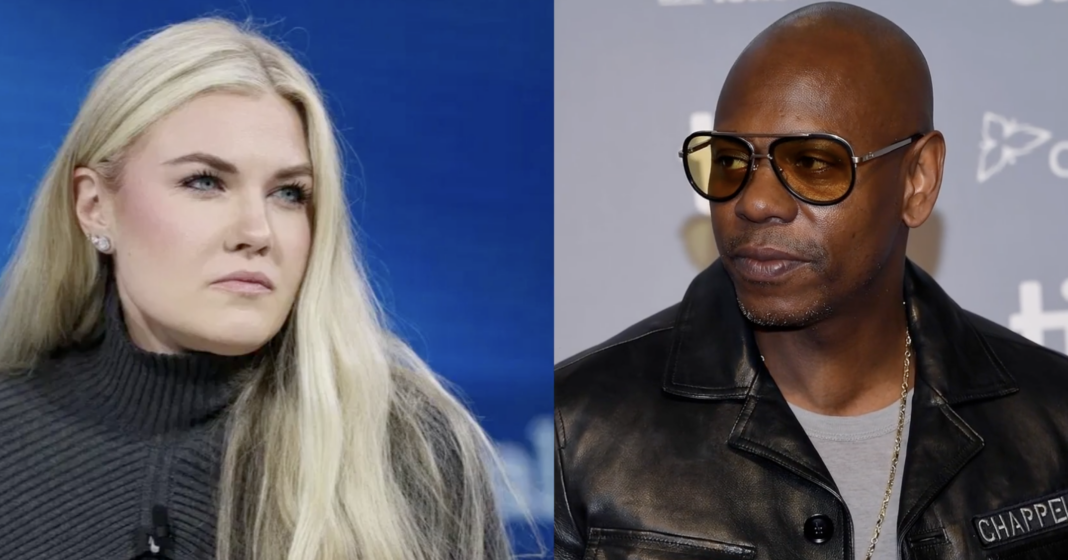
Dave Chappelle walked onto the stage at Madison Square Garden with the kind of audience that expects him to go somewhere uncomfortable. This time, he went straight into a national argument about political violence. At a performance on his Karmageddon tour, the comedian said he felt better since conservative activist Charlie Kirk was murdered. The joke traveled far beyond the room, and the response was immediate.
According to the Los Angeles Times, Chappelle made the remark during a sold-out New York show over the weekend. Footage circulated online despite the event’s phone-free rules. In one reported clip, he acknowledged that he probably should not say what he was about to say, then said he felt better since Kirk’s killing. The self-awareness did not exactly function as a diplomatic immunity card.
The distinction matters: Chappelle was expressing a feeling as part of a stand-up routine, not issuing a call for violence. That does not make the line immune to criticism. The person at the center of the joke was killed in a real attack, and his family is still living with the consequences.
A Widow Responds
Erika Kirk, the activist’s widow, responded on social media to a broader wave of jokes about her husband’s death. She criticized comedians and commentators who treat political assassination as entertainment, calling the practice a sign of moral decay. Her statement did not specifically name Chappelle, a qualification worth keeping in view when headlines compress several controversies into one.
Kirk was shot and killed in September 2025 during a college event in Utah. He was 31. A Utah man has been charged in connection with the killing. The case is not an abstract political argument for Kirk’s family, whatever audiences think of his activism or the rhetoric surrounding it.
That is the tension Chappelle has chosen to work inside. His career has been built partly on testing the distance between what audiences find funny and what they believe should be off limits. The latest line makes that distance unusually personal, because it involves a specific death rather than a hypothetical taboo.
The Backlash Gets Bigger
British broadcaster Piers Morgan denounced the remark, according to the Los Angeles Times, and online reaction quickly divided between people defending the comedian’s right to make dark jokes and those who saw the line as celebrating a murder. Those are different questions: whether a joke should be legally permitted, whether a venue should host it, and whether it is any good are not the same debate.
The controversy also arrived amid backlash to the I’ve Had It podcast. Its hosts apologized after laughing at a separate joke about digging up Kirk and killing him again, and the Times reported that advertisers pulled support. The overlap helped turn an individual stand-up clip into a wider discussion about whether political hatred is becoming a punchline.
Chappelle’s representatives had not immediately responded to requests for comment when the Los Angeles Times published its account. That means there is no verified follow-up explanation from the comedian to insert into the story. His recorded words, and the reactions to them, are the news.
The Hard Part of Dark Comedy
Comedy has always made room for jokes about death, public figures and subjects polite conversation avoids. Chappelle is hardly the first performer to test that room. But a joke about feeling personally improved by a killing lands differently from a joke about a politician’s policies, a movement’s slogans or the media frenzy around a tragedy.
For defenders, the setting matters: an adult audience bought tickets to a provocative stand-up show, not a civics lecture. For critics, the subject matters more: the target was a murdered man whose family can hear the laughter. Neither fact disappears because someone shouts “free speech” or “too soon” loudly enough.
The most revealing part may be that Chappelle reportedly warned the audience he should not say it. He appeared to know the line would detonate. The phones were supposed to be locked away, but in 2026 the internet can turn a supposedly private performance into a national referendum before the ushers finish cleaning up.
What happens next depends on whether Chappelle addresses the backlash or lets the joke stand. Either way, the argument is already bigger than a single clip: it asks whether the political divide has become so bitter that a person’s murder can register as someone else’s good mood. That is a difficult premise to laugh off.