




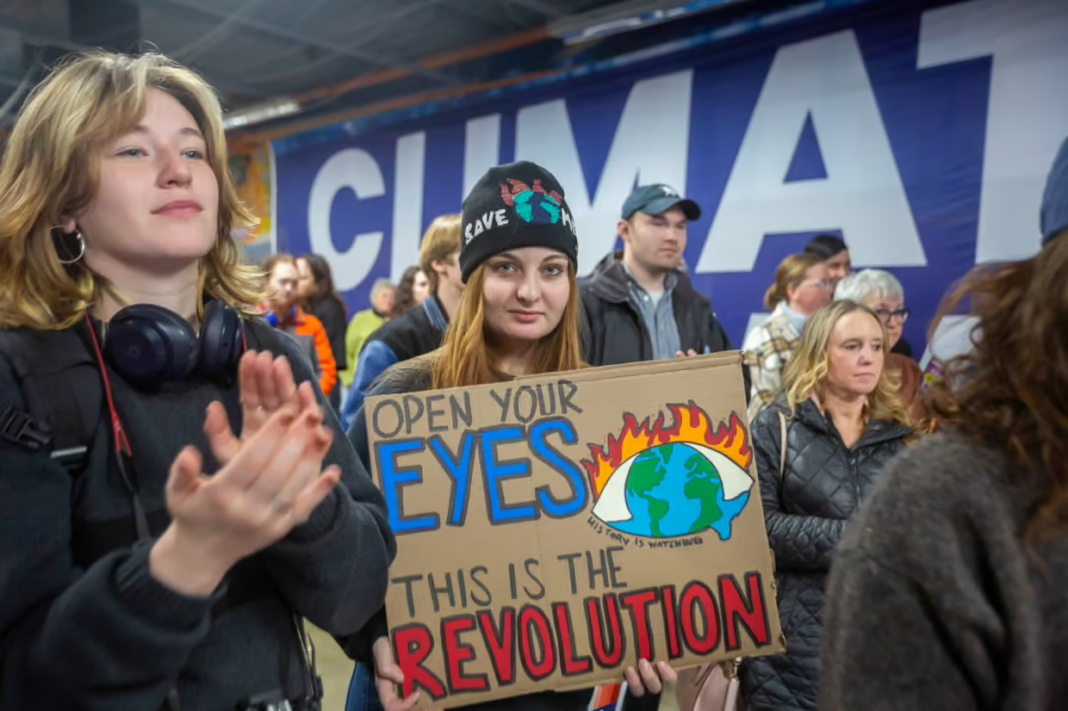
For years, Democrats described climate change as an existential emergency requiring immediate political action. Then the politics became inconvenient, and a new phrase entered the environmental vocabulary: climate hushing. The Guardian reports that many Democrats have started downplaying climate language after the 2024 election while a smaller group of candidates tries to smuggle the issue back into campaigns through insurance costs, data centers and right-to-repair. Nothing says emergency like asking everyone to stop using the emergency’s name until after November.
The retreat is not imaginary. Climate activists have complained for months that Democratic leaders talk less directly about global warming even as extreme weather keeps creating expensive reminders. The Washington Examiner, from the opposite political direction, has also noted that Democrats have run away from climate as a campaign issue. When both the climate activists and the climate skeptics notice you have stopped saying climate, the messaging pivot may have become visible from space.
The strategic logic is easy to understand. Voters rank affordability, housing and everyday prices above abstract policy categories. Republicans successfully turned parts of the Biden climate agenda into an argument about higher costs and regulation. Democrats lost in 2024. Political professionals then performed the ancient ritual of discovering that the issue they loved yesterday was never actually central to the brand. The planet did not receive a calendar invite.
Some candidates are trying a different approach. The Guardian profiles Democrats and independents campaigning on disaster insurance, data-center restrictions and right-to-repair policies without making every sentence begin with atmospheric carbon. That can be smart politics. Voters experience climate through insurance premiums, power bills, heat and floods. Connecting policy to daily life is not betrayal. It is communication. The comic part is the party acting as if changing the label changes the thing it spent years calling an emergency.
If climate change truly is an emergency, political discomfort does not make it less urgent. A fire alarm does not become divisive because focus groups prefer the phrase unexpected warmth event. Democrats spent years criticizing Republicans for refusing to say climate change. Now parts of the party have discovered the strategic sophistication of saying everything around climate change while carefully avoiding the noun. The science remains settled. The branding is in witness protection.
There is a legitimate lesson here for the left. Some climate messaging became moralistic, abstract and detached from household economics. Policies were often sold in language written for people already convinced. Voters care about whether electricity works, whether insurance is available and whether a new rule raises their costs. A movement that cannot connect decarbonization to those concerns deserves political trouble. But the correction should be better explanation, not pretending the signature issue wandered out of the building.
The inconsistency also weakens the party’s attacks on fossil-fuel politics. Democrats say Trump is dismantling environmental protections and expanding fossil fuels while the climate crisis accelerates. That argument has force. It has less force when Democratic candidates behave as though the word climate itself is an electoral contaminant. You cannot demand urgency from the opposition while whispering the subject of the urgency into your sleeve.
The better candidates seem to understand this. Disaster insurance is climate policy whether the brochure says climate or not. Regulating water-hungry data centers is climate policy. Right-to-repair can reduce waste and consumer costs. The problem is not translating climate action into practical terms. The problem is allowing consultants to convince a party that translation requires pretending the original language was embarrassing. There is also a trust problem with environmental groups that spent years telling supporters the issue was too urgent for political convenience. Those voters now get to watch the party treat the same subject as an awkward brand asset. A movement can change tactics without changing its beliefs, but it has to explain the difference if it wants anyone to believe the beliefs came first.
Progressives are usually the first people to argue that language shapes reality. They police euphemisms because naming a problem is supposed to matter. Apparently that insight has an election-year exemption. Climate change can become resilience, affordability, insurance stability or energy independence if the old words test badly in Michigan. Somewhere, an academic department is preparing a seminar on this remarkable discovery that framing matters. That tension is what gives the story a thread beyond the headline. The immediate event is funny because the facts are funny, but the larger question is institutional. Once a public institution builds its legitimacy around a principle, moments like this test whether the principle survives when it becomes inconvenient. The significance is not confined to the day’s headline. It shows what happens when an institution’s public argument collides with the incentives, traditions or contradictions that institution normally keeps offstage. That collision is where the story stops being a curiosity and becomes a test of whether the stated principle survives ordinary pressure.
There is also a credibility cost with younger voters and activists who were told for years that delay itself was dangerous. A party cannot build an entire moral vocabulary around urgency and then demote the subject when the campaign memo changes. The people most invested in climate policy notice the retreat, while skeptics notice it too and conclude the earlier urgency was branding. That is an impressive way to disappoint both audiences with one messaging strategy. Democrats may win more votes by talking about consequences instead of ideology, and there is nothing wrong with learning how voters listen. But the party still has to reconcile the new whisper with the old alarm. If the issue was truly existential before the focus groups arrived, it should remain important after the consultants discover a better noun.
If Democrats still believe climate change is an emergency, what exactly changed when the emergency became awkward to say out loud?
Sources
The Guardian: Disaster insurance, datacenters, right to repair: meet the midterm candidates running on green policies
The Guardian: Democrats’ ‘climate hushing’ prompts activists to turn up the volume
Washington Examiner: Democrats have no clue what they are doing on the climate