



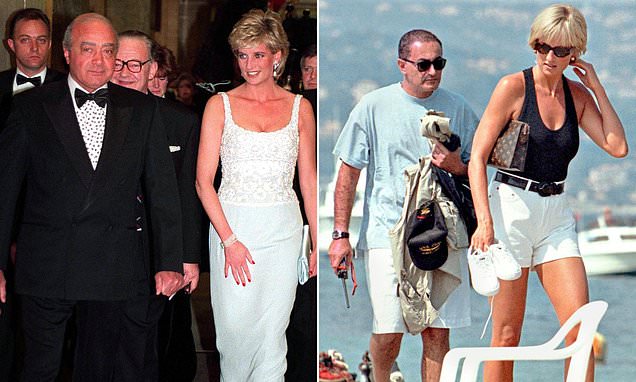
Charles Spencer says Diana told him Mohamed Al Fayed grabbed her backside early in her relationship with Dodi and followed it with a crude sexual remark.
Princess Diana’s brother has added another disturbing allegation to the already enormous list surrounding the late Mohamed Al Fayed. In his new memoir, Charles Spencer says Diana told him Al Fayed once grabbed her backside and squeezed it while she was dating his son, Dodi.
According to Spencer’s account, the physical contact was followed by an even more disturbing remark. Diana told him Al Fayed said, in a suggestive tone, that “in Egypt, father-in-law gets first go.” Spencer writes that Diana remembered the episode with disgust, even though she later laughed while recounting how grotesque it was.
The allegation cannot be independently tested against Al Fayed because he died in 2023. It should therefore be understood exactly as it is: a claim Spencer says his sister personally told him, now being published decades after Diana’s death.
That caveat matters, but the allegation does not exist in a vacuum. Hundreds of women have since accused Al Fayed of sexual misconduct, including sexual assault and rape. Those allegations became the subject of a major BBC investigation, and Harrods — the department store Al Fayed once owned — has publicly said it was appalled by allegations tied to his tenure.
Spencer’s memoir says Diana liked Dodi and found him kind and playful, but felt very differently about his father. That distinction complicates the public image of the final weeks of Diana’s life, when she was repeatedly photographed with Dodi aboard the Fayed family’s yacht and in European resorts.
The broader story around Mohamed Al Fayed has changed dramatically in recent years. For decades, he was often remembered primarily as the wealthy businessman whose son died alongside Diana in Paris and who later promoted conspiracy theories about the crash. The more recent wave of allegations has recast his public legacy around claims of predatory behavior.
Spencer’s version adds Diana to the list of women who allegedly experienced that behavior directly. Again, the allegation is posthumous and untested, but it is significant precisely because of who Diana was and how closely connected she became to the Fayed family in the final period of her life.
The wording of the alleged remark is especially jarring because it transformed an unwanted touching into a joke about future sexual access. There is not much room for a tasteful punch line after that, and this is one of those stories where the bizarre part is the alleged conduct itself.
Spencer’s book has generated controversy beyond the Al Fayed claim. He also revisits family disputes, Princess Diana’s marriage and the aftermath of her death. Buckingham Palace has pushed back against some of his recollections, particularly claims involving King Charles.
That broader controversy makes source discipline especially important. Some claims in the memoir can be checked against records or other witnesses. Others depend almost entirely on Spencer’s memory of private conversations with his sister. The Al Fayed allegation belongs largely in that second category.
What gives it additional weight is the pattern of accusations against Al Fayed that surfaced independently from Spencer’s book. That does not prove Diana’s account, but it does make the allegation relevant to a much larger historical reassessment of his behavior.
The memoir also arrives as the royal family approaches the 30th anniversary of Diana’s death, ensuring that stories about her final years will once again receive intense attention.
For all the royal mythology surrounding Diana and Dodi, Spencer’s claim is a reminder that the private relationships around them may have been far messier and darker than the photographs suggested.
The question is how much weight readers should give a posthumous account when the accused person cannot answer it — especially when the allegation resembles a much broader pattern described by hundreds of other women.