



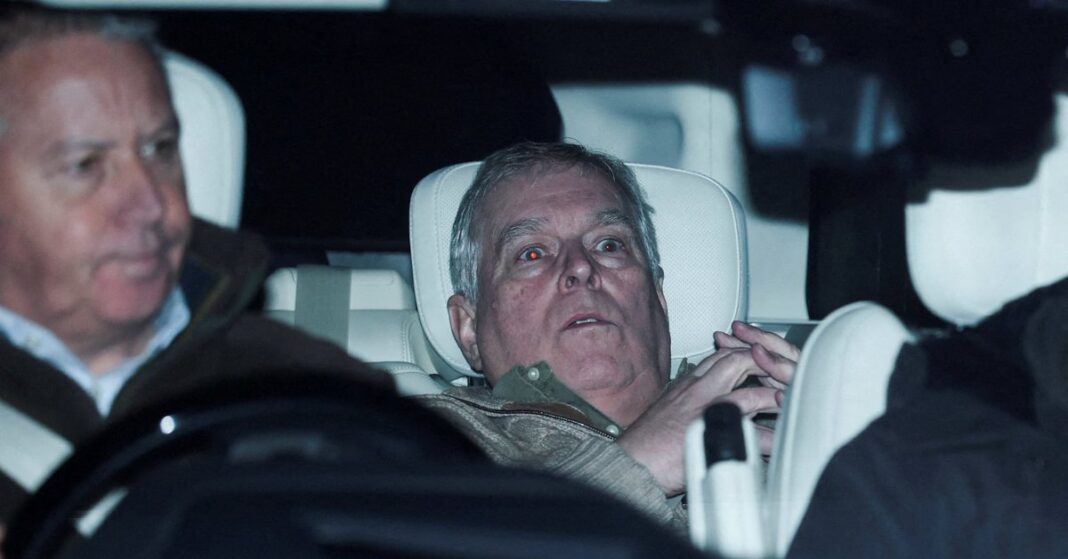
Andrew Mountbatten-Windsor is asking the High Court to quash search warrants used on his homes after his February arrest. He denies wrongdoing, remains under investigation and has not been charged.
Andrew Mountbatten-Windsor has spent years trying to put distance between himself and Jeffrey Epstein. This week, he is instead going to court over what police found while investigating that connection. The former prince has launched a High Court challenge aimed at wiping out the search warrants used to raid his residences at Sandringham and Royal Lodge after his arrest earlier this year.
The legal move is a judicial review, which means Andrew is not asking a court to decide whether he is guilty or innocent. His lawyers are challenging whether Thames Valley Police lawfully obtained the warrants in the first place. If he succeeds, evidence gathered during those searches could potentially become much harder for prosecutors to use later.
The searches followed Andrew’s arrest on February 19, his 66th birthday, on suspicion of misconduct in public office. Police questioned him for roughly 11 hours before releasing him under investigation. He has not been charged, and he continues to deny wrongdoing.
The investigation centers on allegations that Andrew may have shared sensitive information with Epstein while serving as the United Kingdom’s trade envoy. Documents released this year included emails that appeared to show Andrew passing along material connected to official travel and government work after Epstein was already a convicted sex offender.
That does not mean prosecutors have established a crime. The police investigation is still active, and the legal challenge is happening before any criminal charge has been announced. What Andrew is trying to do now is attack the foundation of one part of that investigation before it gets any further.
According to Britain’s judiciary, the warrants were issued by a judge at the Central Criminal Court on February 18. Police then searched Andrew’s residence on the Sandringham Estate and his former home at Royal Lodge in Windsor. The Windsor search reportedly continued for days, which is probably not how anyone wants to spend the week after a birthday arrest.
A private High Court hearing is scheduled for Thursday. Part of that hearing will deal with whether documents connected to the judicial review should be released publicly. Thames Valley Police has confirmed that it is involved in the legal proceedings and says its misconduct-in-public-office investigation continues.
The move is remarkable partly because of who is making it. Andrew was stripped of his royal titles and public role after years of controversy over Epstein and Virginia Giuffre, but he is still the brother of King Charles. British courts do not regularly get cases where a former prince argues that police unlawfully searched royal residences while investigating his relationship with one of the world’s most notorious convicted sex offenders.
CBS News noted that the case is being described as one of the most extraordinary legal confrontations involving a senior royal in centuries. That sounds dramatic until you remember the ingredients: arrest on a royal estate, Old Bailey warrants, Epstein-linked evidence, a former prince and a High Court fight over whether police crossed the line. Subtle this is not.
Andrew has previously settled a U.S. civil lawsuit brought by Giuffre without admitting liability. He has consistently denied her allegations. The current British police inquiry is separate and focuses on alleged misconduct in public office rather than the old civil case.
King Charles has publicly said the law must take its course, an unusually direct statement for a monarch dealing with a criminal investigation involving his own brother. Buckingham Palace has otherwise kept its distance from the legal challenge.
The next question is whether Andrew can convince a judge that the warrants were improperly obtained. If he can, the ruling could reshape the police investigation. If he cannot, the evidence seized during those searches remains part of a case that has already dragged one of Britain’s most damaged royal reputations back into the courtroom.
And that may be the strangest part of all: years after Andrew’s infamous attempts to explain away the Epstein relationship, the fight is no longer over an interview or a photograph. It is over search warrants, seized evidence and whether the police were legally allowed through the door.