



Court records show federal agents obtained warrants for cell-site simulators while trying to locate Jerome Richardson, a producer who worked with Don Lemon on coverage of an anti-ICE protest.
Federal investigators trying to locate a producer who worked with Don Lemon turned to one of the more invasive tools in the modern surveillance toolbox: fake cellphone towers designed to trick nearby phones into connecting to them.
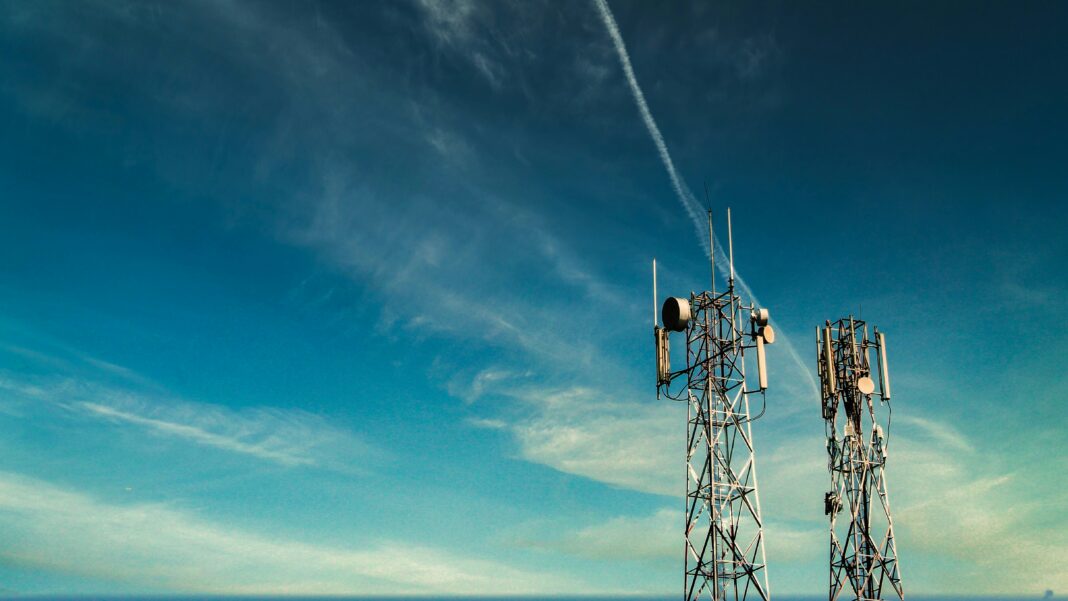
New court records reviewed by WIRED show investigators obtained warrants to use cell-site simulators against Jerome Richardson, a former college student who helped Lemon cover an anti-ICE protest at a church in St. Paul, Minnesota. The technology can mimic a legitimate cell tower, identify nearby phones and help authorities pinpoint a target’s location.
The devices are often known as Stingrays or IMSI catchers, and privacy advocates have complained about them for years because they do not only interact with the target’s phone. They can also sweep up identifying information from other devices nearby, which means everyone in the area can briefly become collateral data.
Richardson is among 39 people charged in connection with the protest, which targeted a church whose pastor also served as an ICE official. Richardson and Lemon have said they were there as journalists covering the demonstration. Prosecutors have accused some participants of interfering with religious worship and violating worshippers’ civil rights.
The surveillance requests are drawing attention partly because Richardson was not exactly disappearing into a mountain bunker. He had publicly indicated that he expected to surrender, and he ultimately walked into a federal courthouse voluntarily before being released on bond the same day.
That makes the government’s decision to seek an advanced tracking tool look especially aggressive to civil-liberties advocates. A former federal prosecutor quoted by WIRED said using a cell-site simulator to locate a suspect is not unheard of, but questioned why it was necessary under these circumstances.
The records also show investigators sought similar surveillance authority involving journalist Georgia Fort and political candidate Jamael Lundy. It is unclear whether judges approved all of those applications or whether every authorized simulator was actually deployed.
Separate court filings show investigators pursued other forms of digital information too, including phone records and data tied to people connected with the protest. Defense lawyers argue the government cast an unusually wide surveillance net around journalists, activists and political figures.
One particularly uncomfortable detail is that prosecutors have acknowledged errors in some of the warrant materials. Affidavits reportedly claimed that Lemon and Fort were chanting with protesters, but the government later conceded that they were not. If you are asking a judge for invasive surveillance powers, “we got part of the journalism wrong” is not the most reassuring footnote.
The Justice Department says it speaks through its court filings, while DHS declined to discuss investigative methods in detail. Richardson’s lawyers are now challenging the surveillance and asking a court to suppress evidence derived from the tracking.
The case raises a bigger question than whether one producer was difficult to locate. Cell-site simulators are extraordinarily powerful precisely because they can silently identify and track phones in a defined area. When those tools are aimed at people involved in journalism and political protest, the First Amendment implications become impossible to ignore.
No court has ruled that the government’s surveillance was unlawful. The warrants were reviewed by judges, and prosecutors are entitled to use lawful investigative tools when pursuing criminal charges. The dispute is over whether the factual basis and necessity for this particular surveillance justified such an intrusive method.
That is why the story feels less like ordinary law enforcement and more like a glimpse into how invisible modern investigations can become. The government did not need to follow someone in a sedan. It could ask a device pretending to be a cell tower where the phone was.
The legal fight now centers on whether the government went too far — and whether journalists and people working alongside them should have to wonder if the nearest “cell tower” is actually a federal surveillance box with excellent reception.