




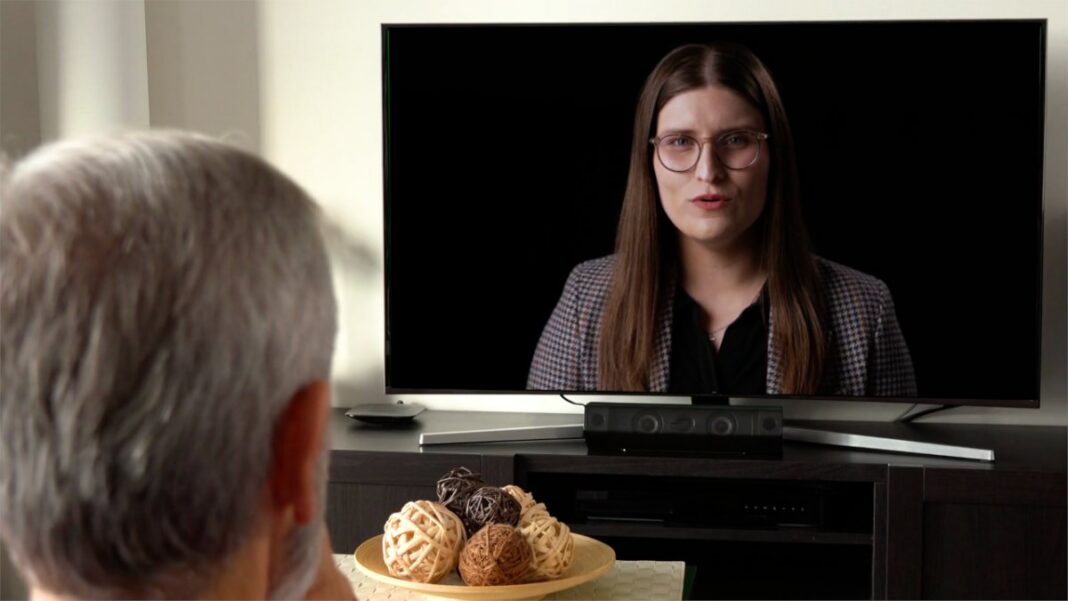
A Republican Senate ad features Soren Aldaco saying irreversible surgery happened to “kids like me.” Public records show her mastectomy occurred at 19, in Texas — not as a child in Ohio.
A Republican super PAC attacking Ohio Democrat Sherrod Brown built an emotional campaign ad around a simple message: children are being pushed into irreversible gender-transition surgery, and Brown supports it. The woman at the center of the ad says the issue affected “kids like me.” There is one very large factual problem with that framing: she had surgery when she was 19.
Soren Aldaco, a detransitioner and social-media influencer, appears in multiple Senate Leadership Fund ads attacking Brown. In one, she says Brown supports “sex changes for minors, irreversible surgery on kids like me.” Another ad describes her experience with hormones and a double mastectomy and presents it as part of a childhood transition story.
Reporting by Ohio Capital Journal and News 5 Cleveland found that Aldaco underwent the mastectomy at 19, when she was legally an adult. The treatment happened in Texas, not Ohio. Court filings from her own litigation confirm the timeline.
Aldaco has described beginning her gender transition as a teenager and has said she was exposed to transgender content online at a young age. Her criticism of the medical treatment she received is real and part of a broader public debate over gender care. But that does not make surgery at 19 “childhood surgery.”
The ad’s claim about Brown is also broader than the evidence supports. PolitiFact reviewed the Senate Leadership Fund’s allegation that Brown supports “forcing childhood sex change surgery” and rated it false.
The group cites a 2023 interview in which Brown said children’s healthcare decisions should be made by children, parents, families and doctors rather than politicians. That statement can reasonably be used to argue Brown opposed certain government restrictions. It does not say he supports forcing surgery on anyone.
There is another local wrinkle: Ohio law already prohibits physicians from performing gender-reassignment surgery on minors. So the ad is warning Ohio voters about a practice that is already banned under state law while using a Texas adult’s medical history as its emotional centerpiece.
Political advertising is built to compress. Nobody buys 30 seconds of television time to say, “The policy history here is nuanced and our strongest example occurred four years after legal adulthood.” But there is a difference between simplification and changing the basic age of the person in your example.
The Senate Leadership Fund argues Brown’s broader position is too permissive and says his opposition to restrictions shows he would not support limits on gender-transition procedures for minors. Brown’s campaign says Republicans are distorting his comments and using transgender issues to distract voters from economic concerns.
Those are legitimate political arguments. “This woman had childhood surgery” is a factual proposition, and the documented record says she did not.
That is what makes the ad unusually vulnerable. Its emotional force comes from presenting Aldaco as someone who personally experienced irreversible surgery as a child. Once viewers learn she was 19, the story is still serious, but it is not the story the ad appears to be telling.
Campaign ads survive exaggeration all the time because voters rarely stop to inspect footnotes. This one has attracted scrutiny precisely because the correction is so easy to understand: child versus adult.
You do not need a medical degree, a law degree or a Senate committee hearing to understand 19.
The broader debate over gender-transition care for minors will continue. But if a campaign wants to make children the center of its argument, it should probably find an example where the surgery actually happened to a child.