



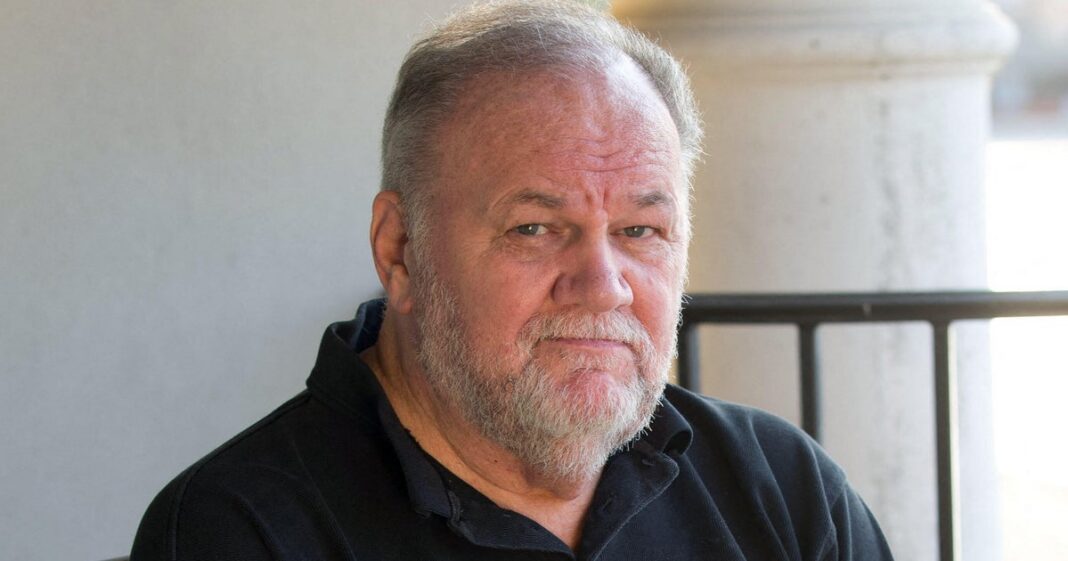
Thomas Markle Sr., the estranged father of Meghan, Duchess of Sussex, is back in federal custody after authorities said he cut off his court-ordered ankle monitor. The incident comes days after his arrest on charges involving possession of child sexual abuse material. A federal judge revoked his release on Tuesday, November 10, turning an already serious case into an even more difficult legal situation for the 82-year-old.
Prosecutors say Markle removed the electronic device at about 1:45 a.m. while subject to home-confinement conditions in Florida. First Assistant U.S. Attorney Bill Essayli announced that authorities were seeking detention. A magistrate judge in Tampa subsequently ordered Markle held pending trial, citing the alleged violation and the lack of a suitable housing arrangement.
The underlying case began with an investigation into material allegedly stored in two Los Angeles-area storage units. Authorities say they recovered approximately 78 items, including film negatives, slides and books containing suspected child sexual abuse imagery. The items and the prosecution's allegations have not been adjudicated, and Markle is presumed innocent of the criminal charge.
Markle had been released under monitoring conditions following his arrest last week. He was staying at a senior-care facility in Lakeland, Florida, but the judge later described his housing situation as untenable. The court also ordered a mental-competency examination, with a report expected by November 20. Such an examination concerns a defendant's ability to participate in proceedings and is not a determination of guilt.
His health and living circumstances are unusually complicated. Markle suffered a stroke while living in the Philippines and had a leg amputated before returning to the United States. Those circumstances are relevant to his detention and care, but they do not change the legal requirement to follow release conditions.
Meghan has publicly described herself as deeply distressed by the allegations and has expressed concern for any children who may have been harmed. She has also said that the distance between her father and her own children was intended to protect them. Her statements are her account of a painful family history, not independent evidence establishing the criminal charge.
The timing has put an especially difficult spotlight on the Sussexes. Meghan and Prince Harry attended an event in Brussels focused on protecting children from online harms as news of her father's detention circulated. Harry spoke about child safety. Meghan did not answer reporters' questions about the case at the event.
The family estrangement long predates this investigation. Markle did not attend Meghan's 2018 wedding, and the relationship has repeatedly played out in tabloid coverage. This case is different in kind from the familiar royal-family feud: it involves a federal prosecution, court-ordered monitoring and allegations concerning exploitation of children.
There is a reason the legal distinctions must remain clear. Prosecutors' statements about seized material are allegations to be tested in court. A judge's decision to detain someone pending trial is not a conviction. The reported removal of an ankle monitor concerns compliance with release conditions, separate from the ultimate question of whether the government can prove its underlying case.
For Meghan, the story is an intensely personal family crisis unfolding in full public view. For the court, it is a question of evidence, safety and whether pretrial conditions can be enforced. Those are very different narratives, and the latter—not the royal gossip—is what will determine what happens next.