



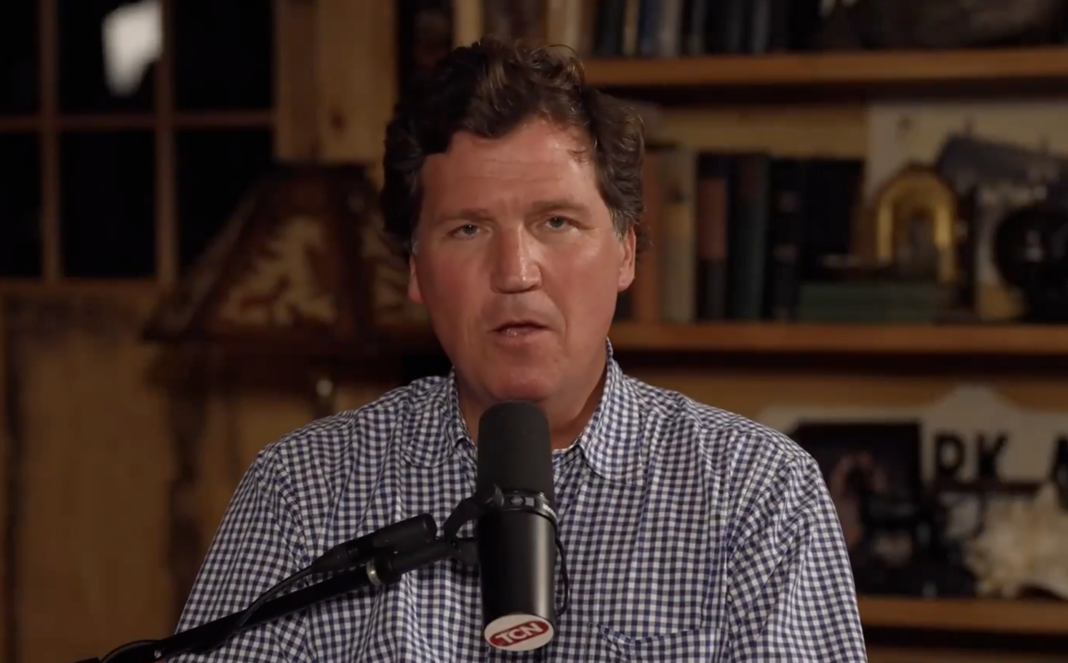
Tucker Carlson has released a 16-minute montage contrasting Trump’s campaign promises with his record. The MAGA family argument now has a video editor.
Tucker Carlson just gave Donald Trump the political equivalent of a breakup video, and he brought the receipts. On Thursday, November 5, the conservative commentator released a roughly 16-minute compilation titled The Great Betrayal that places Trump’s own sweeping promises beside clips of the much messier reality that followed. No elaborate costume, no dramatic courtroom reveal: just the president’s words, edited into a very uncomfortable before-and-after slideshow.
The timing was practically designed to cause maximum indigestion inside the Republican coalition. Democrats had just scored major midterm wins, and a voice long associated with the movement was asking whether the president had delivered on the things voters were promised. Carlson wasn’t presenting an opposition-party attack ad. He was making a prosecution-style case from inside Trump’s own political universe, which is why the video landed differently from another standard Democratic complaint.
Mediaite’s November 5 report describes the montage as a tour through Trump’s pledges on war, the economy and foreign affairs. Carlson’s site labels it a documentary and advertises a 16-minute runtime. The distinction between a 15-minute clip and 16-minute listing is not a scandal in itself; the substance is a cascade of presidential statements that the video urges viewers to compare with events.
Promises made, montage made
The video opens with Trump’s familiar assurance that promises would be kept, then immediately starts testing that premise. One especially memorable target is his insistence that he could resolve Russia’s war in Ukraine within a day. That was a remarkable campaign claim when he made it, and it becomes even more conspicuous when a video editor places it next to evidence that the conflict continued. Governing a complex international crisis, it turns out, is not quite the same as ending a campaign speech.
Another large section addresses the conflict with Iran. As Mediaite documented, clips show Trump talking about finishing the job and suggesting on different occasions that the fighting would conclude soon. The montage contrasts those statements with news coverage of military action and the war’s continuation. Whether every juxtaposition offers the fullest context is a separate question; Carlson’s editorial argument is that the president kept moving the finish line.
That is the fundamental trick of a political montage: the politician does most of the talking while the editor decides which promises get remembered. It can be persuasive, but it is not a neutral audit. The video selects statements and events that reinforce Carlson’s thesis rather than attempting a comprehensive scorecard of every White House initiative. Readers should understand both why the contrast resonates and how deliberately it has been constructed.
The clash also touches the cost of living. The video revisits Trump’s 2024 rhetoric about cutting energy costs, making groceries cheaper and ending inflation, then points to the economic pain Americans continued to discuss during his presidency. Campaign promises often arrive with the confidence of a car commercial: a dazzling price, a spectacular guarantee and very little discussion of the fine print. Here the fine print is apparently an entire national economy.
The argument is coming from inside MAGA
What makes the release especially fascinating is the messenger. Carlson spent years as one of the most prominent conservative media personalities in the country. His audience overlaps heavily with voters who supported Trump, and his criticism often comes from a populist, anti-interventionist direction rather than a conventional liberal one. An attack delivered by Carlson has a chance of reaching people who would never sit through a Democratic campaign commercial, no matter how beautifully it was produced.
The differences over foreign policy matter here. A voter who heard promises of fewer overseas conflicts might interpret extended military operations very differently from a voter who believed Trump should confront foreign adversaries more aggressively. Those are real disagreements about what American power should do, not merely a personality feud between two men who happen to own microphones. Carlson’s montage uses Trump’s campaign language to make that argument unusually personal.
It also arrives amid a larger Republican reckoning after the November 3 midterms. Party officials and commentators are asking what voters rejected, whether inflation and war hurt the administration, and how much loyalty a political movement should demand after losses. Carlson’s contribution to that conversation is essentially to hit play and let Trump’s previous statements provide the soundtrack. There are gentler ways to open a family meeting.
The title The Great Betrayal is itself an accusation, not an established verdict on every promise the president made. A president can face an unexpected international development, a divided Congress or changing conditions; those factors matter when judging outcomes. Yet Trump’s own rhetoric frequently offered certainty where caution might have been wiser. That leaves a critic with an unusually large inventory of categorical statements to revisit later.
A video the White House can’t simply wave away
The basic facts are straightforward: Carlson released the video, it uses Trump clips as the heart of its case, and it is openly hostile to the administration’s performance on selected issues. RealClearPolitics also documented Carlson’s November 5 post promoting the production. The material is publicly discussed in news coverage, although the full documentary page on Carlson’s website offers subscription access.
It is too early to conclude that the video will materially change Trump’s standing with Republican voters. Online political commentary can look like a full-scale civil war while millions of ordinary people are busy with work, school and the mortgage. Nor does one montage establish that every contrasting clip tells the entire policy story. A careful reading distinguishes the video maker’s interpretation from the events and quotations he assembled.
Still, it is hard to imagine a more awkward endorsement of the idea that campaign promises should be taken literally. Trump built much of his appeal on saying he could solve problems other politicians merely talked about. Carlson is now taking that boast and turning it into the organizing principle of an attack. What was once powerful campaign branding has become source material for a political opposition reel.
The most revealing part of this episode may not be any single fact-check but the change in who feels comfortable asking the questions. A critic from the opposite party criticizing Trump is ordinary Washington weather. Tucker Carlson distributing a video called The Great Betrayal is more like watching someone pull the fire alarm at their own convention. The president’s old speeches are still doing the talking; this time, one of his former media allies is holding the remote.