




Lindsey Graham died on July 11, 2026, of an aortic dissection, a tear in the main artery from his heart brought on by heart disease. He was 71. He had represented South Carolina in the United States Senate for 28 years. His political career began 34 years ago with a run for a South Carolina state legislative seat. He served on the Senate Armed Services Committee for essentially the entirety of his Senate tenure. He was a military lawyer, an Air Force Reserve colonel, a veteran, and the most consistently and vocally pro-military member of the Senate during his era. National security was not merely one of his concerns. It was the organizing principle of his entire public career.
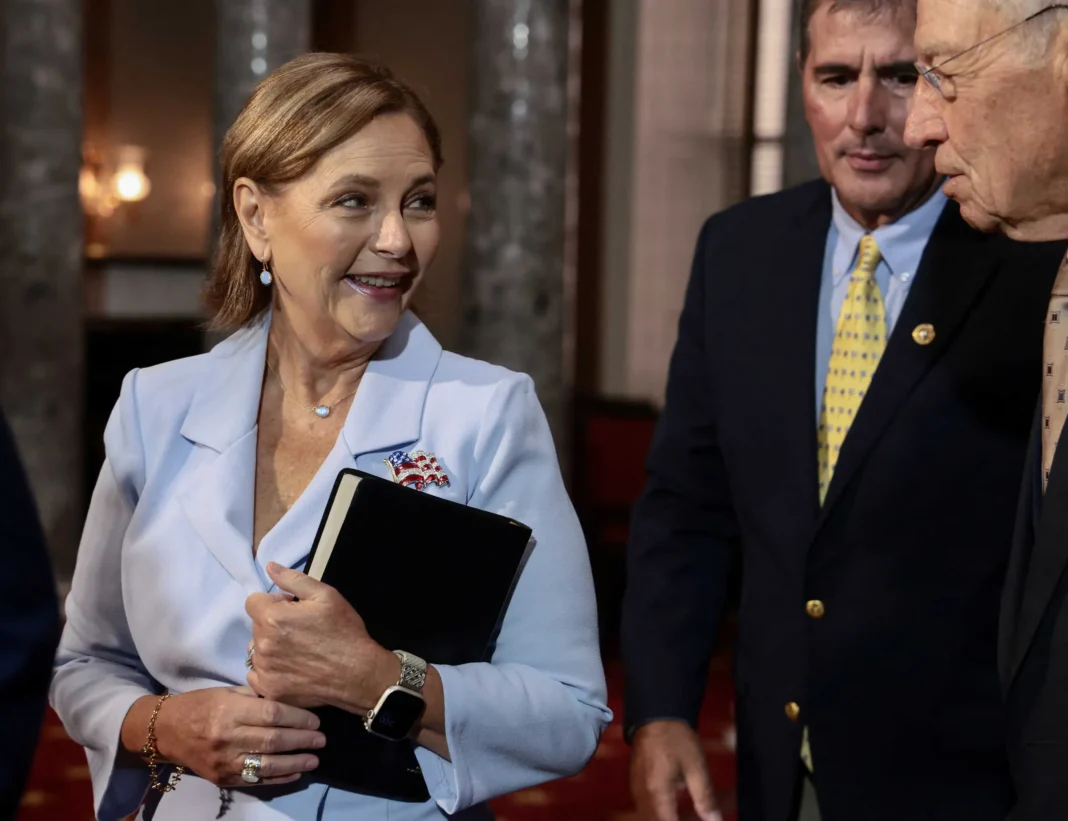
Darline Graham, his sister, was appointed to fill his seat by Trump, took office on July 14, and is now running in the special election to hold that seat for the remainder of the term through January 2027 and then for the full six-year term in November. Her political career began, per HuffPost’s precise accounting, “exactly four weeks ago, two days after her brother’s death.” On Tuesday night, in a debate for that seat, she was asked whether Taiwan or the South China Sea poses a greater national security threat to the United States. She said: “I’m just going to be honest here, I’m not that informed on national security.” She continued: “But I do support the military.” She added: “My brother was in the Air Force for 33 years, so I will do everything I can to support the military.” She then said: “National security is not my thing, not my area of expertise, but I do support the military.”
She said it three ways. She was not informed on national security. National security was not her thing. It was not her area of expertise. She said this in the seat from which Lindsey Graham spent 28 years making national security the single most defining characteristic of South Carolina’s Senate representation. The contrast is not subtle. The seat itself is a kind of argument about what a senator from South Carolina is supposed to know, and Darline Graham told the debate audience what she knew and what she did not.
The specific national security question she was asked deserves a brief answer that she did not provide. Taiwan is a democratic island of 23 million people that China’s government considers part of its sovereign territory and has threatened to reunify with by force if necessary. The United States has a policy of strategic ambiguity regarding Taiwan’s defense, selling Taiwan defensive weapons under the Taiwan Relations Act while not explicitly committing to military intervention in a Chinese attack. The South China Sea is a maritime zone of 3.5 million square kilometers subject to overlapping territorial claims from China, Vietnam, the Philippines, Malaysia, Brunei, and Taiwan, where China has been constructing artificial islands, militarizing reefs and shoals, and asserting control over international shipping lanes in ways that directly challenge freedom of navigation and the interests of US allies. Both are serious national security concerns. They are different in character, scale, and immediacy. The question asked her to distinguish between them. She said she was not that informed.
Earlier in the campaign, in an appearance on Fox News, Darline Graham had provided a preview of where her Senate priorities would diverge from her brother’s. “Lindsey was focused on national security, and I know that’s important,” she said, “but I will probably be focused more on affordability.” This was either a refreshingly honest acknowledgment of her genuine expertise and interests or a preview of what would become the most quoted line of her campaign, depending on the audience. For Republican primary voters in South Carolina, the answer to the question of which is more important, national security or affordability, has historically been national security. Lindsey Graham spent 28 years making it so.
The debate also produced a separate moment worth documenting. When asked about the United States’ reported ammunition shortage during the Iran war, Darline Graham accused her opponent Rep. Ralph Norman of having voted against a defense spending bill. She appeared to be referring to the Big Beautiful Bill, which allocated more than $100 billion in spending for national defense and which Norman initially opposed before Trump pressured him to vote for it. Norman responded: “I don’t know what her comment was about me voting against some defense bill. With the Big Beautiful Bill we made it better. I voted against it because we cut things.” He added: “It’s silly season folks. With all these attack ads, it’s laughable how she’s doing it.” Darline Graham responded: “It’s my understanding that you were the holdout on the Big Beautiful Bill and Trump had to call you in and convince you to sign it.” This exchange involved Darline Graham attacking a Republican congressman for his position on defense spending, in a debate where she had also said defense-adjacent national security was not her thing.
The primary results produced a runoff. Darline Graham led the field but did not clear the threshold required to avoid a second round. She will face Ralph Norman in an August 25 runoff. This means the candidate who said national security is not her thing must now campaign for one more week in the seat of the man who built his career on nothing else. A senior Republican senator told Jewish Insider, before the primary: “She’s no longer a grieving sister” once it reaches a runoff. “At that point, it is a whole new ball game.” Norman has campaign experience, legislative experience, and a record he can defend. Darline Graham has the Trump endorsement, the National Republican Senatorial Committee’s advertising, and the institutional power of incumbency. She was largely absent from the campaign trail before the primary, spending most of her time in Washington as an acting senator. She apologized at one campaign event for reading from notes at a lectern, explaining that Senate votes had kept her in Washington until hours before she traveled to meet voters.
She reads from notes because she is a week-old senator who arrived in the chamber after her brother died. That is an honest explanation for why she reads from notes. It is also an explanation for why, when asked about Taiwan and the South China Sea, she said she was not that informed. Both sentences describe the same condition. She is a person who, six weeks ago, was not a politician. She is now attempting to win the Senate seat that her brother defined for nearly three decades. The two facts are connected.
She is not that informed on national security. Lindsey Graham was. The runoff is August 25.
When the Senate’s most prominent national security hawk’s designated successor says national security is not her thing in his former seat four weeks into her political career, what exactly is the Senate seat representing?
Sources
HuffPost: Florida and Alaska primaries, Darline Graham’s terrible debate
HuffPost: Darline Graham heads to runoff in South Carolina GOP Senate primary
HuffPost: Darline Graham’s lack of experience could spell disaster for her Senate run
Raw Story: Lindsey Graham’s sister breaks up with Trump on hot-button issue