



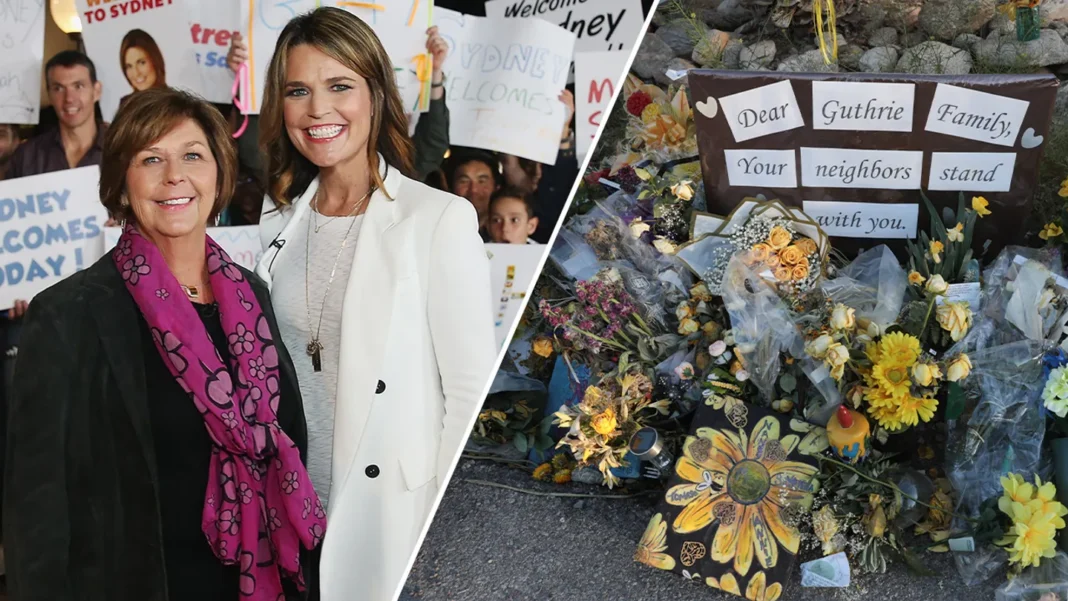
Nancy Guthrie, 84, the mother of NBC “Today” show anchor Savannah Guthrie, disappeared from her home in Tucson, Arizona, in the early morning hours of February 1, 2026. A masked intruder appeared on Nest doorbell camera video that the FBI recovered with help from Google. He was carrying a black Ozark Trail backpack. He tampered with the camera. Nancy Guthrie was gone. Six months, eighteen days, and over $1.2 million in reward money later, she has not been found.
The investigation has produced ransom notes, and the ransom notes have produced their own investigation. The Pima County Sheriff’s Department released the notes publicly on July 31, six months into the case, hoping that someone would recognize the sender’s writing style. The FBI’s Phoenix office has described some notes as “extortion attempts without legitimacy” and others as potentially legitimate demands that are “still being investigated as such.” A forensic psychologist who reviewed the publicly released notes told Fox News they are “likely a hoax” and that the case “looks more like a burglary gone wrong.” Savannah Guthrie has said she believes at least two of the notes could be real. The FBI has not made a definitive public determination that any are authentic.
This week, a new Fox News analysis published today added a linguistic dimension to the debate. Retired investigator Lisa Miller analyzed the publicly released ransom notes and found two recurring writing patterns that she describes as components of the author’s “idiolect,” the personal, individual style of communication shaped by a person’s region, neighborhood, and adopted slang. The first pattern is comma splices, which are sentences that join two independent clauses with a comma where a period or semicolon would be grammatically appropriate. The second is open compounds, which are two-word phrases that a speaker would typically see as one unit but that the author writes as two separate words where a hyphen or closed compound would be conventional. Both patterns are unusual enough to narrow the field of possible authors.
“There’s something else, it’s called idiolect,” Miller told Fox News. “Idiolect is our personal style of communication and it can be affected by many things. The region we grew up in, neighborhoods we live in, slang that we’ve adopted.” She said the comma splices and open compounds appear repeatedly across the notes in ways that suggest they are habits of the specific person who wrote them rather than random choices or attempts to disguise a writing style. “These are characteristics, these are things that law enforcement can use to ask people, crowdsource for help in this case,” she said. She also noted that the notes do not appear to be AI-generated: “There’s a typo, for example, and the sentences don’t have a smooth, AI-generated flow.” The typo and the idiosyncrasies together suggest a human author whose specific patterns might be recognized by someone who knows them.
The competing interpretations of the notes are worth laying out because they reflect how genuinely uncertain the case is. Forensic psychologist Kris Mohandie told Fox News he questions the legitimacy of a note sent to a media outlet that described a ransom and used “we” and then “I” as pronouns. “I certainly question the legitimacy of the so-called ransom note in which the individual is sending it to a news outlet, saying this will be a ransom, so on and so forth, talks about ‘we’ and then breaks into ‘I’ in terms of pronouns,” Mohandie said. “There are a lot of things wrong with that ransom note, and it raised a lot of questions for me of veracity.” Criminal profiler John Kelly, who reviewed the notes separately, told Fox News Digital they read “as if written by two different personalities” and said he does not believe they are real. A retired FBI negotiator analyzed the notes’ demand for no further contact as inconsistent with kidnapping for ransom: “You will not be able to contact me from here on out. There will be no negotiation,” the note reportedly stated, which the negotiator described as breaking a basic ransom rule.
Against those skeptical assessments, the FBI’s Phoenix office said in a June statement that some notes “may potentially be legitimate” and that the case continues to be investigated as a kidnapping for ransom. An unnamed FBI official told TMZ that the apparently legitimate notes are “more legitimate than not.” Savannah Guthrie’s family has publicly stated they believe at least two notes may be real. The case has also produced one documented fake: a man named Derrick Callella sent “imposter” ransom demands to the Guthrie family in early February and has already pleaded guilty to that charge. His notes are among the ones deemed fake. The question of which other notes are fake and which, if any, are authentic has not been publicly resolved.
Nancy Guthrie was 84 at the time of her disappearance. A reward of over $1.2 million has been posted. The masked suspect remains publicly unidentified. He is described as between 5-foot-9 and 5-foot-10 with an average build, wearing a black Ozark Trail backpack. He tampered with the doorbell camera before entering the home. The FBI recovered the camera footage with Google’s assistance. The footage has been released publicly. No arrest has been made.
Savannah Guthrie anchors the “Today” show on NBC on weekday mornings. Her mother has been missing since February 1. She has used her platform to appeal for tips and has said she believes some of the notes may be real. The linguistic analysis of the ransom notes’ idiolect is being published today as a new avenue for public crowdsourcing. If someone recognizes comma splices used in a specific way, open compounds written in a specific pattern, these are the things that might produce the tip that produces the answer.
The notes have quirks. The case is six months old. The reward is $1.2 million. Nancy Guthrie has not been found.
When a kidnapping case six months old produces a linguistic analysis of the ransom notes’ idiolect and experts disagree on whether any notes are real and the reward exceeds a million dollars and the victim has not been found, what exactly are investigators still looking for?
Sources
Fox News: Nancy Guthrie ransom notes contain repeated writing quirks that could help identify suspect, expert says
Fox News: Nancy Guthrie ransom notes may be fake as renowned profiler says case looks more like burglary gone wrong
Fox News: Nancy Guthrie ransom notes don’t match suspect’s behavior, profiler says