



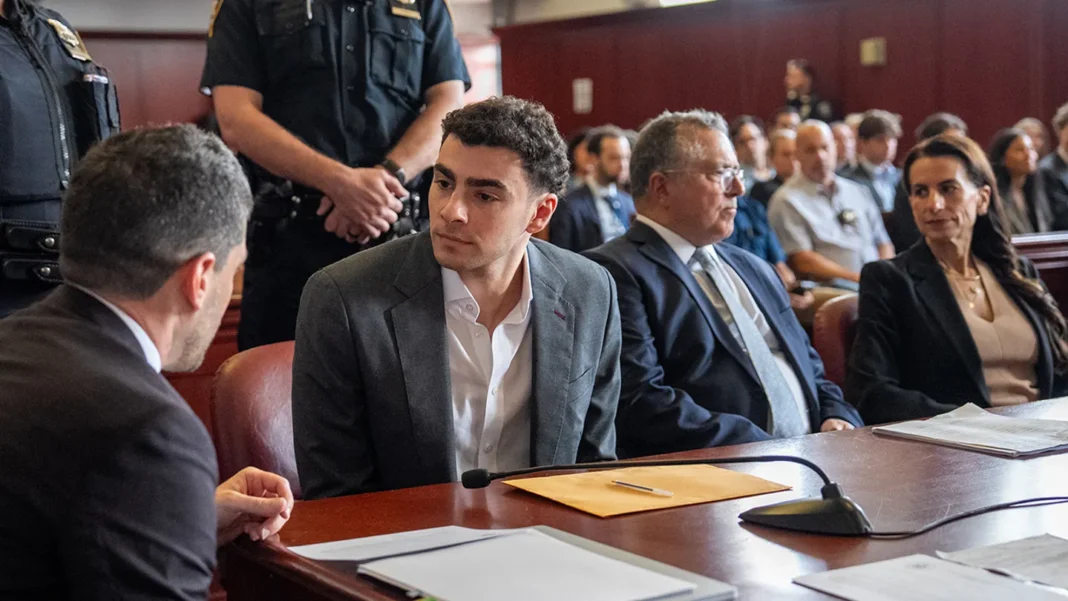
Luigi Mangione stood in federal court on Friday and said, publicly, for the first time: “I shot Mr. Thompson in Manhattan and he died. I knew what I was doing was illegal.” He pled guilty to two federal counts of stalking resulting in death. He will be sentenced on the federal counts on December 18. Brian Thompson’s family members were in the courtroom to hear him say it. The moment Mangione finished speaking, his attorney Karen Agnifilo announced that the defense team had filed a motion in New York state court arguing that double jeopardy protections require dismissal of the state murder case. The plea and the motion are the same move. Understanding one requires understanding the other.
The strategy, explained by retired NYPD inspector and Fox News contributor Paul Mauro, is specific. By pleading guilty to the federal stalking charges rather than fighting them, Mangione gets to serve whatever sentence the federal judge imposes in a federal prison, where conditions are measurably better than state facilities. Federal prisons have more programming, better physical conditions, and a different institutional culture than the state prison system where he would go if convicted of murder in New York. That is one advantage. The larger strategic bet is the double jeopardy argument: if the federal case is resolved through a guilty plea, and the state case involves the same underlying conduct, does the Double Jeopardy Clause of the Fifth Amendment bar the state from prosecuting him again for the same act?
The legal answer to that question is complicated, and deliberately so. The doctrine that applies is called the dual sovereignty doctrine, which holds that federal and state governments are separate sovereigns and can each prosecute a defendant for the same conduct without violating double jeopardy protections. This doctrine has been upheld by the Supreme Court and is the standard rule that allows, for example, federal civil rights prosecutions to follow state acquittals in cases involving racial violence. Mangione’s attorneys are arguing that New York’s state double jeopardy statute is more protective than the federal constitutional standard and would bar the state prosecution regardless of the dual sovereignty doctrine. “Double jeopardy by any common-sense definition,” Mangione himself said in court earlier this year when the question arose. New York Supreme Court Judge Gregory Carro will decide whether the state law argument holds.
The state murder trial is scheduled to begin September 8, less than a month away. Agnifilo’s double jeopardy motion, filed immediately after the federal plea, puts the September 8 date in doubt. If Judge Carro agrees that New York’s double jeopardy statute bars the state prosecution, the murder case is over. Mangione gets sentenced on the two federal stalking counts in December and serves that time in federal prison, with no state murder conviction. If Judge Carro rejects the argument, the September 8 trial proceeds with Mangione having already admitted in open court that he shot Thompson and that he knew it was illegal. That admission will be available to the state jury.
The federal charges to which Mangione pled guilty are stalking resulting in death, not murder. The distinction has legal significance. Stalking charges require proof of a course of conduct directed at a specific individual that causes the victim to fear death or serious bodily injury. Stalking resulting in death means that the course of conduct resulted in the victim’s death. The charge does not require the same specific intent elements as federal murder charges. The Justice Department had originally sought the death penalty on a federal murder charge. The guilty plea to stalking charges, without a formal deal in place per a senior DOJ source who spoke to Fox News before the plea, produces a different sentencing framework than the murder charge would have.
The killing of Brian Thompson on December 4, 2024, outside the New York Hilton Midtown, produced one of the most unusual public reactions to a violent crime in modern American history. The shell casings left at the scene were engraved with “deny,” “delay,” and “depose,” a reference to the insurance industry’s documented practices of delaying and denying claims. Mangione’s notebook, found in his backpack at the time of his arrest at a Pennsylvania McDonald’s five days after the shooting, described health insurance companies as “parasitic” and referenced the disconnect between American healthcare costs and health outcomes. The imagery was absorbed by a public that included millions of people with direct experience of claim denials, insurance refusals, and medical debt, and a significant portion of that public responded with something other than unqualified horror.
The folk hero phenomenon that followed Mangione’s arrest was documented extensively and made many people uncomfortable for obvious reasons. Thompson was a person with a family. His killing was an act of targeted premeditated violence. None of the insurance industry’s practices, however harmful to however many people, legally or morally justify shooting an executive on a sidewalk. These things are all true simultaneously. The public reaction documented that a large number of people experienced some version of the emotion that Mangione’s notebook described, even if they did not endorse the method by which he expressed it. The legal system’s response to this is the same regardless of the public sentiment: Mangione committed a crime and must answer for it. He is now answering for it. He said so himself, in court, on Friday.
The federal sentencing is December 18. The double jeopardy motion is before Judge Carro. The state trial is September 8, or later, or possibly never, depending on what Carro decides. Brian Thompson’s family was in the courtroom. They heard him say it.
When a man stands in federal court and admits he shot someone and knew it was illegal and his attorneys immediately file to block the murder trial, what exactly is the legal system resolving?
Sources
HuffPost: Luigi Mangione Pleads Guilty To Federal Stalking Charges In Healthcare CEO Case
Fox News Video: Luigi Mangione pleads guilty in federal case
Fox News: Luigi Mangione expected to plead guilty in federal case