



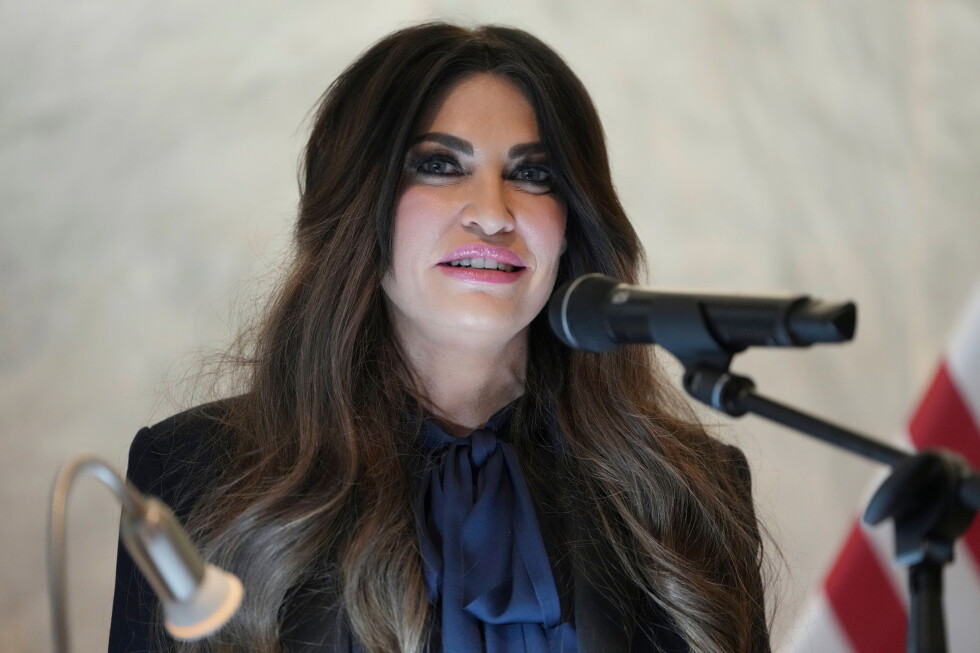
The White House says Trump has asked U.S. Ambassador to Greece Kimberly Guilfoyle to step down as scrutiny expands beyond the alleged $100,000 Amex request to other claims of improper conduct.
Kimberly Guilfoyle’s $100,000 credit-card controversy has officially graduated from embarrassing headline to potential career-ending diplomatic problem. The White House announced Tuesday that President Donald Trump has asked his ambassador to Greece to resign.
The request comes after a series of reports alleging Guilfoyle sought financial favors from Republican donor Eric Deters before taking the diplomatic post. The Wall Street Journal previously reported that she asked Deters to send $100,000 directly to American Express and allegedly suggested that doing so would avoid creating an obvious paper trail.
Deters never made the payment, according to the reporting, and Guilfoyle’s attorneys have disputed key parts of the account. They say any money discussed was connected to legitimate speaking work performed before she became ambassador and have questioned the authenticity or interpretation of some of the messages.
But the controversy did not stop at the Amex bill. Associated Press reporting says scrutiny has expanded to allegations involving improper gifts, threats involving a Greek official and efforts to use political access in ways critics say crossed ethical lines.
White House press secretary Katie Zacharia confirmed that Trump asked Guilfoyle to resign. That is a significant shift from just a day earlier, when Trump publicly said he was merely “looking at” whether to fire her.
Washington scandals often spend a week moving through the traditional stages of denial, concern and “we’re reviewing the matter.” Guilfoyle’s managed to go from disputed credit-card request to presidential resignation demand at roughly express-checkout speed.
Secretary of State Marco Rubio had previously declined to weigh in publicly on the original allegations while visiting Greece. AP now reports that both Trump and Rubio have expressed dissatisfaction with the expanding claims surrounding her conduct.
Guilfoyle has denied wrongdoing. Her lawyers maintain that her travel complied with State Department rules and that financial discussions cited in press reports have been mischaracterized.
The State Department inspector general is reportedly reviewing aspects of the allegations, though it is unclear whether a formal investigation has been opened. Democratic lawmakers have also called for a broader inquiry into whether any diplomatic or government resources were used improperly.
The political optics are especially ugly because Guilfoyle is not some obscure career diplomat who accidentally wandered into a compliance dispute. She is a longtime Trump ally, former Fox News host and former fiancée of Donald Trump Jr., making the scandal a very public problem inside Trump’s own orbit.
Trump has historically shown a high tolerance for controversy among loyal allies, which makes the resignation request notable on its own. The White House appears to have decided that whatever benefit Guilfoyle brings in Athens is now being outweighed by the weekly production schedule of new allegations.
None of those allegations have been proven in court, and no criminal charges have been announced. The distinction matters because the current story is about political and ethical fallout, not an established criminal finding.
Still, the administration’s own response says plenty about the seriousness of the situation. A president can defend an ally through bad press, dismiss a story as fake and blame political enemies. Asking the ambassador to resign is a different sentence entirely.
For Guilfoyle, the question now is whether she actually leaves the post and whether the inspector-general scrutiny ends there. For everyone else in Trump world, the lesson may be simpler: if a story begins with a six-figure Amex bill and ends with the White House press secretary confirming your resignation request, the spin cycle has probably stopped working.