



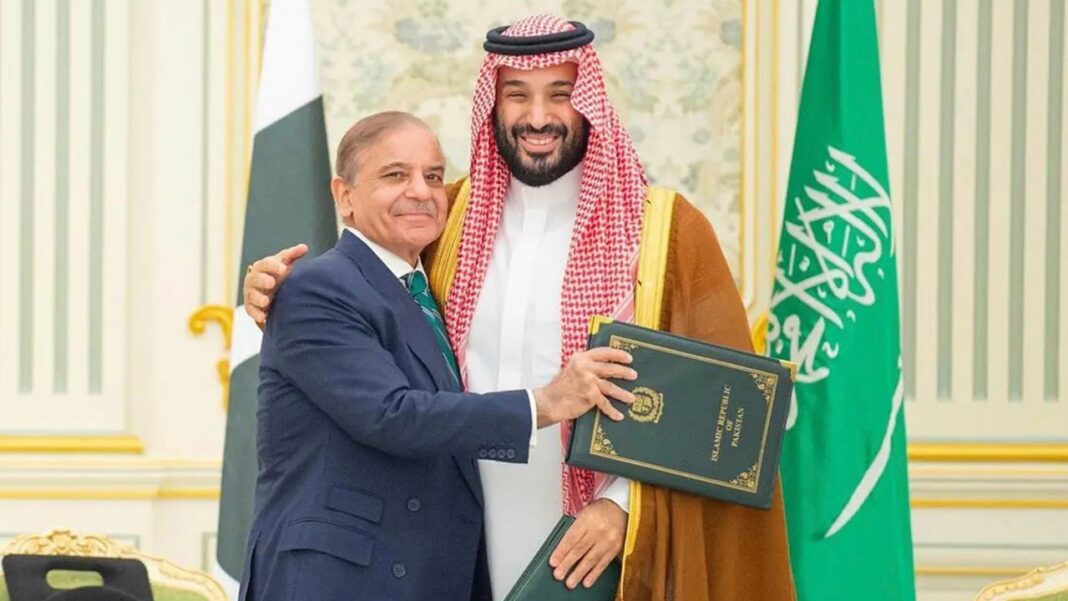
Saudi Arabia, Turkey, and Pakistan signed a collective defense agreement in Mecca on Friday stipulating that “any armed attack against any one of the three States shall be regarded as an attack against them all,” per Pakistan’s foreign ministry, a NATO-style mutual defense commitment signed at a meeting of Saudi Crown Prince Mohammed bin Salman, Turkish President Recep Tayyip Erdogan, and Pakistani Prime Minister Shehbaz Sharif, confirmed in the Fox News live blog’s 17-minute-ago update.
The agreement’s “intended to strengthen collective deterrence against any act of aggression,” per Pakistan’s foreign ministry statement. The specific act of aggression that preceded it involves Iran attacking Saudi Arabian oil facilities and vessels during Operation Epic Fury, the same conflict in which Saudi Arabia joined US airstrikes against Iran-backed militias in Iraq in late July. The three countries signing the pact are not minor regional players. Saudi Arabia is the world’s largest oil exporter. Turkey is a NATO member with the second-largest military in the alliance. Pakistan has nuclear weapons and an army of 654,000 active-duty personnel. This is the coalition Iran’s escalation has assembled.
The detail that the Fox News live blog confirms without dwelling on is that Shehbaz Sharif, Pakistan’s prime minister who signed this mutual defense agreement against Iran on Friday, is simultaneously the key mediator in US-Iran ceasefire negotiations. He is the person carrying messages between Washington and Tehran on the Strait of Hormuz deal that Trump says could come soon. He signed a defense pact against Iranian aggression in the morning. He is mediating with Iran in the afternoon. Both roles belong to the same man on the same Friday, in the same Mecca, in the same week.
Iran’s attacks created the alliance that is now arrayed against it. That is either the strategic consequence the IRGC did not foresee or the one they calculated and misjudged.
When the man brokering Iran’s peace deal also just signed a mutual defense pact against Iranian aggression, what exactly is the negotiating position?
Sources