



Amy Dangerfield spent years promoting far-right ideas about women, marriage and submission. Then she organized her own event, Nick Fuentes accused her of trying to undermine him, and the movement she defended turned its fire on her.
Amy Dangerfield spent years telling women that modern feminism had failed them, that men should lead and that women should embrace traditional submission. Then she learned one of the internet’s oldest lessons the hard way: movements built around humiliating other people do not always stop at other people.
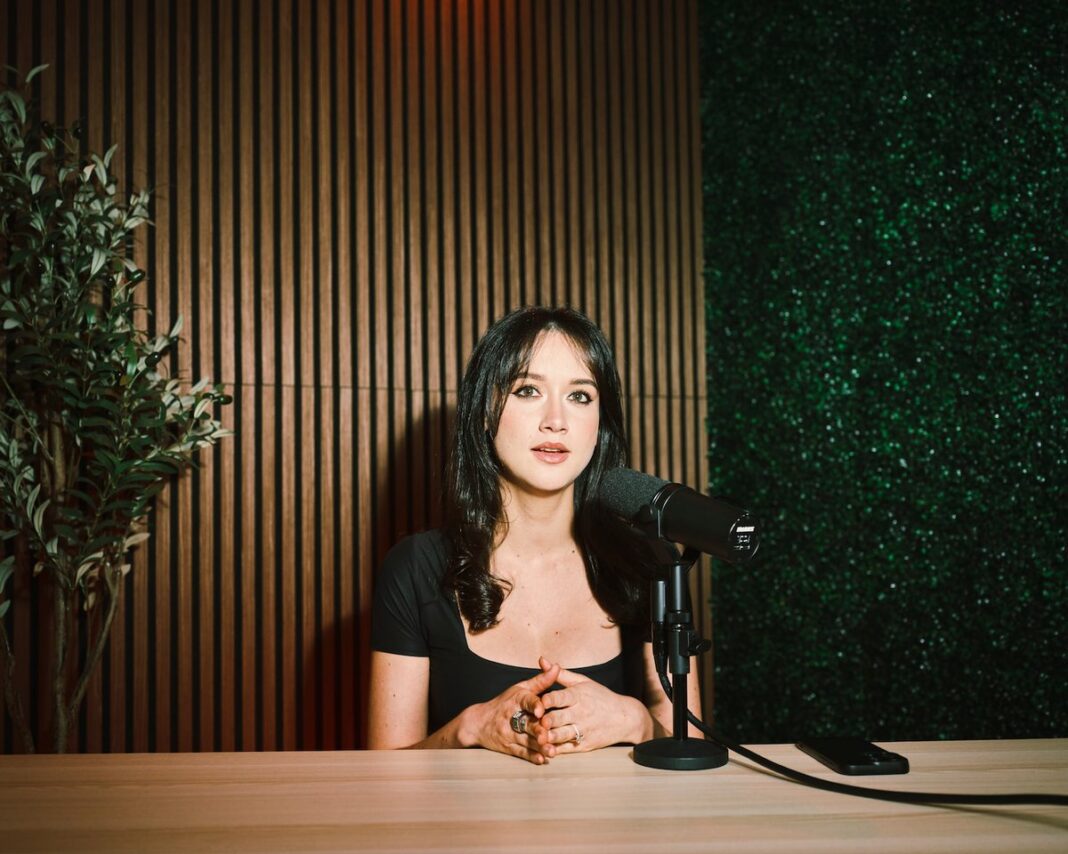
Dangerfield, an Australian-born conservative influencer, built a sizable online audience inside the far-right ecosystem surrounding Nick Fuentes. She embraced the identity of a “groypette,” the name used by female supporters of Fuentes’ “groyper” movement, and defended rhetoric that portrayed women as intellectually inferior, too emotional for politics and naturally suited to following men.
According to an extensive Washington Post profile, Dangerfield did not participate quietly. She built a YouTube audience approaching 100,000 subscribers, appeared on conservative podcasts and made videos arguing that women had been misled by feminism. She married, became pregnant and presented her life as evidence that the traditional gender hierarchy promoted by the movement could work.
Then she tried organizing something of her own. This spring, Dangerfield and her husband put together a small conference called America First United. They saw the event as a way to turn the online movement into something more organized offline. Instead, technical problems and sparse attendance turned the conference into an online embarrassment, with critics mocking the event as an “optical disaster.”
Fuentes soon publicly disavowed the gathering. On Telegram, he described it as a “hostile takeover attempt” and referred to Dangerfield as “some slut from Australia.” From there, the backlash accelerated dramatically. The Post reports that prominent Fuentes followers attacked her in private chats, anonymous accounts flooded her social pages with abuse, and doctored or AI-generated sexual images began circulating.
Dangerfield told The Post she had expected a certain amount of misogyny inside the movement. Even while she was on good terms with groypers, she said, some followers still called her degrading names. What surprised her was how quickly the same tactics she had seen directed at outsiders were redirected toward her personally once she was seen as disloyal.
The attacks included conspiracy theories claiming she was an Israeli spy, a federal infiltrator or part of an organized revolt against Fuentes. She and her husband contacted police and an attorney, and she obtained a stalking-protection order against one individual she said had spread particularly extreme accusations. Fuentes continued mocking her online and, when asked by The Post about her experience, responded dismissively.
The irony is difficult to miss because Dangerfield had spent years defending the movement’s treatment of women. She had argued that harsh jokes contained “inconvenient truths” and insisted that Fuentes respected women who were respectable. She promoted the idea that women should prioritize male leadership while simultaneously building a public media career around saying so.
That contradiction is not unique to her. Scholars interviewed by The Post described a recurring pattern in far-right movements in which women gain status by helping popularize ideologies that subordinate women generally. The women may be treated as exceptions for a time — useful proof that the movement cannot possibly hate women because women are participating in it — until they challenge male authority or violate the movement’s expectations.
In Dangerfield’s case, organizing an event without Fuentes’ blessing appears to have crossed that line. What she understood as movement-building was interpreted by Fuentes and some followers as an attempt to create an alternative power center. Suddenly, a woman who had been praised for embodying the movement’s values was being described as a traitor and worse.
There is dark humor in the ideological boomerang, but the harassment itself is not especially funny. The reported rape threats, doctored sexual imagery and stalking concerns are serious. The absurd part is the speed with which an online subculture built around rigid loyalty and contempt discovered that its own loyal influencer was apparently one conference away from becoming the enemy.
Dangerfield now says she has become disillusioned with parts of the movement and questions whether its repeated claims about respecting traditional women match how those women are actually treated. She has not necessarily renounced every conservative belief she promoted, but she appears far less convinced that the community she defended offers the kind of loyalty or protection she once imagined.
The story is a useful reminder of how internet movements work once personal brands and internal power struggles collide. It is easy to cheer a mob when it is aimed at someone else. It feels considerably different when the algorithm decides you are today’s content.
So the question is broader than whether Dangerfield should have seen it coming. Can a movement built partly around degrading women ever create a stable exception for the women helping promote it?