




A Royal Estate Enters the Epstein Story
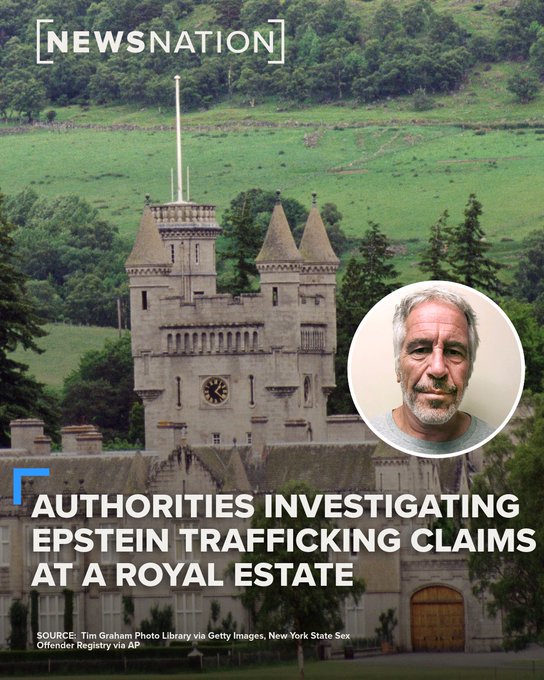
Balmoral is better known for royal holidays, Highland scenery and carefully composed family photographs than for questions involving Jeffrey Epstein. That contrast became impossible to ignore after Police Scotland publicly confirmed it was examining information concerning allegations that women were trafficked by Epstein on the royal estate. The acknowledgment, reported by Sky News on November 19, brings a deeply serious set of claims into one of the British monarchy’s most recognizable private settings. It is a development worth examining closely, and one that requires more precision than a sensational headline can provide.
The police confirmation is not a finding that trafficking occurred at Balmoral. It is not an announcement of charges, and it does not establish criminal wrongdoing by Andrew Mountbatten-Windsor or anyone else connected with the estate. Police said they had received information, and Chief Constable Jo Farrell indicated the force would assess it and determine what further action, if any, was appropriate. That distinction matters because Epstein’s history is so disturbing that an allegation involving his name can sound like a conclusion before investigators have even finished reviewing the information.
Sky News reported that the information concerns the former Prince Andrew and the royal estate in northeast Scotland. Andrew has faced years of public scrutiny over his association with Epstein and has denied wrongdoing in connection with allegations against him. The newest police acknowledgment adds another line of inquiry to that history, but it does not answer the central questions: who provided the information, what precisely is alleged to have happened, whether there is corroborating evidence and whether any criminal investigation will follow. Those are the facts that will determine where this story goes next.
Why Balmoral Is So Significant
Balmoral has a particular place in the royal imagination. It is a private estate, but it is also a public symbol of the monarchy’s continuity and family life. A claim that Epstein-linked trafficking may have touched that setting is therefore especially consequential for the institution’s reputation. Yet the grandeur of the location does not change the evidentiary standard. A castle is not proof, a photograph is not proof of a crime, and a police assessment is not a conviction. The story is serious enough without allowing royal scenery to substitute for documentation.
There is historical context for the renewed attention. Images previously made public through American law enforcement have appeared to show Epstein and Ghislaine Maxwell at the royal estate in 1999. Maxwell was later convicted in the United States for her role in Epstein’s sexual abuse and trafficking operation. Those images help explain why investigators and journalists would examine accounts involving Balmoral, but their existence does not independently establish the newly reported trafficking allegation. The difference between being photographed somewhere and committing a crime there is not a technicality; it is the difference between evidence of presence and evidence of conduct.
The royal family’s association with Epstein has already produced years of reputational damage, legal controversy and painful questions about access to powerful people. Andrew’s friendship with Epstein became a defining scandal of his public life. The latest development places renewed focus on what the royal household knew, what records may exist and whether potential witnesses can provide credible information. Those are legitimate reporting questions, but they remain questions. It would be irresponsible to turn an allegation into a completed narrative simply because the characters and setting are familiar.
What Police Have Actually Said
Farrell’s public remarks were measured. According to Sky News, Police Scotland was examining the information and would determine the appropriate next steps. That is the language of an assessment, not the announcement of a solved case. The force has not publicly laid out a timeline of alleged incidents, identified complainants in the coverage reviewed here or detailed evidence establishing the claims. It is possible that more information will emerge; it is also possible that the review will not produce criminal proceedings. Reporting must leave room for both outcomes.
It is equally important to remember the people at the center of Epstein’s crimes. His victims have spent years seeking recognition and accountability, often while their experiences were treated as a subplot in stories about wealthy men. The attention generated by the royal connection should not eclipse that history. The question is not merely whether a famous estate is embarrassed by another headline. It is whether authorities can identify credible evidence, protect potential witnesses and address any wrongdoing that the evidence supports.
For now, the most defensible headline is that police are examining the claims. That is newsworthy in itself: a senior police official has publicly acknowledged the matter, and the location and names involved guarantee intense interest. But there is no need to manufacture certainty. Balmoral may be a place where the monarchy traditionally goes to escape the spotlight; this week it became a place the spotlight returned to. What happens next depends on investigators, evidence and witnesses, not on the speed with which a scandal can travel across social media.
The public acknowledgment also creates a reporting obligation for everyone following the case. Subsequent coverage should distinguish a police assessment from a formal investigation, a formal investigation from a charge and a charge from a conviction. It should identify new evidence rather than simply repeat the most dramatic allegation. The victims of Epstein’s documented crimes deserve serious attention, and people named in fresh allegations deserve accurate descriptions of what has and has not been established. A story this sensitive is not improved by exaggeration. It is improved by records, credible witnesses, transparent official statements and the willingness to correct an early assumption when better information arrives.